To amend the Higher Education Act of 1965 to improve the financial aid process for homeless and foster care youth.
Analysis under review: This bill has generated analysis that may be too generic or incomplete. Clause-level evidence remains available below.
Summary
What This Bill Does
This bill amends the Higher Education Act to create comprehensive support systems for homeless youth and foster care youth in higher education. It requires colleges to designate liaisons, provide housing priority, and connect these students to support services. The bill also integrates outreach to these populations into federal TRIO programs (Upward Bound, Talent Search, GEAR UP, etc.) and guarantees in-state tuition rates.
Who Benefits and How
Homeless youth and foster care youth benefit significantly: colleges must designate staff liaisons to help them access financial aid, housing, healthcare, and other services. They receive priority for campus housing (including during breaks) and guaranteed in-state tuition at public institutions. Federal TRIO programs must actively reach out to and serve these populations. They also get priority for federal work-study employment.
Who Bears the Burden and How
Colleges and universities face new compliance requirements: designating trained liaison staff, posting information on websites, developing housing access plans, adding voluntary questions to admissions applications, and giving housing priority to homeless/foster youth. Federal TRIO program grantees must revise policies, conduct outreach, and submit reports on serving these populations. The Department of Education must issue guidance, conduct annual training, and report to Congress.
Key Provisions
- Requires every Title IV institution to designate a trained liaison for homeless and foster youth
- Mandates housing priority for homeless and foster youth, including during academic breaks
- Guarantees in-state tuition rates at public institutions regardless of residency
- Integrates homeless/foster youth outreach into all federal TRIO programs
- Requires annual training and Congressional reporting on effective strategies
Evidence Chain:
This summary is generated from the full bill text using AI analysis. Expand "Detailed Analysis" below for identified beneficiaries/burden bearers.
At a Glance
What This Bill Does
Amends the Higher Education Act to improve access to and success in postsecondary education for homeless youth and foster care youth through dedicated liaisons, housing priority, TRIO program reforms, and in-state tuition guarantees
Key Policy Areas
Higher Education, Child Welfare, Housing, Financial Aid
Primary Purpose
Amends the Higher Education Act to improve access to and success in postsecondary education for homeless youth and foster care youth through dedicated liaisons, housing priority, TRIO program reforms, and in-state tuition guarantees
Policy Domains
Federal TRIO Programs (Sections 5-11)
Identified Gains
Contextual inference, no direct clause citation- Homeless youth in TRIO-eligible schools
- Foster youth seeking college access
Contextual inference, no direct clause citation
Identified Costs
Contextual inference, no direct clause citation- TRIO program grantees
- Educational opportunity centers
- GEAR UP grantees
Contextual inference, no direct clause citation
Liaisons and Housing (Section 4)
Identified Gains
Contextual inference, no direct clause citation- Homeless and foster youth students
- Students at risk of homelessness
Contextual inference, no direct clause citation
Identified Costs
Contextual inference, no direct clause citation- Colleges and universities
- Campus housing offices
Contextual inference, no direct clause citation
Financial Support and Reporting (Sections 12-15)
Identified Gains
Contextual inference, no direct clause citation- Homeless and foster youth needing employment
- Out-of-state homeless and foster youth
Contextual inference, no direct clause citation
Identified Costs
Contextual inference, no direct clause citation- Public universities (tuition revenue)
- Department of Education
Contextual inference, no direct clause citation
Definitions and Ombudsman (Sections 2-3)
Identified Gains
Contextual inference, no direct clause citation- Homeless youth
- Foster care youth
- Unaccompanied youth
Contextual inference, no direct clause citation
Identified Costs
Contextual inference, no direct clause citation- Student loan ombudsman
Contextual inference, no direct clause citation
Sponsors
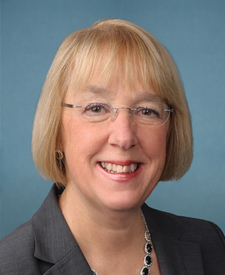
Patty Murray
D-WA | Primary Sponsor
Legislative Progress
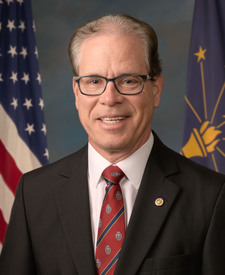
IntroducedMrs. Murray (for herself and Mr. Braun) introduced the following …
Stakeholder Effects
cui bono?How this legislation distributes effects. Mention counts reflect frequency, not effect magnitude.
Campus housing offices, Colleges and universities receiving Title IV funds, Educational Opportunity Center grantees
Positive-direction: Financial aid administrators, Homeless and foster youth adults seeking postsecondary education, Homeless and foster youth eligible for Talent Search, Homeless and foster youth eligible for Upward Bound, Homeless and foster youth from out of state, Homeless and foster youth in GEAR UP cohorts, Homeless and foster youth in TRIO-eligible populations, Homeless and foster youth in higher education, Homeless and foster youth students, Homeless and foster youth students seeking financial aid, Institutional liaisons for homeless/foster youth
Negative-direction: Campus housing offices, Colleges and universities receiving Title IV funds, Educational Opportunity Center grantees, GEAR UP state and partnership grantees, Public colleges and universities, Student Support Services program grantees, TRIO program grantees, Talent Search program grantees, Upward Bound program grantees
Congress, Department of Education, Secretary of Education
Department of Education faces effects in multiple directions
Positive-direction: Congress
Negative-direction: Secretary of Education, Student loan ombudsman office
Bill Structure & Actor Mappings
Who is "The Secretary" in each section?
- "the_secretary"
- → Secretary of Education
- "the_secretary"
- → Secretary of Education
- "the_secretary"
- → Secretary of Education
- "the_secretary"
- → Secretary of Education
Key Definitions
Terms defined in this bill
Children and youth whose care and placement are the responsibility of the State or Tribal agency under title IV of the Social Security Act, including individuals age 13+ who were formerly in care regardless of subsequent adoption or guardianship
Has the meaning given the term homeless children and youths in section 725 of the McKinney-Vento Homeless Assistance Act
Has the meaning given the term in section 725 of the McKinney-Vento Homeless Assistance Act
We use a combination of our own taxonomy and classification in addition to large language models to assess meaning and potential beneficiaries. High confidence means strong textual evidence. Always verify with the original bill text.
Learn more about our methodology