S4259-119

Reported

Blue Skies for Taiwan Act of 2026

119th Congress Introduced Mar 26, 2026

Summary

What This Bill Does

The reported Blue Skies for Taiwan Act requires State and Defense to establish a government-industry-academic Blue UAS working group within 180 days. The group must assess Taiwan's drone research, regulation, testing, certification, production, capital, and supply-chain capacity; identify barriers to Taiwanese participation; recommend supplier integration; identify components that could enter Blue UAS programs within 12 to 24 months; assess participation in the Defense Autonomous Warfare Group and similar initiatives; examine work with Army arsenals, depots, and ammunition plants; and incorporate lessons from Ukraine with U.S. European Command and Ukrainian officials. It reports after one year and annually for three years. State and Defense must also establish a U.S.-Taiwan-allied cooperative framework for secure UAS supply chains, encourage allies to buy qualifying Taiwanese systems instead of PRC-sourced components, and fast-track certification for allied co-developed products. A separate fast-track process must expedite export-control reviews and licensing, streamline review of products without PRC-connected parts, and allow reciprocal testing or equivalent Taiwanese cybersecurity standards where appropriate. The reported version removes the introduced open-ended authorization of appropriations, replaces the Replicator reference with the Defense Autonomous Warfare Group, adds Ukraine lessons, and adds a rule preserving the One China Policy alongside the Taiwan Relations Act and existing U.S. position on Taiwan's status.

Who Benefits and How

Taiwanese drone and component manufacturers gain faster U.S. certification, export licensing, testing recognition, co-production opportunities, allied demand, and potential access to U.S. defense initiatives. U.S. and allied defense users gain more secure, interoperable alternatives to PRC-dependent UAS supply chains. U.S. drone companies, Army industrial facilities, academic experts, and defense researchers gain partnership, testing, production, maintenance, and sustainment opportunities. Congress gains four years of reports with timelines, resource needs, recommendations, and possible funding mechanisms.

Who Bears the Burden and How

State, Defense, the working group, export-control reviewers, certification personnel, Army industrial facilities, European Command, and participating experts must assess capacity and barriers, design accelerated procedures, coordinate partners, incorporate combat lessons, and report annually. Taiwanese firms must still satisfy Blue UAS cybersecurity and supply-chain requirements. PRC-connected component suppliers may lose demand as U.S. and allied programs substitute Taiwanese products. The removed appropriation means agencies and potential Taiwanese partners receive no bill-specific funding guarantee, while the rules of construction constrain implementation to existing Taiwan policy.

Key Provisions

  • Requires a Blue UAS working group within 180 days and annual reports for three years after its first report.
  • Requires assessment of Taiwanese production, certification barriers, supplier integration, and defense-program participation.
  • Adds Army industrial-base collaboration and lessons from Ukraine to the working group's duties.
  • Establishes a cooperative framework for allied purchases and co-produced Taiwanese Blue UAS components.
  • Requires expedited export-control, licensing, testing, and cybersecurity-equivalence procedures.
  • Removes the introduced authorization of such sums as necessary.
  • Protects the Taiwan Relations Act, One China Policy, and the U.S. position on Taiwan's international status.

Evidence Chain:

This summary is generated from the full bill text using AI analysis. Expand "Detailed Analysis" below for identified beneficiaries/burden bearers with clause-level evidence links.

At a Glance

What This Bill Does

Builds secure, PRC-independent unmanned-aircraft supply chains by integrating Taiwanese manufacturers into U.S. Blue UAS certification, allied procurement, co-production, and defense-industrial collaboration.

Key Policy Areas

National Defense, Foreign Affairs, Aerospace Manufacturing, Trade

Primary Purpose

Builds secure, PRC-independent unmanned-aircraft supply chains by integrating Taiwanese manufacturers into U.S. Blue UAS certification, allied procurement, co-production, and defense-industrial collaboration.

Policy Domains

National Defense Foreign Affairs Aerospace Manufacturing Trade

Blue Skies for Taiwan Act of 2026

Identified Gains
  • Taiwanese unmanned-aircraft manufacturers
  • United States unmanned-aircraft companies
  • Army Organic Industrial Base facilities
  • Regional allied defense agencies
  • United States defense users
  • Congressional oversight committees
Model: codex-gpt-5 | Version: bill_summary_v2 | Source: rs
United States defense users: , , ,
Regional allied defense agencies: , , ,
Congressional oversight committees: , , ,
Army Organic Industrial Base facilities: , , ,
Taiwanese unmanned-aircraft manufacturers: , , ,
United States unmanned-aircraft companies: , , ,
Identified Costs
  • State Department security-assistance staff
  • Defense Department Blue UAS staff
  • Export-control licensing officials
  • Taiwanese certification applicants
  • PRC-connected component suppliers
  • Blue UAS Working Group experts
Model: codex-gpt-5 | Version: bill_summary_v2 | Source: rs
Blue UAS Working Group experts: , , ,
Defense Department Blue UAS staff: , , ,
PRC-connected component suppliers: , , ,
Export-control licensing officials: , , ,
Taiwanese certification applicants: , , ,
State Department security-assistance staff: , , ,

Legislative Progress

Reported
Introduced Committee Passed
Jul 27, 2026

Placed on Senate Legislative Calendar under General Orders. Calendar No. …

Jul 27, 2026

Committee on Foreign Relations. Reported by Senator Risch with an …

Jul 27, 2026

Reported by Mr. Risch, with an amendment

Jun 17, 2026

Committee on Foreign Relations. Ordered to be reported with an …

Mar 26, 2026

Read twice and referred to the Committee on Foreign Relations.

Mar 26, 2026

Introduced in Senate

Mar 26, 2026

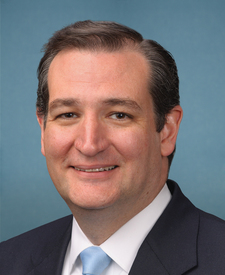
Mr. Merkley (for himself, Mr. Cruz, and Mr. Curtis) introduced …

Mar 26, 2026

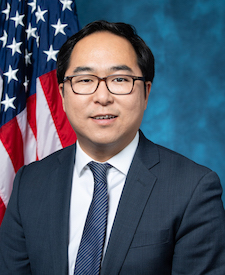
Mr. Merkley (for himself, Mr. Cruz, Mr. Curtis, Mr. Kim, …

Stakeholder Effects

cui bono?

How this legislation distributes effects. Mention counts reflect frequency, not effect magnitude.

Defense
25 mentions across 12 clauses
+13 positive -8 negative ?4 uncertain

Army Organic Industrial Base, Blue UAS certification applicants, Blue UAS companies in Taiwan

Taiwanese Blue UAS companies faces effects in multiple directions

Positive-direction: Army Organic Industrial Base, Blue UAS companies in Taiwan, Defense Contract Management Agency Blue UAS program, Department of Defense UAS supply-chain programs, Taiwan drone component manufacturers, Taiwanese UAS suppliers, Taiwanese unmanned-aircraft manufacturers, U.S. defense supply chains, UAS industry experts, United States unmanned-aircraft companies

Negative-direction: Department of Defense, Department of Defense certification officials, PRC-connected component suppliers, PRC-connected unmanned-aircraft suppliers, PRC-sourced UAS suppliers, UAS component suppliers

Government
22 mentions across 11 clauses
+8 positive -9 negative ?5 uncertain

Appropriate congressional committees, Army Organic Industrial Base facilities, Blue UAS Working Group staff

Positive-direction: Appropriate congressional committees, Army Organic Industrial Base facilities, Regional allied defense agencies, Regional allies procuring Blue UAS, State Department Taiwan-policy staff, Taiwan cybersecurity regulators, Taiwanese government officials

Negative-direction: Blue UAS Working Group staff, Blue UAS certification officials, Defense Department Blue UAS staff, Defense Department acquisition staff, State Department alliance staff, State Department security-assistance staff, Ukrainian defense officials, United States European Command staff, United States export-control reviewers

Federal Administration
4 mentions across 4 clauses
+1 positive -3 negative

State Department, State Department Taiwan security programs, State Department export-control offices

Positive-direction: State Department Taiwan security programs

Negative-direction: State Department, State Department export-control offices

General Public
2 mentions across 2 clauses
+1 positive -1 negative

Taxpayers

Taxpayers faces effects in multiple directions

Education
1 mention across 1 clause
+1 positive

Academic UAS experts

Professional Services
1 mention across 1 clause
?1 uncertain

Legislative compliance counsel

7/15
sections analyzed
Full impact breakdown

Bill Structure & Actor Mappings

Who is "The Secretary" in each section?

Domains
National Defense Foreign Affairs Aerospace Manufacturing Trade
Actor Mappings
"defense_lead"
→ Secretary of Defense
"program_body"
→ Blue UAS Working Group
"diplomatic_lead"
→ Secretary of State
"foreign_partner"
→ Taiwanese UAS manufacturers and officials
"lessons_partner"
→ United States European Command and Ukrainian officials
"industrial_partner"
→ Army Organic Industrial Base

We use a combination of our own taxonomy and classification in addition to large language models to assess meaning and potential beneficiaries. High confidence means strong textual evidence. Always verify with the original bill text.

Learn more about our methodology