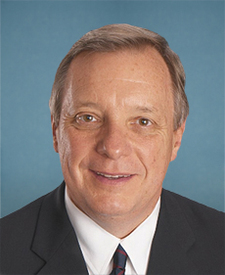
S3977-119

Passed Senate

Bankruptcy Threshold Adjustment Act of 2026

119th Congress Introduced Mar 3, 2026

Summary

What This Bill Does

The Bankruptcy Threshold Adjustment Act rewrites two debtor eligibility rules in title 11. For subchapter V of chapter 11, a person engaged in commercial or business activity may qualify with no more than $7.5 million in noncontingent liquidated debt, excluding debts owed to affiliates or insiders, when at least half of the debt arose from business activity. The definition continues to exclude single-asset real-estate businesses, members of affiliated debtor groups above the ceiling, public reporting companies, and their affiliates. For chapter 13, an individual or married couple with regular income may qualify with aggregate noncontingent liquidated debt below $2.75 million, while stockbrokers and commodity brokers remain excluded. The limits apply to cases commenced on or after enactment.

Who Benefits and How

Small business owners with debt below $7.5 million gain access to the streamlined subchapter V reorganization process, including its lower procedural costs and debtor-focused plan rules. Individuals and married couples with regular income and debt below $2.75 million gain chapter 13 eligibility. Bankruptcy attorneys and restructuring professionals may receive additional cases within those chapters.

Who Bears the Burden and How

Secured and unsecured creditors must participate in subchapter V or chapter 13 proceedings for newly eligible debtors and may face delayed or reduced recoveries under confirmed plans. Bankruptcy courts, United States trustees, and case trustees must administer more cases under the expanded thresholds. Public companies, their affiliates, single-asset real-estate businesses, stockbrokers, and commodity brokers remain barred from the specified relief.

Key Provisions

  • Establishes a $7.5 million debt ceiling for qualifying subchapter V business debtors.
  • Requires at least half of a qualifying subchapter V debtor's debt to arise from commercial or business activity.
  • Preserves exclusions for large affiliated groups, public reporting companies, their affiliates, and single-asset real-estate businesses.
  • Expands chapter 13 eligibility to individuals or spouses with aggregate qualifying debt below $2.75 million.
  • Applies the amended limits to bankruptcy cases commenced on or after enactment.

Evidence Chain:

This summary is generated from the full bill text using AI analysis. Expand "Detailed Analysis" below for identified beneficiaries/burden bearers with clause-level evidence links.

At a Glance

What This Bill Does

Sets permanent $7.5 million small-business reorganization eligibility and $2.75 million chapter 13 debt limits for bankruptcy cases filed after enactment.

Key Policy Areas

Bankruptcy, Finance, Small Business

Primary Purpose

Sets permanent $7.5 million small-business reorganization eligibility and $2.75 million chapter 13 debt limits for bankruptcy cases filed after enactment.

Policy Domains

Bankruptcy Finance Small Business

Bankruptcy Threshold Adjustment Act of 2026

Identified Gains
  • Qualifying small business debtors
  • Individual chapter 13 debtors
  • Married chapter 13 debtors
  • Bankruptcy attorneys
Model: codex-gpt-5 | Version: bill_summary_v2 | Source: es
Bankruptcy attorneys:
Married chapter 13 debtors:
Individual chapter 13 debtors:
Qualifying small business debtors:
Identified Costs
  • Secured creditors
  • Unsecured creditors
  • Bankruptcy courts
  • United States trustees
  • Case trustees
  • Excluded public companies
Model: codex-gpt-5 | Version: bill_summary_v2 | Source: es
Case trustees:
Bankruptcy courts:
Secured creditors:
Unsecured creditors:
United States trustees:
Excluded public companies:

Legislative Progress

Passed Senate
Introduced Committee Passed
Aug 10, 2026

Held at the desk.

Aug 10, 2026

Received in the House.

Aug 10, 2026

Message on Senate action sent to the House.

Aug 3, 2026

Passed Senate without amendment by Unanimous Consent. (consideration: CR S4412; …

Aug 3, 2026

Passed/agreed to in Senate: Passed Senate without amendment by Unanimous …

Mar 4, 2026

Read the second time. Placed on Senate Legislative Calendar under …

Mar 4, 2026

Read the second time and placed on the calendar

Mar 3, 2026

Introduced in the Senate. Read the first time. Placed on …

Mar 3, 2026

Introduced in Senate

Mar 3, 2026

Mr. Grassley (for himself, Mr. Durbin, Mr. Cornyn, Mr. Whitehouse, …

Stakeholder Effects

cui bono?

How this legislation distributes effects. Mention counts reflect frequency, not effect magnitude.

Finance
3 mentions across 1 clause
+3 positive

Qualifying small business debtors, Secured creditors in newly eligible cases, Unsecured creditors in newly eligible cases

General Public
1 mention across 1 clause
+1 positive

Qualifying individual chapter 13 debtors

Government
1 mention across 1 clause
+1 positive

United States bankruptcy courts

Professional Services
1 mention across 1 clause
+1 positive

Bankruptcy attorneys

1/3
sections analyzed
Full impact breakdown

Bill Structure & Actor Mappings

Who is "The Secretary" in each section?

Domains
Bankruptcy Finance Small Business
Actor Mappings
"court"
→ United States bankruptcy court
"trustee"
→ United States trustee and case trustee
"creditors"
→ Secured and unsecured creditors
"business_debtor"
→ Qualifying subchapter V business debtor
"individual_debtor"
→ Individual or married chapter 13 debtor

Key Definitions

Terms defined in this bill

2 terms
"Subchapter V debtor" §2a

A qualifying private commercial or business debtor with no more than $7.5 million in covered debt and at least half arising from business activity, subject to stated exclusions.

"Chapter 13 debt ceiling" §2b

Aggregate noncontingent liquidated debt below $2.75 million for an individual or qualifying spouses with regular income.

We use a combination of our own taxonomy and classification in addition to large language models to assess meaning and potential beneficiaries. High confidence means strong textual evidence. Always verify with the original bill text.

Learn more about our methodology