To implement a 5-year pilot program establishing a performance-based pay structure for certain Federal employees in order to enhance productivity, accountability, and employee satisfaction in public service.
Analysis under review: This bill has generated analysis that may be too generic or incomplete. Clause-level evidence remains available below.
Summary
The Federal Employee Performance and Accountability Act of 2025 creates a 5-year pilot program run by the Office of Management and Budget to test performance-based pay for federal workers. Each executive agency must enroll 1-10% of eligible employees at the GS-11 level and above in positions with measurable performance criteria. Participating employees lose standard GS pay increases, step advances, and bonuses during the program. Instead, they are evaluated annually on productivity, quality, and timeliness, and placed into three tiers: Tier 1 (exceeds expectations) receives a 15% salary increase and potential bonuses and perks; Tier 2 (meets expectations) receives no pay change; Tier 3 (below expectations) gets a 15% pay cut plus mandatory training. Agencies with national security or public safety concerns may opt out with written justification. The program requires annual agency reports, annual OMB assessments published to Congress, and a final GAO/OMB review. No new funding is authorized; agencies must use existing budgets.
Evidence Chain:
This summary is generated from the full bill text using AI analysis. Expand "Detailed Analysis" below for identified beneficiaries/burden bearers.
At a Glance
What This Bill Does
Establishes a 5-year pilot program for performance-based pay in federal agencies, replacing standard GS step increases for participating employees (GS-11 through senior-level) with a tiered system: +15% for exceeding expectations, no change for meeting them, and -15% for underperformance.
Who Benefits
- High-performing federal employees (15% raises and bonuses)
- Taxpayers (efficiency gains from accountability)
- OMB (expanded oversight authority)
Who Bears Costs
- Federal employees rated below expectations (15% pay cuts)
- Federal employee unions (loss of standard step increases for participants)
- Participating agencies (new evaluation and reporting requirements)
Key Policy Areas
{'domain': 'Government Operations', 'evidence': 'Restructures federal employee compensation through OMB-administered pilot program'}, {'domain': 'Labor', 'evidence': 'Replaces collective bargaining-adjacent pay scales with performance-based system'}
Primary Purpose
Establishes a 5-year pilot program for performance-based pay in federal agencies, replacing standard GS step increases for participating employees (GS-11 through senior-level) with a tiered system: +15% for exceeding expectations, no change for meeting them, and -15% for underperformance.
Policy Domains
Legislative Strategy
"Test performance-based pay on a limited scale to build evidence for broader federal compensation reform, while preempting union opposition by replacing rather than supplementing existing pay structures"
Sponsors
Legislative Progress
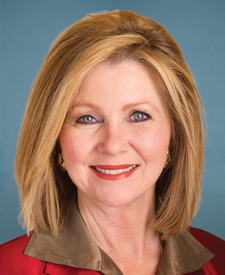
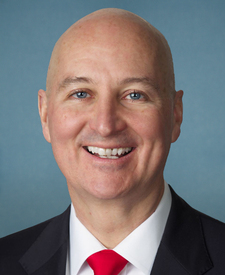
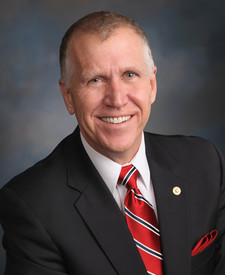
IntroducedMrs. Blackburn (for herself, Mr. Tillis, and Mr. Ricketts) introduced …
Stakeholder Effects
cui bono?How this legislation distributes effects. Mention counts reflect frequency, not effect magnitude.
Executive agencies, GAO, Office of Management and Budget
Federal employees at GS-11 and above, High-performing federal employees, Participating federal employees
Positive-direction: High-performing federal employees
Negative-direction: Underperforming federal employees
Bill Structure & Actor Mappings
Who is "The Secretary" in each section?
- "agency_heads"
- → Heads of Executive agencies
- "the_director"
- → Director of the Office of Management and Budget
- "comptroller_general"
- → Comptroller General of the United States
Key Definitions
Terms defined in this bill
Employee at GS-11 through senior-level with clearly measurable performance criteria such as project management, policy analysis, IT, finance, procurement, leadership, customer service, or claims processing
Standards tailored to agency functions including productivity (quantifiable outputs), quality (compliance and accuracy), and timeliness (deadline compliance)
We use a combination of our own taxonomy and classification in addition to large language models to assess meaning and potential beneficiaries. High confidence means strong textual evidence. Always verify with the original bill text.
Learn more about our methodology