SUCCESS for BEAD Act
Analysis under review: This bill has generated analysis that may be too generic or incomplete. Clause-level evidence remains available below.
Summary
What This Bill Does
The SUCCESS for BEAD Act amends the Broadband Equity, Access, and Deployment (BEAD) Program to direct how leftover grant funds should be spent after states complete their initial broadband deployment plans. Instead of sitting idle, remaining BEAD allocations must be used through competitive subgrants for an expanded set of eligible projects: wholesale fiber construction, internet exchange points, mobile wireless infrastructure, submarine cable systems, workforce development in telecom/AI/cybersecurity sectors, Next Generation 9-1-1 systems, and connectivity for military installations and federal facilities. The bill explicitly prohibits funding data centers and locks in an existing Buy America waiver.
Who Benefits and How
Telecommunications infrastructure companies gain access to new federal subgrant funding for wholesale fiber, internet exchange points, and mobile wireless construction, with up to 24 months of operations funding. Workforce development programs in telecom, AI, cybersecurity, and electrical distribution sectors receive dedicated funding, with a streamlined path through existing workforce boards. Underserved and rural communities, including Tribal lands, are prioritized for infrastructure investments. AI and edge computing operators benefit from prioritized network interconnection funding. Emergency communications centers can access funds for Next Generation 9-1-1 upgrades supporting multimedia, interoperability, and cybersecurity. Military installations and national laboratories are prioritized for enhanced connectivity.
Who Bears the Burden and How
Subgrantees must provide at least 25% matching funds (waivable on request). Data center developers are explicitly excluded from funding. Existing fiber providers face a mandatory challenge process that could block new wholesale fiber routes if substantially similar infrastructure already exists on comparable terms. States must navigate new certification and coordination requirements for NG911 projects.
Key Provisions
- Mandates competitive subgrant program for all remaining BEAD funds after initial broadband deployment
- Eligible projects include wholesale fiber, internet exchange points, wireless, submarine cables, workforce development, NG911, and permitting support
- Prohibits funding data centers whose primary purpose is processing/storing data
- Requires 25% match from subgrantees (waivable)
- Establishes mandatory challenge process for wholesale fiber to prevent overbuilding
- Locks in February 2024 Buy America waiver (cannot be revised or rescinded)
- Creates comprehensive NG911 coordination framework with interoperability, cybersecurity, and governance requirements
- Prioritizes unserved/underserved areas, Tribal lands, military installations, and AI connectivity
- Requires guidance within 30 days of enactment
Evidence Chain:
This summary is generated from the full bill text using AI analysis. Expand "Detailed Analysis" below for identified beneficiaries/burden bearers with clause-level evidence links.
At a Glance
What This Bill Does
Amends the BEAD broadband grant program to allow remaining funds after initial deployment to be used for AI-supportive telecom infrastructure, workforce development, Next Generation 9-1-1, and national security-related connectivity projects
Key Policy Areas
Telecommunications, Broadband Deployment, Public Safety, National Security, Workforce Development, Artificial Intelligence
Primary Purpose
Amends the BEAD broadband grant program to allow remaining funds after initial deployment to be used for AI-supportive telecom infrastructure, workforce development, Next Generation 9-1-1, and national security-related connectivity projects
Policy Domains
SUCCESS for BEAD Act - Remaining Funds Subgrant Program
Identified Gains
- Telecommunications infrastructure companies
- Workforce development programs and trainees
- Underserved and rural communities
- AI and data center operators
- Military installations and national laboratories
Identified Costs
- Subgrantees (25% matching requirement)
- Data center developers (prohibited use)
- Existing fiber providers (challenge process compliance)
Next Generation 9-1-1 Coordination
Identified Gains
- Emergency communications centers
- Public safety agencies
- 9-1-1 callers (improved service)
Identified Costs
- Eligible entities (certification and coordination requirements)
- Assistant Secretary (oversight duties)
Sponsors
Legislative Progress
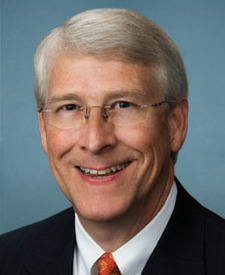
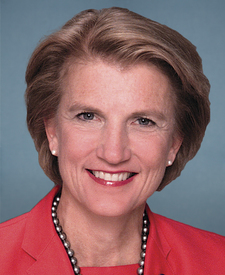
In CommitteeMr. Wicker (for himself and Mrs. Capito) introduced the following …
Read twice and referred to the Committee on Commerce, Science, …
Introduced in Senate
Impact analysis is available but no clear stakeholder effects identified. View clause-level analysis →
Bill Structure & Actor Mappings
Who is "The Secretary" in each section?
- "eligible_entity"
- → State, territory, or other BEAD-eligible entity
- "the_assistant_secretary"
- → Assistant Secretary of Commerce for Communications and Information (NTIA)
- "associate_administrator"
- → Associate Administrator for Public Safety Communications
- "the_assistant_secretary"
- → Assistant Secretary of Commerce for Communications and Information
Key Definitions
Terms defined in this bill
A communication (voice, text, picture, multimedia, or any other data) sent to an emergency communications center for requesting emergency assistance
As defined in section 5002 of the National Artificial Intelligence Initiative Act of 2020 (15 U.S.C. 9401)
Technical standards for network, device, and IP connectivity that enable interoperability, developed by accredited standards organizations through open, consensus-based processes
A facility designated to receive 9-1-1 requests that processes, dispatches, transfers, or analyzes emergency communications, or a PSAP as defined in the Communications Act
A physical building enabling ISPs, transport/mobile networks, CDNs, AI systems, and other operators to directly interconnect and exchange traffic, with neutral nondiscriminatory access and shared IX switching fabric
An IP-based system ensuring interoperability, security, commonly accepted standards, and the ability to receive, process, and analyze all types of 9-1-1 requests with additional data integration
Amounts remaining from BEAD allocations upon approval of the eligible entity's final proposal
Includes construction of wholesale fiber, conduit, internet exchange points, mobile wireless, workforce facilities, submarine cable systems; workforce development programs; Next Generation 9-1-1; data collection/mapping; permitting resources; and other uses deemed necessary by the Assistant Secretary
We use a combination of our own taxonomy and classification in addition to large language models to assess meaning and potential beneficiaries. High confidence means strong textual evidence. Always verify with the original bill text.
Learn more about our methodology