NIH Clinical Trial Integrity Act
Analysis under review: This bill has generated analysis that may be too generic or incomplete. Clause-level evidence remains available below.
Summary
What This Bill Does
This bill requires that all NIH-funded clinical trials set measurable diversity goals for participant recruitment and retention, reflecting the demographics of the disease population or the general U.S. population. Applicants must submit detailed plans for achieving diversity, including strategies for enrollment, separate subgroup analysis, and less burdensome follow-up options (phone, virtual, evening/weekend visits, wearable tech). As a condition of funding, organizations must report participant demographics annually, provide retention rates by demographic group, ensure researchers complete diversity training, and submit final disaggregated participant data. The bill also mandates a study on modernizing participant reimbursement and anti-kickback rules, and funds a $10 million/year public awareness campaign (2026-2029) to promote diverse clinical trial participation.
Who Benefits
- Underrepresented populations (racial/ethnic minorities, women, elderly) gain better representation in clinical trials, leading to more relevant safety and efficacy data
- Patients in underrepresented groups benefit from treatments validated across their demographics
- Community-based organizations, faith communities, HBCUs, and MSIs are eligible for awareness campaign grants
- Clinical trial participants benefit from less burdensome follow-up requirements (virtual visits, wearable tech, flexible scheduling)
Who Bears the Burden
- NIH-funded research organizations face significant new application, reporting, and compliance requirements
- Clinical trial investigators must complete diversity training and meet demographic enrollment targets
- NIH program officers and grants management must monitor compliance and review demographic data
- Federal budget funds the $40 million awareness campaign (2026-2029) and the cost barrier study
Key Provisions
- Requires clear, measurable diversity goals in all NIH-funded clinical trial applications based on disease demographics or U.S. population
- Mandates detailed recruitment and retention plans with separate subgroup analysis
- Requires less burdensome follow-up options: phone, virtual, home visits, evening/weekend hours, wearable tech, alternate labs
- Annual demographic reporting (disaggregated by race, ethnicity, age, sex) as funding condition
- Mandatory diversity training for clinical trial researchers
- Study on modernizing participant reimbursement rules and anti-kickback safe harbors (due within 2 years)
- National public awareness campaign with grants to nonprofits, HBCUs, community pharmacies ($10M/year, FY2026-2029)
- Opt-out provision: applicants can explain why diversity recruitment is not scientifically justified
Evidence Chain:
This summary is generated from the full bill text using AI analysis. Expand "Detailed Analysis" below for identified beneficiaries/burden bearers.
At a Glance
What This Bill Does
Requires NIH-funded clinical trials to set and meet diversity goals for participant recruitment reflecting disease demographics or the U.S. population, with mandatory reporting, researcher training, a study on reducing cost barriers, and a public awareness campaign with $10 million/year authorized
Key Policy Areas
Healthcare, Science & Technology, Civil Rights
Primary Purpose
Requires NIH-funded clinical trials to set and meet diversity goals for participant recruitment reflecting disease demographics or the U.S. population, with mandatory reporting, researcher training, a study on reducing cost barriers, and a public awareness campaign with $10 million/year authorized
Policy Domains
Eliminating Cost Barriers Study
Identified Gains
Contextual inference, no direct clause citation- Clinical trial participants (potential for improved reimbursement)
- Underrepresented populations facing financial barriers to participation
Contextual inference, no direct clause citation
Identified Costs
Contextual inference, no direct clause citation- NIH (must conduct and complete study within 2 years)
Contextual inference, no direct clause citation
Diversity Goals for NIH Clinical Trials
Identified Gains
Contextual inference, no direct clause citation- Underrepresented populations (racial/ethnic minorities, women, elderly)
- Clinical trial participants (less burdensome follow-up)
- Patients who benefit from demographically validated treatments
Contextual inference, no direct clause citation
Identified Costs
Contextual inference, no direct clause citation- NIH-funded research organizations (application and reporting requirements)
- Clinical trial investigators (training and enrollment targets)
- NIH program officers (compliance monitoring)
Contextual inference, no direct clause citation
Public Awareness and Education Campaign
Identified Gains
Contextual inference, no direct clause citation- Underrepresented populations targeted for clinical trial awareness
- Community-based organizations and HBCUs (grant recipients)
- Community pharmacies
Contextual inference, no direct clause citation
Identified Costs
Contextual inference, no direct clause citation- Federal budget ($10M/year for FY2026-2029)
- HHS (campaign administration)
Contextual inference, no direct clause citation
Sponsors

Andy Kim
D-NJ | Primary Sponsor
Legislative Progress
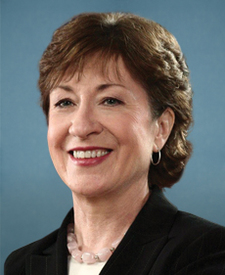
In CommitteeMr. Kim (for himself and Ms. Collins) introduced the following …
Read twice and referred to the Committee on Health, Education, …
Introduced in Senate
Impact analysis is available but no clear stakeholder effects identified. View clause-level analysis →
Bill Structure & Actor Mappings
Who is "The Secretary" in each section?
- "the_director"
- → Director of the National Institutes of Health
- "the_secretary"
- → Secretary of Health and Human Services
- "the_director"
- → Director of the National Institutes of Health
- "the_secretary"
- → Secretary of Health and Human Services
- "the_secretary"
- → Secretary of Health and Human Services
Key Definitions
Terms defined in this bill
A research study in which one or more human subjects are prospectively assigned to one or more interventions (which may include placebo or other control) to evaluate the effects of those interventions on health-related biomedical or behavioral outcomes
We use a combination of our own taxonomy and classification in addition to large language models to assess meaning and potential beneficiaries. High confidence means strong textual evidence. Always verify with the original bill text.
Learn more about our methodology