Safer Detention Act of 2025
Analysis under review: This bill has generated analysis that may be too generic or incomplete. Clause-level evidence remains available below.
Summary
What This Bill Does
This bill expands access to home detention for elderly and terminally ill federal and D.C. offenders, extends the Second Chance Act pilot through 2029, lowers the time-served threshold, and makes a technical compassionate-release correction for pre-1987 offenses.
Who Benefits and How
Eligible elderly and terminally ill incarcerated people would get more opportunities to seek court-ordered home detention or compassionate release.
Who Bears the Burden and How
Federal courts, prosecutors, and prison administrators would have to process more motions, notices, and eligibility determinations.
Key Provisions
- Allows defendants to seek judicial review of denied or delayed home-detention requests.
- Extends the elderly and terminally ill offender pilot through 2029.
- Includes D.C. offenders and lowers the time-served requirement from two-thirds to one-half of the sentence, net of good-time credits.
- Clarifies compassionate-release access for offenses committed before November 1, 1987.
Evidence Chain:
This summary is generated from the full bill text using AI analysis. Expand "Detailed Analysis" below for identified beneficiaries/burden bearers.
At a Glance
What This Bill Does
This bill expands access to home detention for elderly and terminally ill federal and D.C. offenders, extends the Second Chance Act pilot through 2029, lowers the time-served threshold, and makes a technical compassionate-release correction for pre-1987 offenses.
Key Policy Areas
Criminal Justice
Primary Purpose
This bill expands access to home detention for elderly and terminally ill federal and D.C. offenders, extends the Second Chance Act pilot through 2029, lowers the time-served threshold, and makes a technical compassionate-release correction for pre-1987 offenses.
Policy Domains
Main Provisions
Identified Gains
Contextual inference, no direct clause citation- Eligible elderly and terminally ill federal and D.C. offenders
Contextual inference, no direct clause citation
Identified Costs
Contextual inference, no direct clause citation- Federal courts, prosecutors, and prison administrators
Contextual inference, no direct clause citation
Sponsors

Legislative Progress
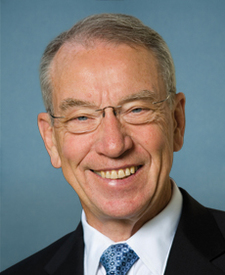
In CommitteeMr. Durbin (for himself and Mr. Grassley) introduced the following …
Read twice and referred to the Committee on the Judiciary. …
Introduced in Senate
Stakeholder Effects
cui bono?How this legislation distributes effects. Mention counts reflect frequency, not effect magnitude.
Eligible elderly and terminally ill federal and District of Columbia offenders seeking home detention
Federal courts and prison administrators processing home-detention requests
Bill Structure & Actor Mappings
Who is "The Secretary" in each section?
We use a combination of our own taxonomy and classification in addition to large language models to assess meaning and potential beneficiaries. High confidence means strong textual evidence. Always verify with the original bill text.
Learn more about our methodology