SAFER SKIES Act
Analysis under review: This bill has generated analysis that may be too generic or incomplete. Clause-level evidence remains available below.
Summary
What This Bill Does
This bill expands federal and state-local authority to detect and mitigate threatening drones, authorizes grant funding and technology lists and training for certified agencies, increases certain drone-related criminal penalties, and requires implementation rules, audits, and reporting.
Who Benefits and How
Federal, State, local, Tribal, territorial, and correctional agencies would gain broader legal authority, funding, and operational support to counter threatening drones around public gatherings, infrastructure, and detention facilities.
Who Bears the Burden and How
Drone operators near protected areas would face greater seizure and criminal risk, while DHS, DOJ, FAA, and other agencies would have to run certification, oversight, reporting, and rulemaking systems.
Key Provisions
- Expands counter-UAS authority and legal protections to certified State, local, Tribal, territorial, and correctional agencies.
- Allows specified grant funds to be used for drones and approved counter-UAS systems.
- Raises penalties for certain repeated or crime-related drone offenses.
- Requires implementation regulations, compliance audits, and reports on the expanded authority.
Evidence Chain:
This summary is generated from the full bill text using AI analysis. Expand "Detailed Analysis" below for identified beneficiaries/burden bearers.
At a Glance
What This Bill Does
This bill expands federal and state-local authority to detect and mitigate threatening drones, authorizes grant funding and technology lists and training for certified agencies, increases certain drone-related criminal penalties, and requires implementation rules, audits, and reporting.
Key Policy Areas
Criminal Justice, Homeland Security, Technology
Primary Purpose
This bill expands federal and state-local authority to detect and mitigate threatening drones, authorizes grant funding and technology lists and training for certified agencies, increases certain drone-related criminal penalties, and requires implementation rules, audits, and reporting.
Policy Domains
Main Provisions
Identified Gains
Contextual inference, no direct clause citation- Public safety and correctional agencies seeking counter-UAS tools
- Owners and operators of protected venues, infrastructure, and correctional facilities
Contextual inference, no direct clause citation
Identified Costs
Contextual inference, no direct clause citation- Drone operators who create threats near protected facilities or events
- Federal agencies administering certification and oversight
Contextual inference, no direct clause citation
Sponsors
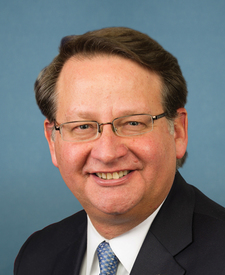
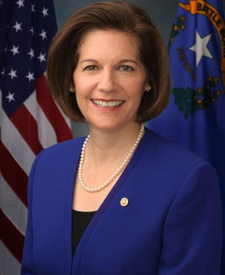
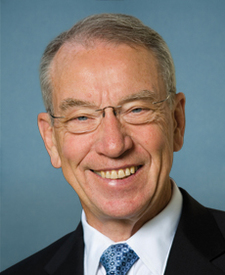
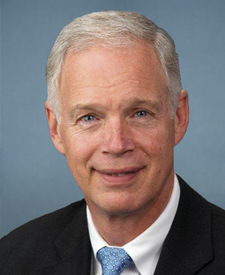
Legislative Progress
In CommitteeMr. Peters (for himself, Mr. Grassley, Mr. Johnson, and Ms. …
Read twice and referred to the Committee on Homeland Security …
Introduced in Senate
Stakeholder Effects
cui bono?How this legislation distributes effects. Mention counts reflect frequency, not effect magnitude.
Certified State, local, Tribal, territorial, and correctional agencies seeking authority to mitigate threatening drones, Public-safety agencies seeking grant support for unmanned aircraft operations
DHS, DOJ, and coordinating federal agencies writing rules and administering compliance for counter-UAS authority, DHS, DOJ, and related federal agencies administering certification, oversight, notifications, and reports
Drone operators whose aircraft create threats near protected facilities, events, infrastructure, or correctional settings
People who use drones in repeat offenses, felonies, or prison-contraband schemes
Bill Structure & Actor Mappings
Who is "The Secretary" in each section?
- "the_secretary"
- → Secretary of Homeland Security
- "the_attorney_general"
- → Attorney General
We use a combination of our own taxonomy and classification in addition to large language models to assess meaning and potential beneficiaries. High confidence means strong textual evidence. Always verify with the original bill text.
Learn more about our methodology