Mental Health in Aviation Act of 2025
Summary
What This Bill Does
The Mental Health in Aviation Act directs FAA to modernize how mental-health issues are handled for pilots and others carrying out aviation activities. It requires regulatory updates, annual review of the mental-health special-issuance process, up to $15 million per year for Office of Aerospace Medicine capacity, implementation of aviation rulemaking committee recommendations where appropriate, and up to $1.5 million per year for public information campaigns.
Who Benefits and How
Pilots benefit if FAA mental-health rules and special-issuance reviews reduce unnecessary career risk for seeking treatment. Aviation medical examiners benefit from clearer FAA guidance and a better-resourced Office of Aerospace Medicine. Air passengers benefit if mental-health rules improve safety without discouraging disclosure or treatment. Airlines benefit from a healthier pilot and aviation workforce with clearer certification standards.
Who Bears the Burden and How
FAA must update regulations, conduct annual reviews, fund medical-office capacity, implement recommendations, and run information campaigns. Office of Aerospace Medicine staff must handle added review capacity and mental-health certification work. Aviation medical examiners must apply updated mental-health guidance in certification decisions. Pilots may still need to provide documentation for special issuance or other FAA medical review.
Key Provisions
- Requires FAA to update mental-health regulations for aviation activities.
- Requires annual review of the mental-health special-issuance process.
- Provides up to $15 million per year for Office of Aerospace Medicine capacity.
- Requires implementation of mental-health aviation rulemaking committee recommendations where appropriate.
- Provides up to $1.5 million per year for public information campaigns.
Evidence Chain:
This summary is generated from the full bill text using AI analysis. Expand "Detailed Analysis" below for identified beneficiaries/burden bearers with clause-level evidence links.
At a Glance
What This Bill Does
Requires FAA mental-health regulatory updates, annual review of the special-issuance process, Office of Aerospace Medicine capacity funding, rulemaking-committee implementation, and public information campaigns for aviation workers.
Key Policy Areas
Aviation, Health Care, Transportation
Primary Purpose
Requires FAA mental-health regulatory updates, annual review of the special-issuance process, Office of Aerospace Medicine capacity funding, rulemaking-committee implementation, and public information campaigns for aviation workers.
Policy Domains
Bill provisions
Identified Gains
- Pilot employees
- Aviation medical examiner providers
- Air passenger families
- Airline safety managers
Identified Costs
- FAA
- Office of Aerospace Medicine staff
- Aviation medical examiner providers
- Pilot applicants
Sponsors




Legislative Progress
ReportedCommittee on Commerce, Science, and Transportation. Ordered to be reported …
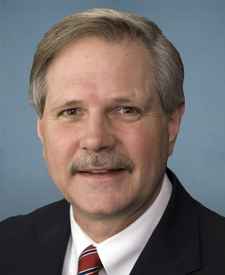
Mr. Hoeven (for himself, Ms. Duckworth, Mrs. Britt, Mr. Durbin, …
Read twice and referred to the Committee on Commerce, Science, …
Introduced in Senate
Stakeholder Effects
cui bono?How this legislation distributes effects. Mention counts reflect frequency, not effect magnitude.
Bill Structure & Actor Mappings
Who is "The Secretary" in each section?
- "administrator"
- → FAA Administrator
We use a combination of our own taxonomy and classification in addition to large language models to assess meaning and potential beneficiaries. High confidence means strong textual evidence. Always verify with the original bill text.
Learn more about our methodology