To amend title 18, United States Code, to prohibit United States persons from advancing artificial intelligence capabilities within the People’s Republic of China, and for other purposes.
Analysis under review: This bill has generated analysis that may be too generic or incomplete. Clause-level evidence remains available below.
Summary
This bill aims to completely decouple American artificial intelligence capabilities from China. It bans importing Chinese-developed AI technology into the U.S. and exporting American AI technology to China, with criminal penalties up to million for corporations and million for individuals. It makes it a federal crime for any American to conduct AI research within China, for a Chinese entity of concern, or in collaboration with Chinese nationals working for such entities. Americans are also prohibited from holding financial interests in or lending money to Chinese AI companies that support military-civil fusion, surveillance, or human rights abuses. The bill provides broad definitions of AI and creates new federal crimes in Title 18 of the U.S. Code.
Evidence Chain:
This summary is generated from the full bill text using AI analysis. Expand "Detailed Analysis" below for identified beneficiaries/burden bearers.
At a Glance
What This Bill Does
Prohibits U.S. persons from conducting AI research for or transferring AI technology to China, bans import/export of AI technology with China, and criminalizes AI collaboration with Chinese entities of concern.
Who Benefits
- U.S. national security interests
- Domestic AI companies (reduced Chinese competition)
- U.S. defense and intelligence agencies
Who Bears Costs
- U.S. technology companies with Chinese operations
- Chinese AI companies and state-owned enterprises
- U.S. researchers collaborating with Chinese institutions
Key Policy Areas
Technology, Defense, Trade
Primary Purpose
Prohibits U.S. persons from conducting AI research for or transferring AI technology to China, bans import/export of AI technology with China, and criminalizes AI collaboration with Chinese entities of concern.
Policy Domains
Legislative Strategy
"Total prohibition approach to AI technology exchange with China through criminal penalties, export controls, and investment restrictions"
Sponsors
Legislative Progress
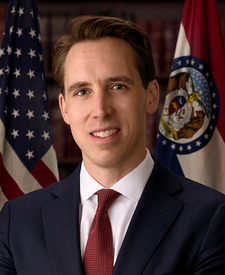
IntroducedMr. Hawley introduced the following bill; which was read twice …
Stakeholder Effects
cui bono?How this legislation distributes effects. Mention counts reflect frequency, not effect magnitude.
Chinese AI companies in military-civil fusion, Chinese AI developers and producers, Chinese AI entities
Positive-direction: Domestic AI companies without Chinese operations
Negative-direction: Chinese AI companies in military-civil fusion, Chinese AI developers and producers, Chinese AI entities, Chinese AI entities of concern, Individual AI researchers and executives, U.S. AI companies with Chinese supply chains, U.S. AI researchers and developers, U.S. corporations with Chinese AI ties, U.S. persons engaging in AI activities, U.S. technology companies
U.S. financial institutions lending to Chinese AI entities
U.S. universities with Chinese research partnerships
Bill Structure & Actor Mappings
Who is "The Secretary" in each section?
- "us_persons"
- → U.S. persons (individuals and entities subject to prohibitions)
- "the_president"
- → President (IEEPA authority for investment prohibitions)
- "secretary_of_commerce"
- → Secretary of Commerce (implementing regulations for import/export bans)
Key Definitions
Terms defined in this bill
Broad definition including automated systems for perception, cognition, planning, learning, decision-making, or interacting with humans
Entity owned/controlled by PRC government, CCP, military, or involved in military-civil fusion, surveillance, or human rights abuses
We use a combination of our own taxonomy and classification in addition to large language models to assess meaning and potential beneficiaries. High confidence means strong textual evidence. Always verify with the original bill text.
Learn more about our methodology