To prohibit the manipulation of rent prices in the United States, and for other purposes.
Analysis under review: This bill has generated analysis that may be too generic or incomplete. Clause-level evidence remains available below.
Summary
What This Bill Does
This bill outlaws algorithmic rent-fixing by prohibiting rental property owners from using coordinating services that collect rent data from multiple landlords and recommend prices, lease terms, or occupancy levels. It treats such activity as a per se violation of the Sherman Antitrust Act and the FTC Act. The bill creates enforcement authority for the FTC, DOJ, state attorneys general, and private citizens, with treble damages and attorney fee recovery for aggrieved tenants.
Who Benefits and How
- Renters and tenants gain protection from algorithmically coordinated rent increases, potentially lowering or stabilizing rents in markets where such tools are used.
- Plaintiffs (tenants and tenant associations) can bring private civil actions with treble damages, invalidate pre-dispute arbitration agreements, and recover attorney fees.
- State attorneys general gain explicit authority to enforce antitrust laws against rent coordination in their jurisdictions.
- Small independent landlords who do not use algorithmic pricing tools face no new burdens and may benefit from fairer competition.
Who Bears the Burden and How
- Property technology companies (e.g., RealPage, Yardi) that provide algorithmic rent-setting services would be forced to cease coordinating functions or face per se antitrust liability.
- Large institutional landlords and REITs that rely on coordinated pricing algorithms would lose a tool used to optimize rents and would face litigation risk for past use.
- Rental property owners who subscribe to coordinating services face direct per se antitrust liability and potential treble damage lawsuits.
Key Provisions
- Defines 'coordinating function' as collecting rental data from multiple owners and recommending prices via shared algorithms (Section 2)
- Makes it a per se Sherman Act violation for landlords to use or for anyone to offer coordinating services (Section 3)
- Creates FTC, DOJ, and state AG enforcement authority (Section 4)
- Provides private right of action with treble damages and attorney fees; invalidates pre-dispute arbitration clauses (Section 4)
- Lowers pleading standard for antitrust claims so complaints need not exclude possibility of independent action (Section 5)
- Preserves state laws that offer greater protection to tenants (Section 6)
Evidence Chain:
This summary is generated from the full bill text using AI analysis. Expand "Detailed Analysis" below for identified beneficiaries/burden bearers.
At a Glance
What This Bill Does
Prohibits algorithmic rent price coordination by making it illegal for rental property owners to use third-party services that collect pricing data from multiple landlords and recommend rental prices, treating such coordination as a per se violation of the Sherman Act and FTC Act.
Key Policy Areas
Housing, Antitrust, Consumer Protection
Primary Purpose
Prohibits algorithmic rent price coordination by making it illegal for rental property owners to use third-party services that collect pricing data from multiple landlords and recommend rental prices, treating such coordination as a per se violation of the Sherman Act and FTC Act.
Policy Domains
Prohibition on Algorithmic Rent Coordination
Identified Gains
Contextual inference, no direct clause citation- Renters and tenants
- State attorneys general
- Plaintiff attorneys
Contextual inference, no direct clause citation
Identified Costs
Contextual inference, no direct clause citation- Property technology companies
- Institutional landlords and REITs
- Rental property owners using coordination services
Contextual inference, no direct clause citation
Sponsors



Legislative Progress
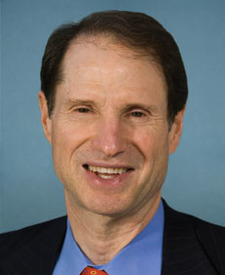
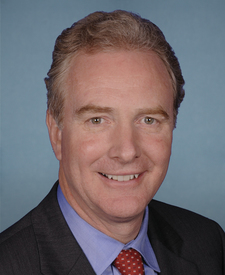
IntroducedMr. Wyden (for himself, Mr. Welch, Ms. Klobuchar, Mr. Booker, …
Stakeholder Effects
cui bono?How this legislation distributes effects. Mention counts reflect frequency, not effect magnitude.
Defendants in antitrust coordination cases, Institutional landlords and REITs, Rental property owners
State attorneys general, State legislatures and regulators
Renters and tenants, Renters in states with stronger protections
Property technology companies, Property technology companies (RealPage, Yardi)
Bill Structure & Actor Mappings
Who is "The Secretary" in each section?
- "the_commission"
- → Federal Trade Commission
- "the_attorney_general"
- → United States Attorney General
Key Definitions
Terms defined in this bill
Collecting rental prices/supply data from 2+ landlords, processing it via shared algorithms (including AI training), and recommending rental prices, lease terms, or occupancy levels to 2+ owners.
Any person performing a coordinating function for any rental property owner, including an owner performing such function for their own benefit.
Any house, apartment, accessory unit, manufactured home, or community lot used as a residence; excludes inpatient care, long-term care, and detention facilities.
Any individual, corporation, partnership, association, trust, or unincorporated organization that owns and leases/rents real property.
We use a combination of our own taxonomy and classification in addition to large language models to assess meaning and potential beneficiaries. High confidence means strong textual evidence. Always verify with the original bill text.
Learn more about our methodology