S3181-119

In Committee

REVOKE Act

119th Congress Introduced Nov 18, 2025

Analysis under review: This bill has generated analysis that may be too generic or incomplete. Clause-level evidence remains available below.

Summary

What This Bill Does

The REVOKE Act (Restricting Ex-Vetted Officials from Knowledge Exploitation Act) mandates that former Department of Defense personnel lose their security clearances if they lobby on behalf of Chinese military companies. It targets retired or separated military members and former civilian DoD employees who engage in lobbying activities for entities designated as Chinese military companies by the Treasury Department.

Who Benefits and How

U.S. national security interests benefit by reducing the risk that former defense insiders share sensitive knowledge with Chinese military-linked entities. Competing U.S. defense contractors may benefit as Chinese military companies lose access to experienced American lobbyists with security clearances. The general public benefits from stronger safeguards against potential foreign influence in defense policy.

Who Bears the Burden and How

Retired military personnel and former DoD civilian employees face new career restrictions, as they must choose between maintaining security clearances and lucrative lobbying work for Chinese firms. Lobbying firms specializing in foreign clients face reduced business opportunities. Chinese military-industrial companies lose access to well-connected American advocates who could navigate the U.S. regulatory and procurement landscape.

Key Provisions

  • Mandates revocation or suspension of security clearances for former DoD personnel lobbying for designated Chinese military companies
  • Applies to entities on both the DoD Chinese Military Company list and Treasury's Non-SDN Chinese Military-Industrial Complex Companies List
  • Includes a 180-day waiver provision if the Secretary of Defense certifies it serves national security interests

Evidence Chain:

This summary is generated from the full bill text using AI analysis. Expand "Detailed Analysis" below for identified beneficiaries/burden bearers with clause-level evidence links.

At a Glance

What This Bill Does

Requires the Secretary of Defense to revoke or suspend security clearances for former DoD personnel who engage in lobbying activities on behalf of Chinese military companies

Key Policy Areas

National Security, Defense, Foreign Relations, Lobbying Regulation

Primary Purpose

Requires the Secretary of Defense to revoke or suspend security clearances for former DoD personnel who engage in lobbying activities on behalf of Chinese military companies

Policy Domains

National Security Defense Foreign Relations Lobbying Regulation

Section 2 - Revocation of Security Clearances for Certain Persons

Identified Gains
  • U.S. national security apparatus
  • U.S. defense industry
  • Counter-espionage efforts
Model: N/A | Version: bill_summary_v2 | Source: is
U.S. defense industry:
Counter-espionage efforts:
U.S. national security apparatus:
Identified Costs
  • Former DoD employees who lobby for Chinese military companies
  • Lobbying firms representing Chinese military companies
  • Chinese military-industrial companies
Model: N/A | Version: bill_summary_v2 | Source: is
Chinese military-industrial companies:
Lobbying firms representing Chinese military companies:
Former DoD employees who lobby for Chinese military companies:

Legislative Progress

In Committee
Introduced Committee Passed
Nov 18, 2025

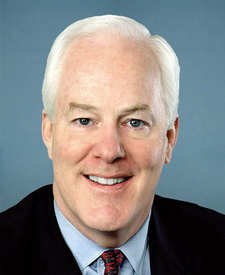
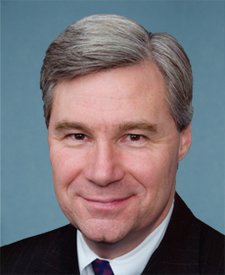
Mr. Cornyn (for himself and Mr. Whitehouse) introduced the following …

Nov 18, 2025

Read twice and referred to the Committee on Armed Services.

Nov 18, 2025

Introduced in Senate

Impact analysis is available but no clear stakeholder effects identified. View clause-level analysis →

Bill Structure & Actor Mappings

Who is "The Secretary" in each section?

Domains
National Security Defense
Actor Mappings
"the_secretary"
→ Secretary of Defense

Key Definitions

Terms defined in this bill

3 terms
"congressional defense committees" §2(d)(1)

Has the meaning given in section 101(a) of title 10, United States Code

"lobbying activities" §2(d)(2)

Has the meaning given in section 3 of the Lobbying Disclosure Act of 1995 (2 U.S.C. 1602)

"lobbying contact" §2(d)(3)

Has the meaning given in section 3 of the Lobbying Disclosure Act of 1995 (2 U.S.C. 1602), except that clause (iv) of paragraph (8)(B)(iv) of such section shall not apply

We use a combination of our own taxonomy and classification in addition to large language models to assess meaning and potential beneficiaries. High confidence means strong textual evidence. Always verify with the original bill text.

Learn more about our methodology