Tribal Warrant Fairness Act
Summary
What This Bill Does
The Tribal Warrant Fairness Act would amend the U.S. Marshals Service statute to expressly include Tribal fugitive matters, on the request of an Indian Tribe as applicable, in the Service's authority to investigate fugitive matters as directed by the Attorney General. It also adds Tribal law-enforcement agencies to those that can request assistance locating and recovering missing children. Amendments to the fugitive-task-force statute add Tribes to consultation and Tribal law enforcement to task-force participation, and preserve existing authority under Tribal law. This concerns assistance in Tribal criminal matters, not a new criminal offense or a universal requirement that every Tribal warrant be executed.
Who Benefits and How
Tribal law-enforcement agencies gain explicit access to federal fugitive and missing-child assistance and participation in regional task forces. Tribal communities and families of missing children could benefit from additional investigative coordination. The Senate-passed bill defines an Indian Tribe by the most recent Interior list under the Federally Recognized Indian Tribe List Act, including individually identified component bands and reservations even when listed parenthetically. This supplies a specific eligibility reference rather than leaving the bill's use of Indian Tribe undefined.
Who Bears the Burden and How
The Department of Justice and U.S. Marshals Service would incur investigative and coordination costs when carrying out the expanded authority and Tribal consultation within their existing structures. Participating Tribal officers would carry operational coordination responsibilities, and people sought in Tribal fugitive matters could face greater federal assistance in apprehension. The request condition and Attorney General direction remain relevant; the bill does not compel a particular response to every request, alter underlying guilt standards or grant a new general arrest power outside the amended authorities. No new appropriation, staffing quota, deadline or reporting requirement is specified.
Key Provisions
- Expands the express scope of U.S. Marshals fugitive investigations to Tribal matters on a Tribe's request as applicable, retaining Attorney General direction.
- Adds Tribal law-enforcement agencies to the missing-child assistance provision.
- Requires Tribal consultation within the task-force framework and adds Tribal law-enforcement participation to regional fugitive task forces.
- Protects existing Tribal-law authority through the task-force savings clause and uses the most recent Interior recognition list to identify covered Tribes.
Evidence Chain:
This summary is generated from the full bill text using AI analysis. Expand "Detailed Analysis" below for identified beneficiaries/burden bearers with clause-level evidence links.
At a Glance
What This Bill Does
Expressly include Tribal fugitive matters and missing-child assistance in U.S. Marshals authorities, add Tribes to regional fugitive-task-force consultation and participation, and preserve Tribal-law authority.
Key Policy Areas
Tribal law enforcement, Fugitive investigations
Primary Purpose
Expressly include Tribal fugitive matters and missing-child assistance in U.S. Marshals authorities, add Tribes to regional fugitive-task-force consultation and participation, and preserve Tribal-law authority.
Policy Domains
Tribal Warrant Fairness Act
Identified Gains
- Tribal law enforcement agencies
- Tribal communities
- Families of missing children
Identified Costs
- Department of Justice
- U.S. Marshals Service
- Persons sought in Tribal fugitive matters
Sponsors

Legislative Progress
Passed SenateHeld at the desk.
Received in the House.
Message on Senate action sent to the House.
Passed Senate with an amendment by Voice Vote. (consideration: CR …
Passed/agreed to in Senate: Passed Senate with an amendment by …
Committee on the Judiciary. Reported by Senator Grassley with an …
Placed on Senate Legislative Calendar under General Orders. Calendar No. …
Reported by Mr. Grassley, with an amendment
Committee on the Judiciary. Ordered to be reported with an …
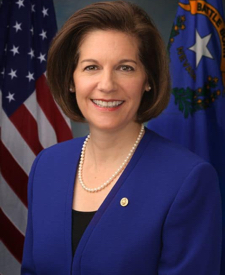
Ms. Cortez Masto (for herself and Mr. Mullin) introduced the …
Stakeholder Effects
cui bono?How this legislation distributes effects. Mention counts reflect frequency, not effect magnitude.
Department of Justice, Federally recognized Tribal law enforcement agencies, Tribal law enforcement agencies
Families of missing children, Persons sought in Tribal fugitive matters
Positive-direction: Families of missing children
Negative-direction: Persons sought in Tribal fugitive matters
Bill Structure & Actor Mappings
Who is "The Secretary" in each section?
- "tribe"
- → An individually identified Indian or Alaska Native entity on the latest Interior list specified by section 2
- "service"
- → U.S. Marshals Service
- "secretary"
- → Secretary of the Interior, solely for the referenced recognition list
- "attorney_general"
- → Attorney General of the United States
Note: {'description': 'The introduced bill already contains the operational assistance amendments. The reported substitute adds a recognition-list definition and cross-references, renumbering original section 2 as section 3. The later removal of the struck original identifier is not repeal. A missing introduced baseline has been restored to represent the original substantive authority.'}
Key Definitions
Terms defined in this bill
An Indian or Alaska Native tribe, band, nation, pueblo, village, community, component band or component reservation individually identified, including parenthetically, on Interior's most recent list under 25 U.S.C. 5131.
We use a combination of our own taxonomy and classification in addition to large language models to assess meaning and potential beneficiaries. High confidence means strong textual evidence. Always verify with the original bill text.
Learn more about our methodology