To establish a competitive grant program to support the establishment, expansion, or enhancement of youth mentoring programs for eligible youth, and to provide for social and emotional learning, employability skill development, career exploration, work-based learning, and other youth workforce opportunities.
Analysis under review: This bill has generated analysis that may be too generic or incomplete. Clause-level evidence remains available below.
Summary
What This Bill Does
This bill, To establish a competitive grant program to support the establishment, expansion, or enhancement of youth mentoring programs for eligible youth, and to provide for social and emotional learning, employability skill development, career exploration, work-based learning, and other youth workforce opportunities., changes federal law or congressional policy affecting federal agencies and legislative administrators. The main policy domain is Government Operations, Labor, Education.
Who Benefits and How
federal agencies and legislative administrators may benefit from new authority, funding, eligibility, regulatory clarity, or reduced risk created by the bill.
Who Bears the Burden and How
federal implementing agencies may take on implementation duties, reporting obligations, compliance costs, or oversight responsibilities.
Key Provisions
- Section S1: 1. Short title This Act may be cited as the Mentoring to Succeed Act of 2025.
- Section id712794905abd4d4d87bcb0e21ae2526f: 2. Youth mentoring programs Subtitle D of title I of the Workforce Innovation and Opportunity Act (29 U.S.C. 3221 et seq.) is amended— by redesignating section...
- Section id391cbbf10c404025ac303a334f92e5b9: 172. Youth mentoring programs The purpose of this section is to make assistance available for mentoring programs for eligible youth, in order to— establish,...
- Section id9a7377e5dae54168ae2d026121bb6cbc: 3. Study on mentoring programs The Secretary of Labor, acting through the Chief Evaluation Officer of the Department of Labor, shall conduct a study to—...
Evidence Chain:
This summary is generated from the full bill text using AI analysis. Expand "Detailed Analysis" below for identified beneficiaries/burden bearers with clause-level evidence links.
At a Glance
What This Bill Does
This bill, To establish a competitive grant program to support the establishment, expansion, or enhancement of youth mentoring programs for eligible youth, and to provide for social and emotional learning, employability skill development, career exploration, work-based learning, and other youth workforce opportunities., changes federal law or congressional policy affecting federal agencies and legislative administrators.
Key Policy Areas
Government Operations, Labor, Education
Primary Purpose
This bill, To establish a competitive grant program to support the establishment, expansion, or enhancement of youth mentoring programs for eligible youth, and to provide for social and emotional learning, employability skill development, career exploration, work-based learning, and other youth workforce opportunities., changes federal law or congressional policy affecting federal agencies and legislative administrators.
Policy Domains
Whole bill
Identified Gains
- federal agencies and legislative administrators
Identified Costs
- federal implementing agencies
Sponsors

Legislative Progress
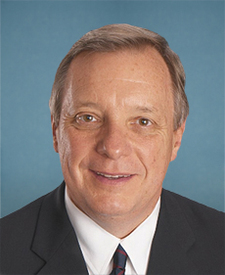
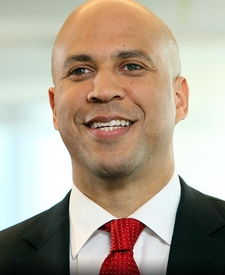
IntroducedMr. Durbin (for himself, Ms. Duckworth, and Mr. Booker) introduced …
Impact analysis is available but no clear stakeholder effects identified. View clause-level analysis →
Bill Structure & Actor Mappings
Who is "The Secretary" in each section?
- "the_administrator"
- → The Administrator identified in the operative section
- "secretary_of_labor"
- → Secretary of Labor
- "secretary_of_education"
- → Secretary of Education
Key Definitions
Terms defined in this bill
a structured, managed activity— in which eligible youth are appropriately matched with screened and trained adult or peer volunteer mentors for consistent relationships
a structured, managed activity—(A)in which eligible youth are appropriately matched with screened and trained adult or peer volunteer mentors for consistent relationships
We use a combination of our own taxonomy and classification in addition to large language models to assess meaning and potential beneficiaries. High confidence means strong textual evidence. Always verify with the original bill text.
Learn more about our methodology