To require the Administrator of the Small Business Administration to relocate 30 percent of the employees assigned to headquarters to duty stations outside the Washington metropolitan area, and for other purposes.
Summary
What This Bill Does
The bill, reported as the Returning SBA to Main Street Act, forces a decentralization of the Small Business Administration. Within one year, the SBA Administrator must move at least 30 percent of headquarters employees to duty stations outside the Washington metropolitan area if implementation determinations are satisfied, shrink headquarters office space by at least 30 percent, explain the plan and costs in budget justification materials, preserve severability, supersede conflicting law and collective bargaining agreements, and prevent private lawsuits challenging relocation choices.
Who Benefits and How
Small business owners outside Washington benefit if more SBA headquarters personnel are placed closer to regional business communities. SBA field offices benefit from a larger federal workforce presence outside headquarters. Communities receiving relocated SBA duty stations benefit from federal jobs and local spending. Congressional small business committees benefit from budget materials explaining relocation costs, office-space reductions, and implementation progress.
Who Bears the Burden and How
The SBA Administrator must execute relocation, office-space reduction, budget reporting, and labor-agreement supersession duties. SBA headquarters employees may have duty stations changed outside the Washington metropolitan area. SBA headquarters landlords face reduced demand because headquarters office space must shrink by at least 30 percent. Federal employee unions lose leverage where the Act supersedes conflicting collective bargaining or master labor agreement provisions.
Key Provisions
- Requires relocation of at least 30 percent of SBA headquarters employees outside the Washington metropolitan area.
- Requires reduction of SBA headquarters office space by at least 30 percent.
- Requires budget justification materials to include relocation costs, office-space savings, and implementation information.
- Provides severability if part of the Act is held unconstitutional.
- Supersedes conflicting law and collective bargaining agreement provisions.
- Bars private causes of action challenging relocation or duty-station decisions.
Evidence Chain:
This summary is generated from the full bill text using AI analysis. Expand "Detailed Analysis" below for identified beneficiaries/burden bearers with clause-level evidence links.
At a Glance
What This Bill Does
Requires SBA to move at least 30 percent of headquarters employees outside the Washington metropolitan area, reduce headquarters office space by at least 30 percent, report the plan in budget materials, supersede conflicting labor agreements, and bar private lawsuits over relocation decisions.
Key Policy Areas
Small Business, Government Operations, Federal Workforce
Primary Purpose
Requires SBA to move at least 30 percent of headquarters employees outside the Washington metropolitan area, reduce headquarters office space by at least 30 percent, report the plan in budget materials, supersede conflicting labor agreements, and bar private lawsuits over relocation decisions.
Policy Domains
Bill provisions
Identified Gains
- Small business owners outside Washington
- SBA field offices
- Communities receiving relocated SBA duty stations
- Congressional small business committees
Identified Costs
- SBA Administrator
- SBA headquarters employees
- SBA headquarters landlords
- Federal employee unions
Sponsors


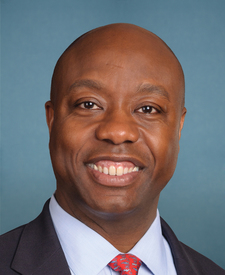
Legislative Progress
ReportedReported by Ms. Ernst, with an amendment
Ms. Ernst (for herself, Mrs. Blackburn, and Mr. Scott of …
Stakeholder Effects
cui bono?How this legislation distributes effects. Mention counts reflect frequency, not effect magnitude.
Congressional small business committees, SBA Administrator, SBA field offices
Positive-direction: Congressional small business committees, SBA field offices
Negative-direction: SBA Administrator
Communities receiving relocated SBA duty stations
Bill Structure & Actor Mappings
Who is "The Secretary" in each section?
- "administrator"
- → Small Business Administration Administrator
We use a combination of our own taxonomy and classification in addition to large language models to assess meaning and potential beneficiaries. High confidence means strong textual evidence. Always verify with the original bill text.
Learn more about our methodology