To require congressional redistricting conducted by a State to be conducted in accordance with a redistricting plan developed and enacted into law by an independent redistricting commission established by the State, and for other purposes.
Analysis under review: This bill has generated analysis that may be too generic or incomplete. Clause-level evidence remains available below.
Summary
What This Bill Does
This bill fundamentally reforms how congressional district lines are drawn in the United States. Instead of allowing state legislatures (often controlled by one party) to draw district maps, it requires every state to establish a 15-member independent redistricting commission with balanced partisan representation. The commissions must follow strict criteria that ban gerrymandering and require public transparency. If a state fails to adopt a plan, federal courts take over.
Who Benefits and How
Voters and democracy advocates benefit from reduced partisan manipulation of district boundaries and increased public participation in the redistricting process. Minority communities gain stronger protections through requirements to create coalition districts and consider communities of interest. Underrepresented political parties in each state benefit from bans on maps that favor the dominant party.
Who Bears the Burden and How
State legislatures lose direct control over congressional redistricting, transferring that power to independent commissions. Incumbent politicians who benefited from partisan gerrymandering may face less favorable district lines. States must fund and administer new redistricting commissions, though federal payments of $150,000 per congressional seat are provided to offset costs.
Key Provisions
- Creates 15-member independent redistricting commissions in each state with balanced partisan membership
- Bans redistricting plans that materially favor any political party (anti-gerrymandering)
- Requires public hearings, transparency, and consideration of communities of interest
- Empowers federal 3-judge courts to draw maps if states fail to adopt compliant plans
- Provides expedited federal court review for redistricting challenges
Evidence Chain:
This summary is generated from the full bill text using AI analysis. Expand "Detailed Analysis" below for identified beneficiaries/burden bearers.
At a Glance
What This Bill Does
Requires states to conduct congressional redistricting through independent, nonpartisan commissions rather than partisan state legislatures, with federal court backup if states fail to adopt a plan
Key Policy Areas
Elections, Voting Rights, Government Reform, Civil Rights
Primary Purpose
Requires states to conduct congressional redistricting through independent, nonpartisan commissions rather than partisan state legislatures, with federal court backup if states fail to adopt a plan
Policy Domains
Title I - Congressional Redistricting Requirements
Identified Gains
Contextual inference, no direct clause citation- Voters seeking fair representation
- Minority communities
- Underrepresented political parties
- Democracy reform advocates
Contextual inference, no direct clause citation
Identified Costs
Contextual inference, no direct clause citation- State legislatures
- Incumbent politicians benefiting from gerrymandering
- Dominant state political parties
Contextual inference, no direct clause citation
Title II - Independent Redistricting Commissions
Identified Gains
Contextual inference, no direct clause citation- Citizens seeking commission membership
- Public interest groups
- Voters in previously gerrymandered districts
Contextual inference, no direct clause citation
Identified Costs
Contextual inference, no direct clause citation- Political insiders and lobbyists
- Government contractors
- Major political donors
Contextual inference, no direct clause citation
Title IV - Administrative and Miscellaneous Provisions
Identified Gains
Contextual inference, no direct clause citation- States implementing new commissions
- Citizens challenging gerrymandering
- Voting rights litigants
Contextual inference, no direct clause citation
Identified Costs
Contextual inference, no direct clause citation- Federal government (funding)
- States with noncompliant redistricting
Contextual inference, no direct clause citation
Title III - Judicial Enforcement of Redistricting Requirements
Identified Gains
Contextual inference, no direct clause citation- Voters in states with dysfunctional redistricting processes
- Voting rights plaintiffs
Contextual inference, no direct clause citation
Identified Costs
Contextual inference, no direct clause citation- States resisting redistricting reform
- Federal courts (increased workload)
Contextual inference, no direct clause citation
Sponsors
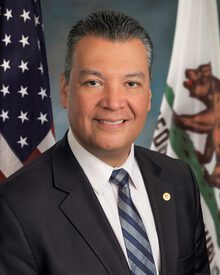

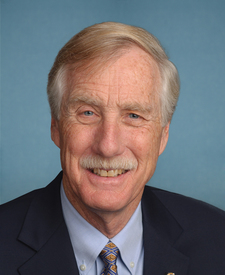

Legislative Progress
IntroducedMr. Padilla (for himself, Mr. Warnock, Mr. King, and Mr. …
Stakeholder Effects
cui bono?How this legislation distributes effects. Mention counts reflect frequency, not effect magnitude.
Single-representative states (Alaska, Delaware, North Dakota, South Dakota, Vermont, Wyoming), State election officials, State governments conducting congressional redistricting
Positive-direction: State election officials, State governments implementing redistricting reform, State legislatures (for state/local redistricting), States with existing compliant independent redistricting commissions
Negative-direction: Single-representative states (Alaska, Delaware, North Dakota, South Dakota, Vermont, Wyoming), State governments conducting congressional redistricting, State legislative leadership, State legislative service agencies, State legislatures, State nonpartisan agencies, State redistricting commissions, States under court-ordered redistricting, States with discriminatory redistricting plans
Clerk of the House of Representatives, Congress (oversight function), Department of Justice
Positive-direction: Congress (oversight function)
Negative-direction: Department of Justice, Election Assistance Commission, Federal courts (3-judge panels, DC Circuit), Federal district courts, Government Accountability Office
Citizens in gerrymandered districts, Citizens seeking to serve on redistricting commissions, Limited English proficiency voters
Current and former elected officials, Dominant state political parties, Incumbent politicians benefiting from gerrymandering
Positive-direction: Independent and third-party voters, Underrepresented political parties
Negative-direction: Current and former elected officials, Dominant state political parties, Incumbent politicians benefiting from gerrymandering, Political parties seeking mid-decade gerrymanders
Civic engagement organizations, Racial and ethnic minority communities, Voting rights plaintiffs
Bill Structure & Actor Mappings
Who is "The Secretary" in each section?
- "the_state"
- → Each state government
- "the_commission"
- → Independent redistricting commission (15 members)
- "the_select_committee"
- → Select Committee on Redistricting
- "the_nonpartisan_agency"
- → State nonpartisan agency in the legislative branch
- "the_court"
- → United States district court (3-judge panel)
- "the_commission_eac"
- → Election Assistance Commission
- "the_attorney_general"
- → United States Attorney General
Note: The term 'commission' refers to the independent redistricting commission in most contexts but to the Election Assistance Commission in Section 401
Key Definitions
Terms defined in this bill
The notice sent to a state from the Clerk of the House of Representatives regarding the number of Representatives to which the state is entitled
A state redistricting commission that was already in effect prior to this Act and meets specified requirements including open applications, conflict-of-interest screening, balanced partisan membership, community-of-interest requirements, public hearings, and bipartisan approval
An area with broadly shared interests and representational needs, including shared ethnic, racial, economic, Indian, social, cultural, geographic, or historic identities, or similar socioeconomic conditions. May include political subdivisions but shall not include common relationships with political parties
Persons ineligible to serve on commission including public officials, candidates, party officers, lobbyists, government contractors, significant political donors, and their immediate family members during covered periods
We use a combination of our own taxonomy and classification in addition to large language models to assess meaning and potential beneficiaries. High confidence means strong textual evidence. Always verify with the original bill text.
Learn more about our methodology