American Tech Workforce Act of 2025
Analysis under review: This bill has generated analysis that may be too generic or incomplete. Clause-level evidence remains available below.
Summary
What This Bill Does
The American Tech Workforce Act of 2025 makes major restrictions to the H-1B visa program and eliminates the Optional Practical Training (OPT) program. It terminates OPT, which allowed international students on F-1 visas to work in the U.S. for up to 3 years after completing STEM degrees, and prohibits any employment authorization for F-1 visa holders after completing their studies. For H-1B visas, it sets a minimum annual wage of $150,000 (indexed to CPI), requires that wages match or exceed what was paid to U.S. workers in similar roles over the prior 2 years, limits visa validity to 1 year for third-party worksite assignments, requires that third-party worksite assignments be specific and nonspeculative, and prioritizes H-1B petitions by compensation level rather than filing order.
Who Benefits and How
- U.S. domestic workers in tech and STEM fields: Reduced competition from lower-wage foreign workers; employers must now pay at least $150,000 for H-1B roles, making it costlier to substitute foreign for domestic labor.
- U.S. workers generally: Elimination of OPT removes a category of workers who could be hired without employer payroll tax obligations, removing a cost advantage for hiring foreign students.
- Domestic STEM graduates: With OPT eliminated, employers have fewer alternatives to hiring U.S. graduates.
Who Bears the Burden and How
- Big Tech companies (Amazon, Meta, Google, Microsoft, Apple): Explicitly targeted in the findings; face dramatically higher costs for H-1B workers and loss of OPT pipeline.
- IT outsourcing and staffing firms: Third-party worksite restrictions and 1-year visa limits severely constrain their business model.
- International students in the U.S.: Lose post-graduation work authorization entirely; OPT applications in progress will be denied.
- Foreign skilled workers: The $150,000 minimum wage floor prices out many specialty occupation positions.
- Universities and STEM programs: May see reduced international student enrollment as the U.S. becomes less attractive without post-graduation work options.
- Startups and small tech companies: The $150,000 floor may be disproportionately burdensome compared to large firms.
Key Provisions
- Terminates the Optional Practical Training (OPT) program for F-1 visa holders (Section 3)
- Prohibits any employment authorization for F-1 visa holders after completing studies (Section 3)
- Pending OPT applications are denied and fees refunded (Section 3)
- Sets H-1B minimum annual wage at $150,000, indexed to CPI (Section 4)
- H-1B wage must also match or exceed wages paid to U.S. workers in similar roles over prior 2 years (Section 4)
- Limits H-1B visa to 1 year for third-party worksite assignments (Section 4)
- Third-party worksite assignments must be specific and nonspeculative for the entire work period (Section 4)
- H-1B petitions prioritized by compensation level, not filing order (Section 4)
- Rule of construction prevents agencies from granting unauthorized work permits (Section 5)
Evidence Chain:
This summary is generated from the full bill text using AI analysis. Expand "Detailed Analysis" below for identified beneficiaries/burden bearers.
At a Glance
What This Bill Does
Restricts the H-1B visa program by imposing a $150,000 minimum wage floor, terminates the Optional Practical Training (OPT) program for F-1 student visa holders, limits third-party worksite placements, and prioritizes H-1B petitions by compensation level.
Key Policy Areas
Immigration, Labor, Technology
Primary Purpose
Restricts the H-1B visa program by imposing a $150,000 minimum wage floor, terminates the Optional Practical Training (OPT) program for F-1 student visa holders, limits third-party worksite placements, and prioritizes H-1B petitions by compensation level.
Policy Domains
Section 4 - H-1B Visa Reform
Identified Gains
Contextual inference, no direct clause citation- U.S. domestic tech workers
- U.S. workers in specialty occupations
Contextual inference, no direct clause citation
Identified Costs
Contextual inference, no direct clause citation- Big Tech companies
- IT outsourcing and staffing firms
- Foreign skilled workers
- Startups and small tech companies
Contextual inference, no direct clause citation
Section 3 - Termination of OPT Program
Identified Gains
Contextual inference, no direct clause citation- U.S. domestic workers in STEM fields
- Recent U.S. STEM graduates
Contextual inference, no direct clause citation
Identified Costs
Contextual inference, no direct clause citation- International students on F-1 visas
- Big Tech companies
- Universities with international STEM programs
Contextual inference, no direct clause citation
Section 5 - Rule of Construction
Identified Gains
Contextual inference, no direct clause citation- Congress (preserves legislative authority)
Contextual inference, no direct clause citation
Identified Costs
Contextual inference, no direct clause citation- Federal agencies (limited discretion)
Contextual inference, no direct clause citation
Sponsors


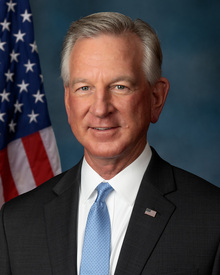
Legislative Progress
In CommitteeMr. Banks introduced the following bill; which was read twice …
Read twice and referred to the Committee on the Judiciary.
Introduced in Senate
Stakeholder Effects
cui bono?How this legislation distributes effects. Mention counts reflect frequency, not effect magnitude.
Big Tech companies, Big Tech companies (Amazon, Meta, Google, Microsoft, Apple), Highly compensated foreign specialists
Positive-direction: Highly compensated foreign specialists, U.S. domestic tech workers
Negative-direction: Big Tech companies, Big Tech companies (Amazon, Meta, Google, Microsoft, Apple), IT outsourcing and staffing firms, Startups and small tech companies, U.S. employers using OPT workers
Foreign skilled workers seeking H-1B visas, U.S. domestic STEM graduates, U.S. domestic workers
Positive-direction: U.S. domestic STEM graduates, U.S. domestic workers
Negative-direction: Foreign skilled workers seeking H-1B visas
International students on F-1 visas, U.S. universities with international programs
Congress, Federal agencies (USCIS, DHS)
Positive-direction: Congress
Negative-direction: Federal agencies (USCIS, DHS)
Bill Structure & Actor Mappings
Who is "The Secretary" in each section?
We use a combination of our own taxonomy and classification in addition to large language models to assess meaning and potential beneficiaries. High confidence means strong textual evidence. Always verify with the original bill text.
Learn more about our methodology