To expand the opportunities of recent graduates for employment in Executive agencies, and for other purposes.
Analysis under review: This bill has generated analysis that may be too generic or incomplete. Clause-level evidence remains available below.
Summary
What This Bill Does
This bill aims to strengthen the pipeline of talented individuals into federal government careers. It creates partnerships between the Office of Personnel Management (OPM) and colleges/universities to recruit students, and significantly expands and reforms the Presidential Management Fellows (PMF) Program to double its size and improve fellowship development.
Who Benefits and How
Students at universities (especially minority-serving institutions, community colleges, and land-grant universities) benefit from new career advising, professional development workshops, and job placement assistance. Recent graduate school graduates gain expanded opportunities through the doubled PMF Program, with clearer pathways to permanent federal positions. Federal agencies benefit from a larger pool of trained, qualified candidates.
Who Bears the Burden and How
Federal agencies must allocate resources to implement partnerships, fund rotational assignments, provide 80+ hours of annual training per Fellow, and pay placement fees. The Office of Personnel Management faces increased administrative responsibilities coordinating expanded programs. Taxpayers fund the expanded fellowship positions and training programs.
Key Provisions
- Creates OPM-university partnerships to recruit students into federal careers with career counseling and professional development
- Doubles the number of Presidential Management Fellows positions through fiscal year 2031
- Requires agencies to provide Fellows with 80 hours of formal training annually, mentors, and developmental rotations
- Establishes or continues 26 Federal Executive Boards in major metropolitan areas to coordinate field operations
Evidence Chain:
This summary is generated from the full bill text using AI analysis. Expand "Detailed Analysis" below for identified beneficiaries/burden bearers.
At a Glance
What This Bill Does
Expands federal workforce recruitment by creating educational institution partnerships and reforming the Presidential Management Fellows Program to attract more talent to government service
Key Policy Areas
Federal Workforce, Education, Government Administration
Primary Purpose
Expands federal workforce recruitment by creating educational institution partnerships and reforming the Presidential Management Fellows Program to attract more talent to government service
Policy Domains
Title I - Expanding Opportunities for Employment
Identified Gains
Contextual inference, no direct clause citation- University students
- Minority-serving institutions
- Community college students
- Land-grant university students
- Federal agencies seeking qualified candidates
Contextual inference, no direct clause citation
Identified Costs
Contextual inference, no direct clause citation- Office of Personnel Management
- Federal agencies implementing partnerships
Contextual inference, no direct clause citation
Title II - TALENTS Act (Presidential Management Fellows Program)
Identified Gains
Contextual inference, no direct clause citation- Graduate school students and recent graduates
- Federal agencies needing leadership talent
- Fellows receiving structured development
Contextual inference, no direct clause citation
Identified Costs
Contextual inference, no direct clause citation- Federal agencies funding fellowships
- Office of Personnel Management administering expanded program
- Taxpayers
Contextual inference, no direct clause citation
Sponsors
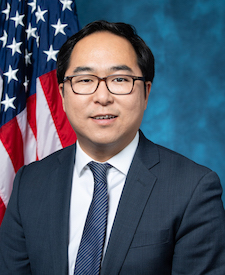
Legislative Progress
IntroducedMr. Kim introduced the following bill; which was read twice …
Stakeholder Effects
cui bono?How this legislation distributes effects. Mention counts reflect frequency, not effect magnitude.
Federal agencies, Federal agencies employing Fellows, Federal agencies seeking leadership talent
Positive-direction: Federal agencies seeking leadership talent, Federal agencies seeking permanent employees, Presidential Management Fellows, Presidential Management Fellows completing program
Negative-direction: Federal agencies, Federal agencies employing Fellows, Federal agencies with field operations, Federal executive agencies, Government Publishing Office, Office of Personnel Management
Community colleges and junior colleges, Graduate students currently enrolled, Graduate students with advanced degrees
Professional development and training providers
Bill Structure & Actor Mappings
Who is "The Secretary" in each section?
- "the_director"
- → Director of the Office of Personnel Management
- "agency"
- → Executive agency under 5 U.S.C. 105, plus Government Publishing Office
- "the_director"
- → Director of the Office of Personnel Management
Key Definitions
Terms defined in this bill
An individual appointed to serve as a Fellow under the Presidential Management Fellows Program
Executive agency as defined in 5 U.S.C. 105, plus the Government Publishing Office
As defined in section 1404 of the National Agricultural Research, Extension, and Teaching Policy Act of 1977 (7 U.S.C. 3103)
As defined in 5 CFR 362.102; Director may determine whether a masters certificate qualifies
An institution described in section 371(a) of the Higher Education Act of 1965 (20 U.S.C. 1067q(a))
We use a combination of our own taxonomy and classification in addition to large language models to assess meaning and potential beneficiaries. High confidence means strong textual evidence. Always verify with the original bill text.
Learn more about our methodology