FAIR Act of 2025
Summary
What This Bill Does
The bill requires comprehensive reform of federal civil asset forfeiture procedures: raises burden of proof from preponderance to clear and convincing evidence, abolishes nonjudicial forfeiture, requires judicial process for all, provides redirects proceeds from forfeited property away from law enforcement agencies to the General Fund of the Treasury, and provides removes deposit categories from the Department of Justice Assets Forfeiture Fund by striking subparagraphs (A) and (B) of Section 524(c)(4) of title 28, reducing the types of funds that flow into the DOJ. It relies on compliance mandates, definition changes, appropriations, and liability protections. The main policy areas are Criminal Justice, Civil Rights, and Finance.
Who Benefits and How
Property owners subject to civil forfeiture could face reduced risk, Small business owners and individuals making cash transactions could face reduced risk, and General Fund of the Treasury could gain revenue opportunities.
Who Bears the Burden and How
Federal law enforcement agencies could lose revenue opportunities, Department of Justice would take on compliance duties, and Federal courts would take on compliance duties.
Key Provisions
- Requires comprehensive reform of federal civil asset forfeiture procedures: raises burden of proof from preponderance to clear and convincing evidence, abolishes nonjudicial forfeiture, requires judicial process for all...
- Provides redirects proceeds from forfeited property away from law enforcement agencies to the General Fund of the Treasury.
- Provides removes deposit categories from the Department of Justice Assets Forfeiture Fund by striking subparagraphs (A) and (B) of Section 524(c)(4) of title 28, reducing the types of funds that flow into the DOJ...
- Requires raises the mens rea standard for currency structuring violations by adding a knowingly requirement and limiting seizures to funds not derived from a legitimate source.
- Requires the Department of Justice to separately identify and report funds obtained from criminal forfeitures versus civil forfeitures in its annual reports to Congress, increasing transparency and accountability.
Evidence Chain:
This summary is generated from the full bill text using AI analysis. Expand "Detailed Analysis" below for identified beneficiaries/burden bearers with clause-level evidence links.
At a Glance
What This Bill Does
The bill requires comprehensive reform of federal civil asset forfeiture procedures: raises burden of proof from preponderance to clear and convincing evidence, abolishes nonjudicial forfeiture, requires judicial process for all, provides redirects proceeds from forfeited property away from law enforcement agencies to the General Fund of the Treasury, and provides removes deposit categories from the Department of Justice Assets Forfeiture Fund by striking subparagraphs (A) and (B) of Section 524(c)(4) of title 28, reducing the types of funds that flow into the DOJ.
Key Policy Areas
Criminal Justice, Civil Rights, Finance
Primary Purpose
The bill requires comprehensive reform of federal civil asset forfeiture procedures: raises burden of proof from preponderance to clear and convincing evidence, abolishes nonjudicial forfeiture, requires judicial process for all, provides redirects proceeds from forfeited property away from law enforcement agencies to the General Fund of the Treasury, and provides removes deposit categories from the Department of Justice Assets Forfeiture Fund by striking subparagraphs (A) and (B) of Section 524(c)(4) of title 28, reducing the types of funds that flow into the DOJ.
Policy Domains
Whole bill
Identified Gains
- Property owners subject to civil forfeiture
- Small business owners and individuals making cash transactions
- General Fund of the Treasury
- Congressional oversight committees
- Criminal defense attorneys
Identified Costs
- Federal law enforcement agencies
- Department of Justice
- Federal courts
- State and local law enforcement
Sponsors

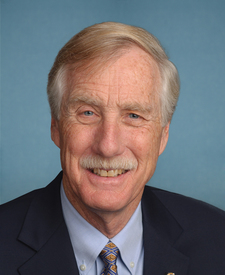
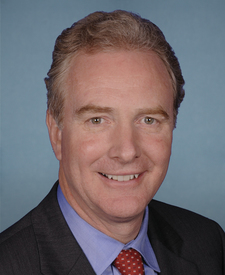
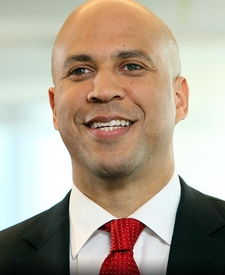
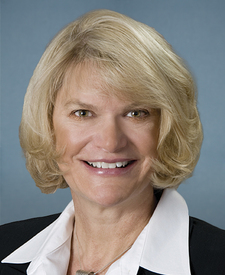
Legislative Progress
In CommitteeMr. Paul (for himself, Mr. Booker, Mr. Lee, Mr. King, …
Read twice and referred to the Committee on the Judiciary.
Introduced in Senate
Stakeholder Effects
cui bono?How this legislation distributes effects. Mention counts reflect frequency, not effect magnitude.
Congressional oversight committees, Department of Justice, Federal courts
Positive-direction: Congressional oversight committees, General Fund of the Treasury
Negative-direction: Department of Justice, Federal courts
Federal law enforcement agencies, State and local law enforcement
Civil liberties organizations, Property owners subject to civil forfeiture
Bill Structure & Actor Mappings
Who is "The Secretary" in each section?
We use a combination of our own taxonomy and classification in addition to large language models to assess meaning and potential beneficiaries. High confidence means strong textual evidence. Always verify with the original bill text.
Learn more about our methodology