To establish protections for warehouse workers, and for other purposes.
Analysis under review: This bill has generated analysis that may be too generic or incomplete. Clause-level evidence remains available below.
Summary
What This Bill Does
The Warehouse Worker Protection Act regulates the quota systems used by large warehouse and distribution center employers (like Amazon fulfillment centers). It requires employers to disclose quota requirements in writing, limits quotas that prevent bathroom breaks or violate safety laws, and mandates paid rest breaks every 4 hours.
Who Benefits and How
Warehouse workers benefit from mandatory disclosure of performance quotas, guaranteed 15-minute paid rest breaks every 4 hours, and protection from retaliation when filing complaints. Labor unions gain rights to accompany government inspectors and represent workers in enforcement actions. Workers also gain the right to sue employers in class actions without forced arbitration.
Who Bears the Burden and How
Large warehouse operators (200+ employees) face new compliance requirements including written quota disclosures, data retention for 3+ years, posting notices, and providing rest breaks. They face civil penalties up to $76,987 per violation (or $769,870 for repeat/willful violations). They must also comply with new OSHA ergonomic standards within 4 years.
Key Provisions
- Employers must provide written descriptions of quotas and how worker performance is monitored
- Quotas cannot prevent bathroom breaks, meal periods, or exercise of labor rights
- Mandatory 15-minute paid rest break every 4 hours
- Workers can sue in class actions; predispute arbitration agreements are unenforceable
- New OSHA standards for ergonomics and medical treatment referrals at warehouses
Evidence Chain:
This summary is generated from the full bill text using AI analysis. Expand "Detailed Analysis" below for identified beneficiaries/burden bearers with clause-level evidence links.
At a Glance
What This Bill Does
Establishes comprehensive protections for warehouse workers by regulating quota-based performance systems, requiring transparency in workplace surveillance, mandating rest breaks, and creating new OSHA ergonomic standards.
Key Policy Areas
Labor, Workplace Safety, Worker Rights
Primary Purpose
Establishes comprehensive protections for warehouse workers by regulating quota-based performance systems, requiring transparency in workplace surveillance, mandating rest breaks, and creating new OSHA ergonomic standards.
Policy Domains
Title I - Warehouse Worker Protections
Identified Gains
- Warehouse workers
- Labor unions
- Worker advocacy organizations
Identified Costs
- Large warehouse operators
- E-commerce fulfillment centers
- Logistics companies
Title II - Amendments to National Labor Relations Act
Identified Gains
- Workers seeking to organize
- Labor unions
Identified Costs
- Employers using quotas to discourage organizing
Title IV - General Provisions
Identified Gains
- States with stronger worker protection laws
Title III - OSHA Standards
Identified Gains
- Warehouse workers
- Occupational health professionals
Identified Costs
- Warehouse employers
Sponsors
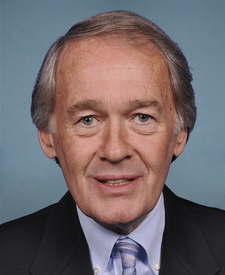
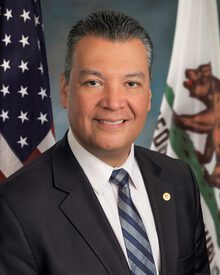



Legislative Progress
IntroducedMr. Markey (for himself, Mr. Hawley, Mr. Marshall, Mr. Sanders, …
Stakeholder Effects
cui bono?How this legislation distributes effects. Mention counts reflect frequency, not effect magnitude.
Employers contesting serious OSHA violations, Employers using quotas in unionizing workplaces, Large warehouse and distribution center operators
Positive-direction: Warehouse workers, Warehouse workers at risk of musculoskeletal injuries, Warehouse workers subject to quotas, Workers affected by quota-based retaliation, Workers at facilities with serious safety violations
Negative-direction: Employers contesting serious OSHA violations, Employers using quotas in unionizing workplaces, Large warehouse and distribution center operators, Large warehouse and distribution center operators with 200+ employees, Large warehouse operators with high injury rates, Warehouse employers
Department of Labor, Department of Labor enforcement agencies, Federal Trade Commission
Department of Labor faces effects in multiple directions
Labor organizations, Labor organizations and worker advocacy groups, Labor unions
Ergonomics consultants and equipment manufacturers, Worker protection experts and civil rights experts
Occupational health providers, Occupational medicine physicians
Courier and express delivery services
Temporary staffing agencies serving warehouses
Bill Structure & Actor Mappings
Who is "The Secretary" in each section?
- "the_director"
- → Director of the Fairness and Transparency Office
- "the_secretary"
- → Secretary of Labor
- "the_commission"
- → Federal Trade Commission
- "the_board"
- → National Labor Relations Board
- "the_secretary"
- → Secretary of Labor
Note: 'The Secretary' refers to Secretary of Labor throughout Titles I and III, but enforcement in Section 105 is handled by the Federal Trade Commission
Key Definitions
Terms defined in this bill
An express or implied performance standard requiring employees to perform a quantified number of tasks, achieve a specified productivity speed, or handle/produce a quantified amount within a defined time period (one day or less)
An employee who works at a covered facility and is subject to a quota while performing work
An employer engaged in commerce that employs workers at covered facilities and has more than 200 total employees across all covered facilities
Any warehouse distribution center under NAICS codes 493 (warehousing/storage), 423/424 (merchant wholesalers), 454110 (electronic shopping/mail-order), or 492110 (couriers/express delivery)
Information collected relating to employee performance on quotas, including task quantities, rates/speeds, performance metrics, and time categorization
Any employer surveillance (on- or off-duty) including monitoring, interception, collection of data concerning employee activities through devices like computers, phones, cameras, sensors, or wearable devices
We use a combination of our own taxonomy and classification in addition to large language models to assess meaning and potential beneficiaries. High confidence means strong textual evidence. Always verify with the original bill text.
Learn more about our methodology