CRP Improvement and Flexibility Act of 2025
Analysis under review: This bill has generated analysis that may be too generic or incomplete. Clause-level evidence remains available below.
Summary
What This Bill Does
The CRP Improvement and Flexibility Act of 2025 makes it easier for farmers and ranchers to use their Conservation Reserve Program (CRP) land during emergencies while still protecting wildlife. It expands when and how landowners can hay or graze their CRP-enrolled acres during droughts and natural disasters, increases federal cost-sharing for building grazing infrastructure, and more than doubles the payment limit farmers can receive.
Who Benefits and How
Farmers and ranchers with CRP contracts benefit significantly. They gain new flexibility to hay their land during severe droughts (D2 or worse) or when forage production drops 40% or more, helping them feed livestock during emergencies. They can also receive federal cost-sharing for installing fencing, water wells, pipelines, and tanks on their CRP land.
Livestock producers benefit from expanded emergency grazing access, allowing them to sustain their herds during feed shortages caused by drought, wildfire, or flooding.
Individual landowners see their maximum annual payment limit increase from ,000 to ,000, making CRP participation more financially attractive for larger operations.
Who Bears the Burden and How
Federal taxpayers will pay for increased cost-sharing on grazing infrastructure and higher per-person payment limits, expanding the program's overall cost.
USDA and the Farm Service Agency face additional administrative responsibilities managing the new emergency provisions, coordinating with State technical committees, and tracking infrastructure cost-sharing.
Wildlife and habitat conservation could face trade-offs if emergency haying provisions are used extensively, though the bill includes safeguards requiring that haying not cause long-term damage to vegetative cover supporting wildlife populations.
Key Provisions
- Emergency haying expansion: Allows haying on up to 50% of CRP contract acres during the final 2 weeks of and outside the primary nesting season when drought reaches D2 severity, forage production drops 40%, or the Secretary determines it can help respond to a natural disaster
- Grazing infrastructure cost-sharing: Adds federal cost-sharing for interior cross fencing, perimeter fencing, and water infrastructure (wells, pipelines, tanks, rural water connections) on CRP land with grazing in the conservation plan
- Payment limit increase: Raises the maximum CRP payment from ,000 to ,000 per person or entity
- Simplified re-enrollment: Land with grazing infrastructure is automatically considered "planted" for re-enrollment purposes, making it easier to continue in the program after a contract expires
- Wildlife enhancement practice: Creates a new "State acres for wildlife enhancement practice" category for CRP enrollment
Evidence Chain:
This summary is generated from the full bill text using AI analysis. Expand "Detailed Analysis" below for identified beneficiaries/burden bearers.
At a Glance
What This Bill Does
This bill modifies the Conservation Reserve Program (CRP) to expand emergency haying flexibility, allow cost-sharing for grazing infrastructure, increase payment limits, and facilitate land re-enrollment.
Who Benefits
- Ranchers and farmers with CRP contracts (emergency haying relief, grazing infrastructure cost-sharing)
- Livestock producers (expanded grazing access during emergencies)
- Wildlife conservation organizations (new State acres for wildlife enhancement practice)
Who Bears Costs
- USDA/FSA (increased administrative costs for managing expanded emergency provisions and higher payment limits)
- Federal taxpayers (increased cost-sharing payments from ,000 to ,000 per person/entity)
- Potential wildlife habitat concerns if emergency haying provisions are overused
Key Policy Areas
Agriculture, Conservation, Public Lands, Wildlife Protection
Primary Purpose
This bill modifies the Conservation Reserve Program (CRP) to expand emergency haying flexibility, allow cost-sharing for grazing infrastructure, increase payment limits, and facilitate land re-enrollment.
Policy Domains
Legislative Strategy
"Increase flexibility for agricultural producers participating in CRP while maintaining wildlife protections, expand infrastructure support to encourage program participation, and remove barriers to land re-enrollment"
Identified Gains
- Ranchers and farmers with CRP contracts (emergency haying relief, grazing infrastructure cost-sharing)
- Livestock producers (expanded grazing access during emergencies)
- Wildlife conservation organizations (new State acres for wildlife enhancement practice)
Identified Costs
- USDA/FSA (increased administrative costs for managing expanded emergency provisions and higher payment limits)
- Federal taxpayers (increased cost-sharing payments from ,000 to ,000 per person/entity)
- Potential wildlife habitat concerns if emergency haying provisions are overused
Sponsors

Legislative Progress
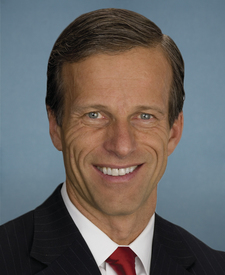
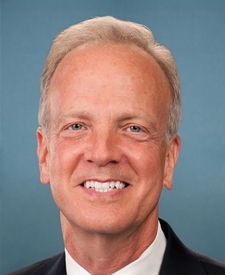
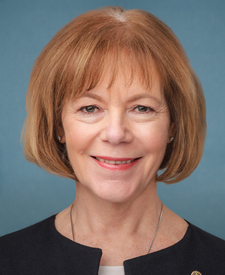
In CommitteeMr. Thune (for himself, Ms. Klobuchar, Mr. Moran, and Ms. …
Read twice and referred to the Committee on Agriculture, Nutrition, …
Introduced in Senate
Impact analysis is available but no clear stakeholder effects identified. View clause-level analysis →
Bill Structure & Actor Mappings
Who is "The Secretary" in each section?
- "the_secretary"
- → Secretary of Agriculture
- "state_technical_committee"
- → State Technical Committee established under USDA authority
Key Definitions
Terms defined in this bill
Haying in response to localized or regional drought, flooding, wildfire, or other emergency, on all practices, during the final 2 weeks of and outside of the primary nesting season, on not more than 50% of contract acres, when drought conditions reach D2 (severe) or greater, or there is at least 40% loss in forage production, or the Secretary determines the program can assist without permanent damage to established cover
A specific CRP practice established by the Secretary for wildlife habitat enhancement at the state level
Interior cross fencing, perimeter fencing, and water infrastructure (such as rural water connections, water wells, pipelines, and water tanks)
We use a combination of our own taxonomy and classification in addition to large language models to assess meaning and potential beneficiaries. High confidence means strong textual evidence. Always verify with the original bill text.
Learn more about our methodology