Critical Minerals Partnership Act of 2025
Summary
What This Bill Does
The bill treats critical minerals as a foreign-policy and national-security supply-chain issue. It defines critical minerals to include Energy Act minerals plus gold, copper, and State-designated minerals essential to U.S. economic or national security with vulnerable supply chains. It directs U.S. policy toward allied supply chains, domestic development, recycling, reduced reliance on China, Russia, Iran, and other adversaries, diplomatic and development-finance tools, and standards against inhumane labor and environmental harm. It authorizes negotiations for a coalition, State Department leadership of the Minerals Security Partnership, a project database, reports on priority minerals and tools, a 180-day diplomatic strategy, a mechanism for U.S. private-sector projects abroad, International Nickel Study Group membership, and $50 million for fiscal year 2026 in the introduced text.
Who Benefits and How
United States critical mineral companies benefit from diplomatic support, project databases, embassy engagement, and tools such as political risk insurance, financing, equity investments, and commercial advocacy. Allied and partner country mining projects benefit from a coalition framework for secure supply chains, joint investment, infrastructure cost sharing, and coordinated standards. Advanced manufacturing companies benefit from efforts to secure inputs for defense, energy, technology, consumer technology, and other mineral-dependent products. Recycling and reclamation firms benefit because U.S. policy and international negotiations prioritize recovery of used or discarded equipment containing critical minerals. The Department of State benefits from explicit authority to lead the Minerals Security Partnership and organize critical-minerals diplomacy. Congressional foreign affairs and intelligence committees benefit from reports, briefings, and strategy documents on priority minerals and diplomatic tools.
Who Bears the Burden and How
The Secretary of State must lead the Minerals Security Partnership, build diplomatic strategies, maintain project databases, brief Congress, and identify a private-sector support office. State Department regional bureaus and U.S. missions abroad must coordinate project support, diplomatic engagement, and information-sharing. PRC, Russian, Iranian, and other adversary-controlled suppliers face U.S. efforts to reduce or eliminate reliance on their mineral supply chains. Critical mineral project sponsors must meet labor-rights, environmental-impact, and responsible-investment expectations to receive U.S. diplomatic support. The Department of State bears spending and implementation responsibility for the $50 million fiscal year 2026 authorization when appropriated.
Key Provisions
- Defines critical mineral to include Energy Act minerals, gold, copper, and State-designated minerals essential to U.S. economic or national security with vulnerable supply chains.
- Establishes U.S. policy to build allied critical-mineral supply chains, increase domestic production and recycling, and reduce reliance on China, Russia, Iran, and other adversaries.
- Authorizes international negotiations for a coalition covering mining, processing, recycling, advanced manufacturing, financing, standards, transport, and market disciplines.
- Authorizes State Department leadership of the Minerals Security Partnership, project databases, information sharing, staffing priorities, and joint-project support tools.
- Requires reports and a diplomatic strategy on priority critical minerals, existing diplomatic tools, offices, roles, import restrictions, multilateral institutions, standards, labor practices, and environmental impacts.
- Authorizes U.S. membership in the International Nickel Study Group and diplomatic tools for U.S. private-sector critical-mineral projects abroad.
- Authorizes $50 million for fiscal year 2026 to enhance critical mineral supply-chain security in the introduced version.
Evidence Chain:
This summary is generated from the full bill text using AI analysis. Expand "Detailed Analysis" below for identified beneficiaries/burden bearers with clause-level evidence links.
At a Glance
What This Bill Does
Builds a State Department-led critical-minerals diplomacy framework by defining critical minerals broadly, setting policy against adversary-controlled supply chains, authorizing international negotiations and the Minerals Security Partnership, requiring reports and strategies, maintaining U.S. membership in the International Nickel Study Group, creating project support tools abroad, and authorizing $50 million for fiscal year 2026.
Key Policy Areas
Energy, Trade, Foreign Affairs, Manufacturing
Primary Purpose
Builds a State Department-led critical-minerals diplomacy framework by defining critical minerals broadly, setting policy against adversary-controlled supply chains, authorizing international negotiations and the Minerals Security Partnership, requiring reports and strategies, maintaining U.S. membership in the International Nickel Study Group, creating project support tools abroad, and authorizing $50 million for fiscal year 2026.
Policy Domains
Bill provisions
Identified Gains
- United States critical mineral companies
- Allied mining projects
- Advanced manufacturing companies
- Recycling firms
- Department of State
- Congressional foreign affairs committees
Identified Costs
- Secretary of State
- State Department regional bureaus
- United States missions abroad
- Adversary-controlled suppliers
- Critical mineral project sponsors
- Department of State budget offices
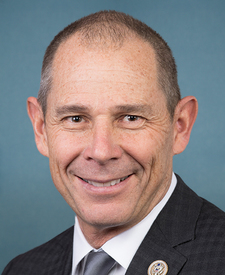
Sponsors

Legislative Progress
ReportedReported by Mr. Risch, with an amendment
Placed on Senate Legislative Calendar under General Orders. Calendar No. …
Committee on Foreign Relations. Reported by Senator Risch with an …
Committee on Foreign Relations. Ordered to be reported with an …
Mrs. Shaheen (for herself and Mr. Curtis) introduced the following …
Mrs. Shaheen (for herself and Mr. Curtis) introduced the following …
Read twice and referred to the Committee on Foreign Relations.
Introduced in Senate
Stakeholder Effects
cui bono?How this legislation distributes effects. Mention counts reflect frequency, not effect magnitude.
Department of State, United States missions abroad
Bill Structure & Actor Mappings
Who is "The Secretary" in each section?
- "secretary"
- → Secretary of State
- "under_secretary"
- → Under Secretary of State for Economic Growth, Energy, and the Environment
We use a combination of our own taxonomy and classification in addition to large language models to assess meaning and potential beneficiaries. High confidence means strong textual evidence. Always verify with the original bill text.
Learn more about our methodology