John R. Lewis Voting Rights Advancement Act of 2025
Analysis under review: This bill has generated analysis that may be too generic or incomplete. Clause-level evidence remains available below.
Summary
What This Bill Does
The John R. Lewis Voting Rights Advancement Act of 2025 restores and strengthens federal oversight of state and local voting laws that was weakened by the Supreme Court's 2013 Shelby County decision. It creates a new formula to determine which states and localities must get federal approval before changing their voting rules, based on their recent history of voting rights violations rather than decades-old data.
Who Benefits and How
Racial and language minority voters - including Black, Hispanic, Asian, and Native American communities - benefit from stronger federal protections against discriminatory voting practices. The bill makes it easier to challenge restrictive voting laws in court and ensures minority communities receive advance notice of election rule changes. Civil rights organizations and voting rights attorneys gain expanded ability to sue on behalf of voters, with better chances of recovering legal fees when they win.
Who Bears the Burden and How
State and local election officials in jurisdictions with histories of voting discrimination face the most significant new requirements. They must submit voting changes to federal review, maintain public databases of election rule changes, and comply with stricter transparency requirements. States that have recently passed restrictive voting laws - particularly those enacted since January 2021 - may face legal challenges under the bill's new retrogression standard. Small jurisdictions (under 10,000 population) can receive federal grants to help with compliance costs.
Key Provisions
- Establishes a new coverage formula: States with 15+ voting rights violations in the past 25 years (or 10+ including at least one by the state itself) must preclear voting changes with the federal government
- Creates "practice-based preclearance" requiring federal review of specific types of voting changes in jurisdictions with 20%+ minority populations, including changes to voter ID, polling place closures, and redistricting
- Strengthens Section 2 of the Voting Rights Act by clarifying vote dilution and denial standards, codifying the Thornburg v. Gingles test, and prohibiting voting changes that make it harder for minorities to vote (retroactive to January 1, 2021)
- Extends bilingual election requirements through 2037 and adds protections for Native American voters on tribal lands
- Creates new criminal penalties for voter intimidation and for election officials who refuse to certify valid election results
- Expands the Attorney General's enforcement powers and allows private citizens to bring voting rights lawsuits more easily
Evidence Chain:
This summary is generated from the full bill text using AI analysis. Expand "Detailed Analysis" below for identified beneficiaries/burden bearers.
At a Glance
What This Bill Does
Amends the Voting Rights Act of 1965 to establish new criteria for determining which states and political subdivisions are subject to federal preclearance requirements, and strengthens protections against vote denial, dilution, and discrimination.
Who Benefits
- Racial minority voters (African Americans, Hispanics, Asian Americans)
- Language minority groups
- Native American/Alaska Native voters on tribal lands
Who Bears Costs
- State governments in covered jurisdictions
- County and local election administrators
- Political subdivisions with history of voting rights violations
Key Policy Areas
Civil Rights, Elections, Voting Rights, Federal-State Relations
Primary Purpose
Amends the Voting Rights Act of 1965 to establish new criteria for determining which states and political subdivisions are subject to federal preclearance requirements, and strengthens protections against vote denial, dilution, and discrimination.
Policy Domains
Legislative Strategy
"Restore and strengthen federal voting rights protections that were weakened by Shelby County v. Holder (2013), using a new coverage formula based on recent voting rights violations rather than historical data"
Identified Gains
- Racial minority voters (African Americans, Hispanics, Asian Americans)
- Language minority groups
- Native American/Alaska Native voters on tribal lands
- Civil rights organizations
- Voting rights advocacy groups
- Federal election oversight agencies (DOJ)
Identified Costs
- State governments in covered jurisdictions
- County and local election administrators
- Political subdivisions with history of voting rights violations
- States seeking to change election laws without federal review
- Political parties benefiting from restrictive voting practices
Sponsors
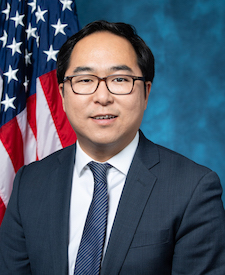
Legislative Progress
In CommitteeMr. Durbin (for himself, Mr. Warnock, Mr. Blumenthal, Mr. Schumer, …
Read twice and referred to the Committee on the Judiciary. …
Introduced in Senate
Stakeholder Effects
cui bono?How this legislation distributes effects. Mention counts reflect frequency, not effect magnitude.
Election officials who fail to certify results, Election workers and poll watchers, Jurisdictions covered by Section 203 bilingual requirements
Positive-direction: Election workers and poll watchers, Small political subdivisions and rural election offices
Negative-direction: Election officials who fail to certify results, Jurisdictions covered by Section 203 bilingual requirements, Jurisdictions with 20%+ minority voting-age population, Local/county election officials and political subdivisions, State and local election officials in monitored jurisdictions, State election administrators, State election administrators and secretaries of state, States and localities as defendants, States and localities as defendants in voting rights cases, States and localities violating voting rights laws, States and political subdivisions as defendants, States and political subdivisions under investigation, States and subdivisions making covered voting changes, States enacting voter restrictions, States that enacted restrictive voting laws since 2021, States with history of voting rights violations
Language minority voters, Minority voters and language minority communities, Minority voters in areas with diverse populations
Positive-direction: Language minority voters, Minority voters and language minority communities, Minority voters in areas with diverse populations, Minority voters in covered jurisdictions, Native American and Alaska Native voters, Native American and Alaska Native voters on tribal lands, Racial and language minority voters, Voters and candidates in federal elections, Voters facing intimidation at polls, Voters in minority communities and with disabilities
Negative-direction: Persons who intimidate voters or election workers
Civil rights attorneys and advocacy organizations, Civil rights attorneys and voting rights litigators, Civil rights litigants and voting rights organizations
Bill Structure & Actor Mappings
Who is "The Secretary" in each section?
- "the_court"
- → United States District Court for the District of Columbia
- "the_attorney_general"
- → United States Attorney General
Key Definitions
Terms defined in this bill
A final judgment finding denial or abridgement of voting rights on account of race, color, or language minority group; denial of declaratory judgment under sections 3(c) or 5; objection by the Attorney General; or consent decree/settlement admitting liability for voting discrimination
Specific types of voting changes that require preclearance: changes to method of election, changes to political subdivision boundaries, redistricting changes, changes to documentation requirements, changes to multilingual materials, and changes that reduce voting locations or opportunities
When political processes are not equally open to participation by members of a protected class, resulting in less opportunity to participate and elect representatives of their choice, governed by Thornburg v. Gingles standard
When members of a protected class face greater difficulty complying with a voting standard, practice, or procedure, and such difficulty is caused by or linked to social and historical conditions producing discrimination
Any American Indian or Alaska Native area, as defined by the Census Bureau
We use a combination of our own taxonomy and classification in addition to large language models to assess meaning and potential beneficiaries. High confidence means strong textual evidence. Always verify with the original bill text.
Learn more about our methodology