John R. Lewis Voting Rights Advancement Act of 2025
Analysis under review: This bill has generated analysis that may be too generic or incomplete. Clause-level evidence remains available below.
Summary
What This Bill Does
The bill amends Section 2 of the VRA to clarify standards for vote dilution and denial claims, codifying the Thornburg v. Gingles test and allowing claims by coalitions of minority groups, prohibits states from enacting voting changes that diminish the ability of minority citizens to participate in elections, applying retroactively to any action taken on or after January 1, 2021, and establishes new coverage formula for Section 4 based on voting rights violations in the previous 25 years. It relies on compliance mandates, definition changes, reporting requirements, and grants. The main policy areas are Civil Rights, Voting Rights, and Finance.
Who Benefits and How
Racial and language minority voters could face fewer barriers, Minority voters in covered jurisdictions could face fewer barriers, and Voters facing intimidation at polls could face fewer barriers.
Who Bears the Burden and How
States with history of voting rights violations would take on compliance duties, States and subdivisions making covered voting changes would take on compliance duties, and Persons who intimidate voters or election workers could face increased risk.
Key Provisions
- Amends Section 2 of the VRA to clarify standards for vote dilution and denial claims, codifying the Thornburg v. Gingles test and allowing claims by coalitions of minority groups.
- Prohibits states from enacting voting changes that diminish the ability of minority citizens to participate in elections, applying retroactively to any action taken on or after January 1, 2021.
- Establishes new coverage formula for Section 4 based on voting rights violations in the previous 25 years.
- Creates new Section 4A establishing practice-based preclearance for specific voting changes in covered areas.
- Creates Section 4A with detailed covered practice requirements including judicial and administrative preclearance procedures.
Evidence Chain:
This summary is generated from the full bill text using AI analysis. Expand "Detailed Analysis" below for identified beneficiaries/burden bearers with clause-level evidence links.
At a Glance
What This Bill Does
The bill amends Section 2 of the VRA to clarify standards for vote dilution and denial claims, codifying the Thornburg v. Gingles test and allowing claims by coalitions of minority groups, prohibits states from enacting voting changes that diminish the ability of minority citizens to participate in elections, applying retroactively to any action taken on or after January 1, 2021, and establishes new coverage formula for Section 4 based on voting rights violations in the previous 25 years.
Key Policy Areas
Civil Rights, Voting Rights, Finance
Primary Purpose
The bill amends Section 2 of the VRA to clarify standards for vote dilution and denial claims, codifying the Thornburg v. Gingles test and allowing claims by coalitions of minority groups, prohibits states from enacting voting changes that diminish the ability of minority citizens to participate in elections, applying retroactively to any action taken on or after January 1, 2021, and establishes new coverage formula for Section 4 based on voting rights violations in the previous 25 years.
Policy Domains
Title I - Amendments to the Voting Rights Act
Identified Gains
- Racial and language minority voters
- Minority voters in covered jurisdictions
- Voters facing intimidation at polls
- Native American and Alaska Native voters on tribal lands
- Minority voters in areas with diverse populations
Identified Costs
- States with history of voting rights violations
- States and subdivisions making covered voting changes
- Persons who intimidate voters or election workers
- Jurisdictions with 20%+ minority voting-age population
- States that enacted restrictive voting laws since 2021
Sponsors


Legislative Progress
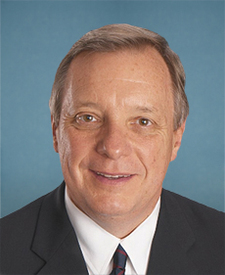
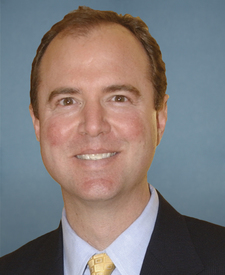
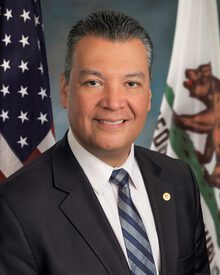
In CommitteeMr. Durbin (for himself, Mr. Warnock, Mr. Blumenthal, Mr. Schumer, …
Read twice and referred to the Committee on the Judiciary. …
Introduced in Senate
Stakeholder Effects
cui bono?How this legislation distributes effects. Mention counts reflect frequency, not effect magnitude.
Election officials who fail to certify results, Election workers and poll watchers, Jurisdictions covered by Section 203 bilingual requirements
Positive-direction: Election workers and poll watchers, Small political subdivisions and rural election offices
Negative-direction: Election officials who fail to certify results, Jurisdictions covered by Section 203 bilingual requirements, Jurisdictions with 20%+ minority voting-age population, Local/county election officials and political subdivisions, State and local election officials in monitored jurisdictions, State election administrators, State election administrators and secretaries of state, States and localities as defendants, States and localities as defendants in voting rights cases, States and localities violating voting rights laws, States and political subdivisions as defendants, States and political subdivisions under investigation, States and subdivisions making covered voting changes, States enacting voter restrictions, States that enacted restrictive voting laws since 2021, States with history of voting rights violations
Language minority voters, Minority voters and language minority communities, Minority voters in areas with diverse populations
Positive-direction: Language minority voters, Minority voters and language minority communities, Minority voters in areas with diverse populations, Minority voters in covered jurisdictions, Native American and Alaska Native voters, Native American and Alaska Native voters on tribal lands, Racial and language minority voters, Voters and candidates in federal elections, Voters facing intimidation at polls, Voters in minority communities and with disabilities
Negative-direction: Persons who intimidate voters or election workers
Civil rights attorneys and advocacy organizations, Civil rights attorneys and voting rights litigators, Civil rights litigants and voting rights organizations
Bill Structure & Actor Mappings
Who is "The Secretary" in each section?
- "the_court"
- → United States District Court for the District of Columbia
- "the_attorney_general"
- → United States Attorney General
Key Definitions
Terms defined in this bill
A final judgment finding denial or abridgement of voting rights on account of race, color, or language minority group; denial of declaratory judgment under sections 3(c) or 5; objection by the Attorney General; or consent decree/settlement admitting liability for voting discrimination
Specific types of voting changes that require preclearance: changes to method of election, changes to political subdivision boundaries, redistricting changes, changes to documentation requirements, changes to multilingual materials, and changes that reduce voting locations or opportunities
When political processes are not equally open to participation by members of a protected class, resulting in less opportunity to participate and elect representatives of their choice, governed by Thornburg v. Gingles standard
When members of a protected class face greater difficulty complying with a voting standard, practice, or procedure, and such difficulty is caused by or linked to social and historical conditions producing discrimination
Any American Indian or Alaska Native area, as defined by the Census Bureau
We use a combination of our own taxonomy and classification in addition to large language models to assess meaning and potential beneficiaries. High confidence means strong textual evidence. Always verify with the original bill text.
Learn more about our methodology