To establish the Chief Artificial Intelligence Officers Council, Chief Artificial Intelligence Officers, and Artificial Intelligence Governance Boards, and for other purposes.
Analysis under review: This bill has generated analysis that may be too generic or incomplete. Clause-level evidence remains available below.
Summary
What This Bill Does
This bill creates a Chief Artificial Intelligence Officers Council chaired by the OMB Director and requires every federal agency to designate a Chief AI Officer (above GS-15 for CFO Act agencies) responsible for AI innovation, risk management, and policy compliance. Each agency must establish an AI Coordination Board and develop an AI strategy covering governance, ethics, workforce development, and civil liberties protections. The bill mandates GAO reports on implementation effectiveness and AI workforce impacts, and sunsets after the OMB Director issues updated governance guidance (at least 5 years post-enactment).
Who Benefits and How
Federal agencies benefit from a structured governance framework for AI adoption. The public benefits from mandated civil rights, privacy, nondiscrimination, and transparency protections in government AI use. The AI industry benefits from clearer government AI procurement pathways and interagency coordination on acquisition practices. Federal AI workforce benefits from required training and professional development programs.
Who Bears the Burden and How
Federal agencies bear the administrative burden of establishing new leadership positions, governance boards, and comprehensive AI strategies. The OMB Director takes on significant coordination, guidance-issuance, and oversight responsibilities. Agencies must inventory and publish AI use cases, monitor deployed systems for harm, and classify risk levels.
Key Provisions
- Establishes Chief AI Officers Council at OMB to coordinate governmentwide AI activities (Section 3)
- Requires each agency to designate a Chief AI Officer with defined responsibilities for AI governance, risk management, and compliance (Section 4)
- Mandates agency AI Coordination Boards and comprehensive AI strategies including civil liberties protections (Section 5)
- Requires GAO reports on implementation effectiveness, AI workforce impacts, and bias in federal AI systems within 2 years (Section 6)
- Mandates OMB Director to issue updated AI governance directive within 5 years; Act sunsets 90 days after (Sections 7-8)
Evidence Chain:
This summary is generated from the full bill text using AI analysis. Expand "Detailed Analysis" below for identified beneficiaries/burden bearers.
At a Glance
What This Bill Does
Establishes a governmentwide framework for AI governance by creating a Chief AI Officers Council, requiring each federal agency to designate a Chief AI Officer, establish an AI Coordination Board, and develop an AI strategy for responsible adoption.
Key Policy Areas
Artificial Intelligence, Federal Government Management, Technology Policy, Civil Liberties
Primary Purpose
Establishes a governmentwide framework for AI governance by creating a Chief AI Officers Council, requiring each federal agency to designate a Chief AI Officer, establish an AI Coordination Board, and develop an AI strategy for responsible adoption.
Policy Domains
Chief AI Officers Council
Identified Gains
Contextual inference, no direct clause citation- Federal agencies (coordination and best practice sharing)
- AI industry (clearer government procurement framework)
Contextual inference, no direct clause citation
Identified Costs
Contextual inference, no direct clause citation- OMB Director (chairing and coordination)
- CFO Act agency Chief AI Officers (participation)
Contextual inference, no direct clause citation
Agency Chief AI Officers
Identified Gains
Contextual inference, no direct clause citation- Federal agencies (structured AI governance)
- Public (civil rights and safety protections)
Contextual inference, no direct clause citation
Identified Costs
Contextual inference, no direct clause citation- Federal agencies (new executive position and oversight requirements)
Contextual inference, no direct clause citation
GAO Oversight and Sunset
Identified Gains
Contextual inference, no direct clause citation- Congress (oversight information)
- Federal workforce (job impact assessment)
Contextual inference, no direct clause citation
Identified Costs
Contextual inference, no direct clause citation- GAO (study mandates)
- OMB Director (updated directive)
Contextual inference, no direct clause citation
Agency AI Coordination and Strategy
Identified Gains
Contextual inference, no direct clause citation- Public (algorithmic discrimination protections)
- Federal workforce (training and development)
- Congress (transparency into agency AI use)
Contextual inference, no direct clause citation
Identified Costs
Contextual inference, no direct clause citation- Federal agencies (strategy development and compliance)
Contextual inference, no direct clause citation
Sponsors
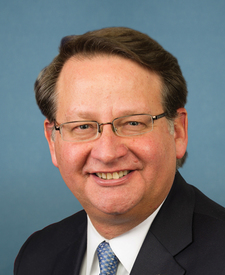
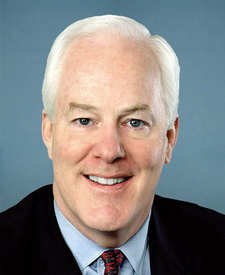
Legislative Progress
ReportedReported by Mr. Peters, with an amendment and an amendment …
Mr. Peters (for himself and Mr. Cornyn) introduced the following …
Mr. Peters introduced the following bill; which was read twice …
Stakeholder Effects
cui bono?How this legislation distributes effects. Mention counts reflect frequency, not effect magnitude.
Federal AI workforce, Federal agencies, Federal agencies (CFO Act)
Positive-direction: Federal AI workforce
Negative-direction: Federal agencies, Federal agencies (CFO Act), OMB Director
AI industry / technology vendors, AI professionals seeking federal roles
Public (algorithmic discrimination protection), Public / individuals affected by government AI
Bill Structure & Actor Mappings
Who is "The Secretary" in each section?
- "federal"
- → ['OMB Director', 'Chief AI Officers of CFO Act agencies']
- "federal"
- → ['Agency heads', 'Chief AI Officers', 'OMB Director']
- "federal"
- → ['Agency heads', 'AI Coordination Boards', 'OMB Director']
- "federal"
- → ['Comptroller General', 'OMB Director', 'Congressional committees']
Key Definitions
Terms defined in this bill
We use a combination of our own taxonomy and classification in addition to large language models to assess meaning and potential beneficiaries. High confidence means strong textual evidence. Always verify with the original bill text.
Learn more about our methodology