To amend title 49, United States Code, to permit the use of Federal funds to pay for travel costs of Federal personnel and their pets, and for other purposes.
Analysis under review: This bill has generated analysis that may be too generic or incomplete. Clause-level evidence remains available below.
Summary
What This Bill Does
The Fly PETS Act creates an exception to the Fly America Act, which normally requires federal employees to use US airlines when traveling on government funds. Under this bill, if no US airline can transport an employee's pets (up to 3 dogs, cats, or other approved animals), the employee may instead use a foreign airline.
Who Benefits and How
Federal personnel (including military members, Foreign Service officers, and Peace Corps volunteers) who travel internationally with pets benefit by gaining more flexibility in their travel arrangements. Foreign air carriers also benefit by gaining access to some government-funded travel that was previously restricted to US carriers.
Who Bears the Burden and How
US airlines face slightly reduced government-funded travel bookings in cases where they cannot accommodate pets. Federal employees must pay the difference if the foreign carrier costs more than what a US carrier would have charged.
Key Provisions
- Allows federal funds to pay for foreign carrier travel when no US carrier can transport up to 3 domesticated animals
- Limits government reimbursement to the amount that would have been paid to a US carrier
- Defines domesticated animals as dogs, cats, or other animals the Secretary deems appropriate
- Applies to all federal personnel including uniformed services, Foreign Service, and Peace Corps volunteers
Evidence Chain:
This summary is generated from the full bill text using AI analysis. Expand "Detailed Analysis" below for identified beneficiaries/burden bearers.
At a Glance
What This Bill Does
Creates an exception to the Fly America Act allowing federal personnel to use foreign air carriers when no US carrier can transport their pets during government-funded travel
Key Policy Areas
Transportation, Federal Employment, Government Spending
Primary Purpose
Creates an exception to the Fly America Act allowing federal personnel to use foreign air carriers when no US carrier can transport their pets during government-funded travel
Policy Domains
Fly PETS Act
Identified Gains
Contextual inference, no direct clause citation- Federal employees traveling with pets
- Foreign air carriers
- Military personnel with pets
Contextual inference, no direct clause citation
Identified Costs
Contextual inference, no direct clause citation- US airlines
- Federal employees (if foreign carrier costs more)
Contextual inference, no direct clause citation
Legislative Progress
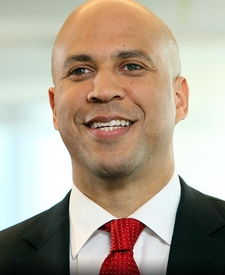
IntroducedMr. Booker introduced the following bill; which was read twice …
Stakeholder Effects
cui bono?How this legislation distributes effects. Mention counts reflect frequency, not effect magnitude.
Foreign air carriers operating international routes, US air carriers (certificate holders under section 41102)
Positive-direction: Foreign air carriers operating international routes
Negative-direction: US air carriers (certificate holders under section 41102)
Federal personnel traveling internationally with pets
Bill Structure & Actor Mappings
Who is "The Secretary" in each section?
- "the_secretary"
- → Secretary of Transportation
Key Definitions
Terms defined in this bill
A dog or a cat, or any other animal the Secretary deems appropriate for reimbursement under this section
Any officer or employee of the United States Government, including any member of the uniformed services, the Foreign Service, and any Peace Corps volunteer
An individual described in section 5(a) of the Peace Corps Act (22 U.S.C. 2504(a))
We use a combination of our own taxonomy and classification in addition to large language models to assess meaning and potential beneficiaries. High confidence means strong textual evidence. Always verify with the original bill text.
Learn more about our methodology