To provide limited authority to use the Armed Forces to suppress insurrection or rebellion and quell domestic violence.
Summary
What This Bill Does
The Insurrection Act of 2025 comprehensively rewrites the existing Insurrection Act (10 U.S.C. sections 251-255) to impose significant new constraints on the President's authority to deploy the armed forces domestically. It replaces the broad, largely unchecked presidential discretion in current law with a framework requiring specific triggering circumstances, mandatory consultation with Congress, a proclamation and detailed reporting to Congress, a 7-day automatic expiration unless Congress passes a joint resolution of approval, renewable 14-day authorization periods, explicit judicial review rights for anyone injured or threatened by domestic military deployment, and a prohibition on using National Guard members performing training duty for domestic law enforcement purposes.
Who Benefits and How
- Congress gains substantial oversight and approval authority over domestic military deployments. Under current law the President can invoke the Insurrection Act with virtually no congressional check; this bill requires a joint resolution of approval within 7 days or the authority automatically terminates, with 14-day renewal periods requiring further congressional action.
- State and local governments gain protections because most triggering circumstances require a request from the state's chief executive (or a supermajority of the state legislature for domestic violence situations) before federal troops can be deployed, ensuring state sovereignty is respected.
- Individuals and entities (including state and local governments) subject to domestic military deployment gain an explicit right to judicial review. Any person injured or credibly threatened by military deployment under this chapter can bring a civil action for declaratory or injunctive relief, with expedited court proceedings and direct Supreme Court appeal.
- Civil liberties are protected by explicit prohibitions on suspending habeas corpus or violating federal or state law, requirements that deployed forces follow Standing Rules for the Use of Force, and the subordination of deployed forces to the military chain of command.
- National Guard members performing training or other duty are explicitly prohibited from being used to suppress insurrection, quell domestic violence, or enforce law.
Who Bears the Burden and How
- The President and executive branch bear significant new constraints on domestic military deployment authority. The current Insurrection Act gives the President broad discretion; this bill requires meeting specific triggering circumstances, consulting Congress, issuing a proclamation with specific legal justifications, obtaining Attorney General certifications, and securing congressional approval within 7 days.
- The Department of Defense and military leadership bear new procedural requirements including Service Secretary certifications that forces are trained and equipped, adherence to Standing Rules for the Use of Force, and compliance with the chain of command requirements.
- The Attorney General bears new certification requirements regarding state requests, exhaustion of non-military options, and the insufficiency of civilian law enforcement.
- Federal courts bear the burden of expedited judicial review proceedings with direct Supreme Court appeal rights.
Key Provisions
- Declares domestic military deployment should be a "last resort" (Sec. 251)
- Limits triggering circumstances to: insurrection/rebellion against state or federal government, severe domestic violence with state request, and specific types of law obstruction (Sec. 252)
- Requires congressional consultation, a public proclamation specifying legal basis, and a detailed written report with Attorney General and Service Secretary certifications (Sec. 254)
- Authority automatically expires after 7 days unless Congress passes a joint resolution of approval (Sec. 255)
- Congressional approval authorizes 14-day periods, renewable only by additional joint resolutions (Sec. 255)
- Courts can enjoin deployment; substantial evidence standard for reviewing triggering circumstances (Sec. 257)
- Explicitly prohibits suspension of habeas corpus and violation of federal/state law (Sec. 253)
- Bars National Guard members on training duty from domestic deployment (Sec. 259)
Evidence Chain:
This summary is generated from the full bill text using AI analysis. Expand "Detailed Analysis" below for identified beneficiaries/burden bearers with clause-level evidence links.
At a Glance
What This Bill Does
Comprehensively rewrites the Insurrection Act to impose strict constraints on presidential authority to deploy the armed forces domestically, requiring specific triggering circumstances, congressional consultation and approval within 7 days, detailed reporting and certifications, judicial review rights, and automatic expiration of authority.
Key Policy Areas
Armed Forces and National Security, Congress, Civil Rights and Liberties, Government Operations
Primary Purpose
Comprehensively rewrites the Insurrection Act to impose strict constraints on presidential authority to deploy the armed forces domestically, requiring specific triggering circumstances, congressional consultation and approval within 7 days, detailed reporting and certifications, judicial review rights, and automatic expiration of authority.
Policy Domains
Policy Framework and Triggering Circumstances (Secs. 251-252)
Identified Gains
- State and local governments (sovereignty protected by state-request requirement)
- General public (narrow triggering circumstances limit domestic military deployment)
- Constitutional order (explicit enumeration of triggering circumstances provides legal clarity)
Identified Costs
- The President (authority significantly constrained compared to current law)
- Federal executive branch (must meet specific factual predicates before deploying forces)
Termination, Judicial Review, and Definitions (Secs. 256-259)
Identified Gains
- Individuals and entities subject to military deployment (explicit judicial review right)
- State and local governments (can seek judicial review; state can revoke request to terminate)
- National Guard members on training duty (protected from domestic deployment)
- Federal courts (clear jurisdictional grant and procedural framework)
Identified Costs
- The executive branch (deployment subject to judicial injunction)
- Federal courts (must expedite proceedings)
- Department of Defense (must manage orderly wind-down of terminated deployments)
Presidential Authority and Limitations (Sec. 253)
Identified Gains
- Civil liberties (explicit habeas corpus and rule-of-law protections)
- Military personnel (clear rules of engagement and chain of command)
- General public (protection from lawless military action)
Identified Costs
- The President (cannot suspend habeas corpus or violate law)
- Armed forces (must adhere to Standing Rules for the Use of Force and chain of command)
Congressional Oversight and Approval (Secs. 254-255)
Identified Gains
- Congress (gains meaningful approval authority over domestic military deployment)
- Democratic accountability (deployment requires public proclamation, reporting, and legislative vote)
- General public (congressional approval ensures democratic legitimacy)
Identified Costs
- The President (must consult, proclaim, report, and obtain congressional approval)
- The Attorney General (must certify state request, exhaustion of alternatives)
- Service Secretaries (must certify force readiness and suitability)
- Congress (must act within 7 days to authorize continuation)
Sponsors



Legislative Progress
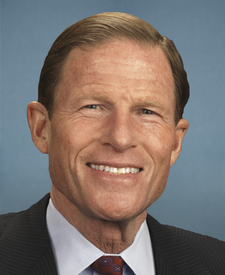
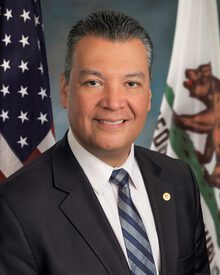
IntroducedMr. Blumenthal (for himself, Mr. Padilla, Mr. Schiff, Mr. Booker, …
Stakeholder Effects
cui bono?How this legislation distributes effects. Mention counts reflect frequency, not effect magnitude.
Attorney General, Congress, Federal courts
Positive-direction: Congress, State and local authorities, State and local governments, State governments
Negative-direction: Attorney General, Federal courts, Service Secretaries, State governors, The President, The President and executive branch, The executive branch
General public (civil liberties), General public (constitutional rights protection), General public (democratic accountability)
Armed forces personnel, Department of Defense, National Guard members on training duty
Positive-direction: National Guard members on training duty
Negative-direction: Armed forces personnel, Department of Defense
Bill Structure & Actor Mappings
Who is "The Secretary" in each section?
- "the_president"
- → President of the United States
- "state_legislature"
- → State legislature (supermajority required for domestic violence requests)
- "state_chief_executive"
- → Governor or chief executive of the affected State
- "armed_forces"
- → Armed forces of the United States
- "the_president"
- → President of the United States
- "congress"
- → United States Congress
- "the_president"
- → President of the United States
- "attorney_general"
- → Attorney General of the United States
- "service_secretary"
- → Relevant Service Secretary or Secretaries
- "the_president"
- → President of the United States
- "federal_courts"
- → United States district courts and the Supreme Court
- "state_chief_executive"
- → Governor or chief executive of the affected State
Note: {'term': 'The President', 'resolution': 'Refers to the President of the United States throughout all sections'}
Key Definitions
Terms defined in this bill
We use a combination of our own taxonomy and classification in addition to large language models to assess meaning and potential beneficiaries. High confidence means strong textual evidence. Always verify with the original bill text.
Learn more about our methodology