To provide for the overall health and well-being of young people, including the promotion and attainment of lifelong sexual health and healthy relationships, and for other purposes.
Analysis under review: This bill has generated analysis that may be too generic or incomplete. Clause-level evidence remains available below.
Summary
What This Bill Does
This omnibus legislation advances several policy priorities: expanding small business innovation research grants to underserved communities, creating tourism grant programs for Native American tribes, providing tax credits for employers who hire military spouses, improving mental health outreach for veterans, establishing a national task force to address working family challenges, creating a fentanyl disruption steering group, and prohibiting Members of Congress from serving as officers or directors of public companies.
Who Benefits and How
Small businesses at minority and Hispanic-serving institutions receive enhanced outreach and application assistance for SBIR/STTR federal research grants. Native American tribes and Native Hawaiian organizations can receive up to $35 million in tourism development grants over 5 years. Military spouses gain access to the Work Opportunity Tax Credit, making them more attractive to employers. Veterans with service-connected mental health disabilities receive annual mental health consultations and outreach. Employers hiring military spouses receive tax credits. Private sector entities gain formal partnership channels for fentanyl disruption efforts.
Who Bears the Burden and How
Members of Congress, Delegates, officers, and employees of the House face new restrictions prohibiting them from serving as officers or directors of public companies. Federal agencies including Labor, HHS, Commerce, and others must participate in new task forces and steering groups, requiring staff time and coordination resources. The SBA must modify policy directives within 90 days to implement enhanced outreach requirements.
Key Provisions
- Creates $35 million Native American tourism grant program (FY2026-2030)
- Extends Work Opportunity Tax Credit to employers hiring military spouses
- Mandates annual mental health outreach to veterans receiving compensation for mental health disabilities
- Establishes Fentanyl Disruption Steering Group within National Security Council
- Prohibits House members and staff from serving on public company boards
Evidence Chain:
This summary is generated from the full bill text using AI analysis. Expand "Detailed Analysis" below for identified beneficiaries/burden bearers.
At a Glance
What This Bill Does
An omnibus bill that advances multiple policy priorities including small business support, Native American tourism grants, military spouse tax benefits, veterans mental health services, fentanyl disruption efforts, working families support, and congressional ethics reforms.
Key Policy Areas
Small Business, Native American Affairs, Tax Policy, Veterans Affairs, Labor, National Security, Government Ethics, Public Health
Primary Purpose
An omnibus bill that advances multiple policy priorities including small business support, Native American tourism grants, military spouse tax benefits, veterans mental health services, fentanyl disruption efforts, working families support, and congressional ethics reforms.
Policy Domains
Title I - Small Business Innovation Research
Identified Gains
Contextual inference, no direct clause citation- Small businesses at minority-serving institutions
- Small businesses at Hispanic-serving institutions
- Small businesses in states with historically low SBIR/STTR awards
Contextual inference, no direct clause citation
Identified Costs
Contextual inference, no direct clause citation- Small Business Administration
- Federal agencies with SBIR/STTR programs
Contextual inference, no direct clause citation
Title II - Native American Tourism
Identified Gains
Contextual inference, no direct clause citation- Indian tribes
- Tribal organizations
- Native Hawaiian organizations
- Tourism industry in tribal areas
Contextual inference, no direct clause citation
Identified Costs
Contextual inference, no direct clause citation- Federal taxpayers
Contextual inference, no direct clause citation
Title IV - Veterans Mental Health
Identified Gains
Contextual inference, no direct clause citation- Veterans with mental health disabilities
- Military families
Contextual inference, no direct clause citation
Identified Costs
Contextual inference, no direct clause citation- Department of Veterans Affairs
- VA mental health providers
Contextual inference, no direct clause citation
Title IX - Congressional Ethics
Identified Gains
Contextual inference, no direct clause citation- Public trust in government
- Competitors of companies that previously had Congressional board members
Contextual inference, no direct clause citation
Identified Costs
Contextual inference, no direct clause citation- Members of Congress
- House officers and employees
- Public companies seeking Congressional members as directors
Contextual inference, no direct clause citation
Title VI - Working Families Task Force
Identified Gains
Contextual inference, no direct clause citation- Working families
- Low and middle-income households
Contextual inference, no direct clause citation
Identified Costs
Contextual inference, no direct clause citation- Federal agencies (coordination costs)
- Department of Labor
Contextual inference, no direct clause citation
Title III - Military Spouse Tax Credit
Identified Gains
Contextual inference, no direct clause citation- Military spouses
- Employers hiring military spouses
- Military families
Contextual inference, no direct clause citation
Identified Costs
Contextual inference, no direct clause citation- Federal Treasury (reduced tax revenue)
Contextual inference, no direct clause citation
Title VII - Fentanyl Disruption
Identified Gains
Contextual inference, no direct clause citation- Public health (reduced overdose deaths)
- Law enforcement agencies
- Private sector partners
Contextual inference, no direct clause citation
Identified Costs
Contextual inference, no direct clause citation- Federal agencies (participation in steering group)
- Drug traffickers and cartels
Contextual inference, no direct clause citation
Sponsors
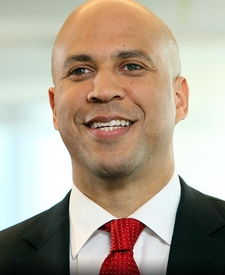
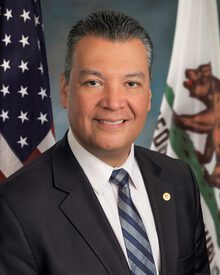
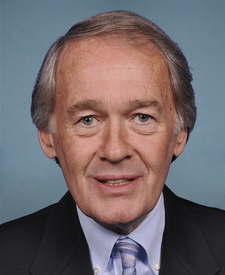
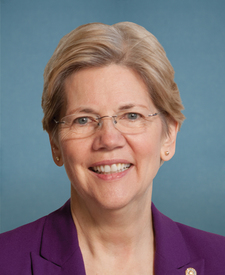
Legislative Progress
IntroducedMr. Booker (for himself, Ms. Hirono, Mr. Padilla, Mr. Markey, …
Stakeholder Effects
cui bono?How this legislation distributes effects. Mention counts reflect frequency, not effect magnitude.
Abstinence-only education providers, All colleges and universities, Comprehensive sex education providers
Positive-direction: All colleges and universities, Comprehensive sex education providers, Educational service agencies, Indian Tribes and Tribal organizations, Local educational agencies, Minority-serving institutions of higher education, Nonprofit institutions of higher education, State education agencies, State educational agencies, Teachers and health educators, Tribal Colleges and Universities
Negative-direction: Abstinence-only education providers, Grant recipients under this Act, HIV education programs receiving federal funds, Organizations currently receiving Section 510 abstinence-only funding
LGBTQ+ young people, Minority young people, Underserved young people (LGBTQ+, minorities, low-income)
Sex education training nonprofits, Youth-serving nonprofit organizations, Youth-serving organizations providing health services
Community health centers (340B covered entities), Federally Qualified Health Centers, Sexual health service providers
Independent evaluation contractors, Research and technical assistance providers
Bill Structure & Actor Mappings
Who is "The Secretary" in each section?
- "the_administration"
- → Small Business Administration
- "the_director_bia"
- → Director of the Bureau of Indian Affairs
- "the_director_onhr"
- → Director of the Office of Native Hawaiian Relations
- "the_secretary"
- → Secretary of Veterans Affairs
- "the_comptroller_general"
- → Comptroller General of the United States
- "the_secretary"
- → Secretary of Labor
- "the_chair"
- → Assistant to the President for National Security Affairs
- "the_committee"
- → Committee on Ethics
Note: 'The Secretary' refers to different Cabinet officials depending on title: Secretary of Veterans Affairs in Title IV, Secretary of Labor in Title VI
Key Definitions
Terms defined in this bill
Any individual who is certified by the designated local agency as being (as of the hiring date) a spouse of a member of the Armed Forces of the United States
An issuer as defined in section 3 of the Securities Exchange Act of 1934 whose securities are required to be registered under section 12 or that is required to file reports under section 15(d) of such Act
We use a combination of our own taxonomy and classification in addition to large language models to assess meaning and potential beneficiaries. High confidence means strong textual evidence. Always verify with the original bill text.
Learn more about our methodology