High-Quality Charter Schools Act
Analysis under review: This bill has generated analysis that may be too generic or incomplete. Clause-level evidence remains available below.
Summary
The High-Quality Charter Schools Act creates a new federal tax credit allowing individuals to claim 75% of their charitable donations to qualifying charter school organizations. The credit is capped at the greater of 10% of adjusted gross income or $5,000 per year. To qualify, charter school organizations must be high-performing 501(c)(3) nonprofits that have received federal grants for charter school expansion or been ranked in the top 10% of their state for student performance. The bill sets a national volume cap of $5 billion in tax credits annually, with $10 million allocated to each state and the remainder available nationally on a first-come, first-served basis. Charter school organizations must spend contributions on school creation or expansion, with penalties for failing to meet expenditure requirements. The bill explicitly preserves organizational and parental autonomy from government control.
Evidence Chain:
This summary is generated from the full bill text using AI analysis. Expand "Detailed Analysis" below for identified beneficiaries/burden bearers.
At a Glance
What This Bill Does
Creates a new federal tax credit (section 25F) of 75% for charitable donations to high-quality charter school organizations, with a $5 billion annual volume cap and state-based allocation system.
Who Benefits
- Charter management organizations
- High-income taxpayers who donate to charter schools
- Families seeking charter school options
Who Bears Costs
- Federal revenue (up to $5B annual tax expenditure)
- Traditional public schools (increased competition for students)
- State education budgets (indirect effects)
Key Policy Areas
{'domain': 'Education', 'evidence': ['2', '3', '5']}, {'domain': 'Tax', 'evidence': ['2', '4']}
Primary Purpose
Creates a new federal tax credit (section 25F) of 75% for charitable donations to high-quality charter school organizations, with a $5 billion annual volume cap and state-based allocation system.
Policy Domains
Legislative Strategy
"Use the tax code to incentivize private charitable funding for charter school expansion, bypassing direct federal appropriations and leveraging donor-driven school choice."
Sponsors

Legislative Progress
In CommitteeCommittee on Health, Education, Labor, and Pensions. Hearings held.
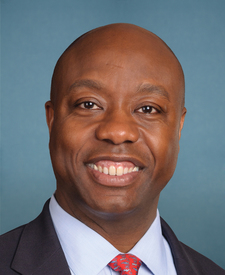
Mr. Scott of South Carolina introduced the following bill; which …
Read twice and referred to the Committee on Finance.
Introduced in Senate
Stakeholder Effects
cui bono?How this legislation distributes effects. Mention counts reflect frequency, not effect magnitude.
Charter management organizations, Charter school accountability, Charter school organizations
Eligible charter school organizations faces effects in multiple directions
Positive-direction: Charter management organizations, Charter school accountability, Charter school organizations, Charter school organizations in all 50 states, Charter school parents and students
Negative-direction: Charter school organizations receiving donations, Traditional public schools
Charter school donors, High-income individual taxpayers, Individual taxpayer donors
States with large charter school sectors
Bill Structure & Actor Mappings
Who is "The Secretary" in each section?
- "the_secretary"
- → Secretary of the Treasury
- "the_secretary"
- → Secretary of the Treasury
- "the_secretary"
- → Secretary of the Treasury
Key Definitions
Terms defined in this bill
We use a combination of our own taxonomy and classification in addition to large language models to assess meaning and potential beneficiaries. High confidence means strong textual evidence. Always verify with the original bill text.
Learn more about our methodology