To require the Director of the Office of Personnel Management to establish, or otherwise ensure the provision of, a training program on artificial intelligence for Federal management officials and supervisors, and for other purposes.
Analysis under review: This bill has generated analysis that may be too generic or incomplete. Clause-level evidence remains available below.
Summary
What This Bill Does
This bill requires the Office of Personnel Management (OPM) to create and run a mandatory training program on artificial intelligence for federal government managers and supervisors. The training must be provided annually and cover AI capabilities, risks, safety issues, ethics, and best practices for procuring and using AI in government. The program has a 10-year lifespan, after which it automatically expires unless Congress renews it.
Who Benefits and How
Federal managers and supervisors benefit by receiving formal education on AI technology, helping them make more informed decisions about adopting and overseeing AI systems in their agencies. This training covers what AI is, how it works, its risks and benefits, and how to mitigate potential problems.
Federal agencies and the public indirectly benefit from having better-informed leadership when it comes to AI adoption. Managers who understand AI's limitations and risks are better positioned to avoid costly mistakes, ensure ethical deployment, and protect against AI systems that could fail or produce unfair outcomes.
The AI industry and technology vendors may benefit as trained federal managers become more comfortable and knowledgeable about procuring AI capabilities, potentially leading to more informed (and possibly increased) government adoption of AI technologies.
Who Bears the Burden and How
The Office of Personnel Management bears the primary administrative burden. OPM must develop the training curriculum, implement the program within 18 months, update it at least every two years, track participation, and collect feedback from participants. This requires staff time, expertise, and likely budget allocation.
Covered federal employees (managers, supervisors, and designated employees) bear a time burden, as they must complete annual training on AI. While this is educational, it represents mandatory work time away from other duties.
Taxpayers bear the cost of developing and maintaining this government-wide training program, though no specific funding amount is authorized in the bill.
Key Provisions
-
Mandatory Annual Training: Federal management officials and supervisors must receive AI training every year covering capabilities, risks, ethics, procurement, and best practices.
-
18-Month Implementation Deadline: OPM must develop and launch the program within 18 months of the bill becoming law.
-
Comprehensive Curriculum Requirements: Training must cover what AI is, how it works, different types of AI, benefits and risks, the role of data, ways AI can fail, risk mitigation strategies, and organizational deployment considerations.
-
Biennial Updates Required: OPM must update the training content at least every two years to keep pace with AI developments.
-
Expert Input Encouraged: Congress expresses that training should include interactions with technologists, scholars, and experts from private, public, and nonprofit sectors.
-
10-Year Sunset Clause: The entire program expires automatically 10 years after enactment unless Congress acts to extend it.
Evidence Chain:
This summary is generated from the full bill text using AI analysis. Expand "Detailed Analysis" below for identified beneficiaries/burden bearers.
At a Glance
What This Bill Does
This bill requires the Director of the Office of Personnel Management to establish a training program on artificial intelligence for Federal management officials and supervisors.
Key Policy Areas
Technology, Government
Primary Purpose
This bill requires the Director of the Office of Personnel Management to establish a training program on artificial intelligence for Federal management officials and supervisors.
Policy Domains
Sponsors
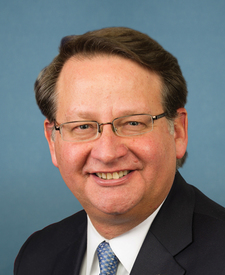
Gary C. Peters
D-MI | Primary Sponsor
Legislative Progress
IntroducedMr. Peters (for himself and Mr. Braun) introduced the following …
Stakeholder Effects
cui bono?How this legislation distributes effects. Mention counts reflect frequency, not effect magnitude.
Bill Structure & Actor Mappings
Who is "The Secretary" in each section?
- "the_director"
- → Director of the Office of Personnel Management
Key Definitions
Terms defined in this bill
The AI leadership training program established and implemented by the Director under subsection (b)(1).
We use a combination of our own taxonomy and classification in addition to large language models to assess meaning and potential beneficiaries. High confidence means strong textual evidence. Always verify with the original bill text.
Learn more about our methodology