PREVAIL Act
Summary
What This Bill Does
The bill requires congressional findings establishing the constitutional, economic, and national security rationale for strengthening patent protections, citing unintended consequences of the America Invents Act of 2011, requires reforms Patent Trial and Appeal Board governance by mandating a code of conduct modeled on federal judicial ethics, requiring transparency in panel composition changes, prohibiting supervisory interference, and requires substantially reforms inter partes review by requiring petitioners to demonstrate standing (actual or imminent infringement, declaratory judgment standing, or pending litigation), introducing estoppel. It relies on reporting requirements, regulatory standard, barrier to entry, and spending. The main policy areas are Technology, Intellectual Property, Finance, and Healthcare.
Who Benefits and How
Patent owners could face reduced risk, Universities and institutions of higher education could see lower costs, and United States Patent and Trademark Office could gain revenue opportunities.
Who Bears the Burden and How
USPTO Director would take on compliance duties, USPTO could lose revenue opportunities, and Post-grant review petitioners could face higher barriers.
Key Provisions
- Requires congressional findings establishing the constitutional, economic, and national security rationale for strengthening patent protections, citing unintended consequences of the America Invents Act of 2011...
- Requires reforms Patent Trial and Appeal Board governance by mandating a code of conduct modeled on federal judicial ethics, requiring transparency in panel composition changes, prohibiting supervisory interference...
- Requires substantially reforms inter partes review by requiring petitioners to demonstrate standing (actual or imminent infringement, declaratory judgment standing, or pending litigation), introducing estoppel...
- Creates applies parallel reforms to post-grant review proceedings: estoppel preventing simultaneous invalidity challenges in federal court/ITC, bars on repetitive petitions, tighter joinder rules, coordinated...
- Requires reforms ex parte reexamination by requiring identification of all real parties in interest, adding a 1-year time bar after infringement complaint service, expanding real party in interest to include financial...
Evidence Chain:
This summary is generated from the full bill text using AI analysis. Expand "Detailed Analysis" below for identified beneficiaries/burden bearers with clause-level evidence links.
At a Glance
What This Bill Does
The bill requires congressional findings establishing the constitutional, economic, and national security rationale for strengthening patent protections, citing unintended consequences of the America Invents Act of 2011, requires reforms Patent Trial and Appeal Board governance by mandating a code of conduct modeled on federal judicial ethics, requiring transparency in panel composition changes, prohibiting supervisory interference, and requires substantially reforms inter partes review by requiring petitioners to demonstrate standing (actual or imminent infringement, declaratory judgment standing, or pending litigation), introducing estoppel.
Key Policy Areas
Technology, Intellectual Property, Finance, Healthcare
Primary Purpose
The bill requires congressional findings establishing the constitutional, economic, and national security rationale for strengthening patent protections, citing unintended consequences of the America Invents Act of 2011, requires reforms Patent Trial and Appeal Board governance by mandating a code of conduct modeled on federal judicial ethics, requiring transparency in panel composition changes, prohibiting supervisory interference, and requires substantially reforms inter partes review by requiring petitioners to demonstrate standing (actual or imminent infringement, declaratory judgment standing, or pending litigation), introducing estoppel.
Policy Domains
Whole bill
Identified Gains
- Patent owners
- Universities and institutions of higher education
- United States Patent and Trademark Office
- University technology-transfer nonprofits
- Patent owners appearing before PTAB
Identified Costs
- USPTO Director
- USPTO
- Post-grant review petitioners
- Pharmaceutical patent holders
- Generic pharmaceutical companies
Sponsors
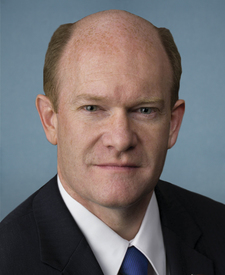
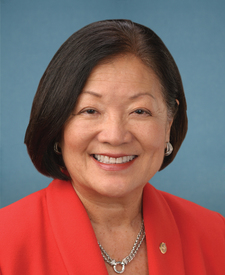
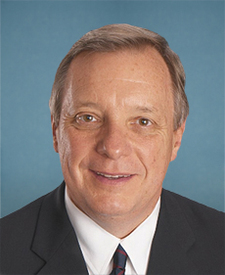
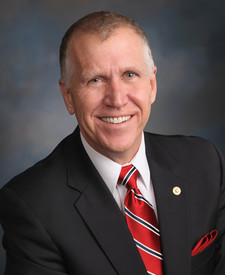
Legislative Progress
In CommitteeMr. Coons (for himself, Mr. Tillis, Mr. Durbin, and Ms. …
Read twice and referred to the Committee on the Judiciary.
Introduced in Senate
Stakeholder Effects
cui bono?How this legislation distributes effects. Mention counts reflect frequency, not effect magnitude.
Ex parte reexamination requesters, Patent applicants, Patent owners
Positive-direction: Patent applicants, Patent owners, Patent owners and inventors, Patent owners appearing before PTAB, Trademark applicants
Negative-direction: Ex parte reexamination requesters, Post-grant review petitioners
Administrative patent judges, Small Business Administration, U.S. Treasury general fund
Positive-direction: United States Patent and Trademark Office
Negative-direction: Small Business Administration, U.S. Treasury general fund, USPTO Director
Third-party litigation funders, Third-party litigation funders and hedge funds
Generic pharmaceutical companies, Pharmaceutical patent holders
Positive-direction: Pharmaceutical patent holders
Negative-direction: Generic pharmaceutical companies
Qualifying 501(c)(3) nonprofit organizations, University technology-transfer nonprofits
Bill Structure & Actor Mappings
Who is "The Secretary" in each section?
We use a combination of our own taxonomy and classification in addition to large language models to assess meaning and potential beneficiaries. High confidence means strong textual evidence. Always verify with the original bill text.
Learn more about our methodology