Uyghur Policy Act of 2025
Analysis under review: This bill has generated analysis that may be too generic or incomplete. Clause-level evidence remains available below.
Summary
What This Bill Does
The Uyghur Policy Act of 2025 directs the U.S. State Department to prioritize Uyghur human rights in its foreign policy, coordinate with international partners to pressure China to close mass detention camps in the Xinjiang Uyghur Autonomous Region, and establish reporting mechanisms for transnational repression of Uyghurs. It earmarks $250,000 per year for three years for public diplomacy by Uyghur human rights advocates.
Who Benefits
- Uyghur diaspora and activists gain U.S. government support including a formal reporting mechanism for transnational repression incidents and public diplomacy funding
- Uyghur and minority detainees in XUAR are the target of international pressure strategy to close detention facilities and secure prisoner releases
- Human rights organizations receive platform support through State Department Speaker Programs
- Independent media like Radio Free Asia are recognized and supported for XUAR coverage
Who Bears the Burden
- Department of State takes on significant new coordination, strategy development, and annual reporting obligations
- Foreign Service Institute must establish Uyghur language training and staff Chinese posts with Uyghur-speaking officers
- Government of the PRC faces coordinated international diplomatic pressure
Key Provisions
- Requires the Secretary of State to develop a strategy within 180 days to pressure China to close all XUAR detention facilities (Sec. 7)
- Mandates annual reporting to Congress on actions to address and prevent transnational repression against Uyghurs (Sec. 4)
- Allocates $250,000/year for FY2025-2027 from existing funds for Uyghur human rights public diplomacy (Sec. 5)
- Requires Uyghur language training for Foreign Service and at least one Uyghur-speaking officer at each U.S. post in China (Sec. 8)
- Directs the U.S. to support a UN special rapporteur for the XUAR (Sec. 9)
- Explicitly authorizes no additional funds; all requirements funded from existing authorizations (Sec. 6)
- Bill provisions sunset 5 years after enactment (Sec. 4)
Evidence Chain:
This summary is generated from the full bill text using AI analysis. Expand "Detailed Analysis" below for identified beneficiaries/burden bearers.
At a Glance
What This Bill Does
Directs U.S. foreign policy to support Uyghur human rights, combat PRC repression and transnational harassment, and coordinate international pressure to close detention camps in the Xinjiang Uyghur Autonomous Region.
Key Policy Areas
Foreign Affairs, Human Rights, International Relations
Primary Purpose
Directs U.S. foreign policy to support Uyghur human rights, combat PRC repression and transnational harassment, and coordinate international pressure to close detention camps in the Xinjiang Uyghur Autonomous Region.
Policy Domains
Uyghur Policy Act of 2025 — Uyghur Human Rights
Identified Gains
Contextual inference, no direct clause citation- Uyghur diaspora and activists
- Uyghur and minority detainees in XUAR
- Human rights advocacy organizations
- Radio Free Asia and independent media
Contextual inference, no direct clause citation
Identified Costs
Contextual inference, no direct clause citation- Department of State (coordination and reporting mandates)
- Foreign Service Institute (Uyghur language training)
- Government of the PRC (diplomatic pressure)
Contextual inference, no direct clause citation
Sponsors
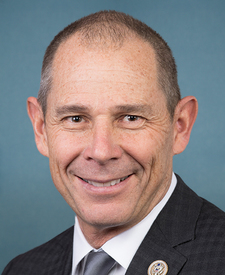
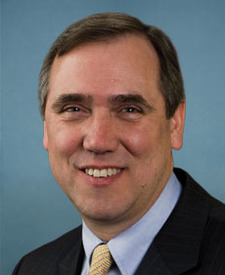
Legislative Progress
ReportedCommittee on Foreign Relations. Ordered to be reported with an …
Mr. Curtis introduced the following bill; which was read twice …
Read twice and referred to the Committee on Foreign Relations.
Introduced in Senate
Stakeholder Effects
cui bono?How this legislation distributes effects. Mention counts reflect frequency, not effect magnitude.
Bureau of Educational and Cultural Affairs, Department of State, Federal agencies implementing this Act
Uyghur diaspora and activists, Uyghur human rights advocates, Uyghur political prisoners in XUAR
Bill Structure & Actor Mappings
Who is "The Secretary" in each section?
- "the_president"
- → President of the United States
- "the_secretary"
- → Secretary of State
- "the_assistant_secretary"
- → Assistant Secretary of State for Educational and Cultural Affairs
Key Definitions
Terms defined in this bill
People's Republic of China
Xinjiang Uyghur Autonomous Region in northwestern China
We use a combination of our own taxonomy and classification in addition to large language models to assess meaning and potential beneficiaries. High confidence means strong textual evidence. Always verify with the original bill text.
Learn more about our methodology