To ensure that whistleblowers, including contractors, are protected from retaliation when a Federal employee orders a reprisal, and for other purposes.
Analysis under review: This bill has generated analysis that may be too generic or incomplete. Clause-level evidence remains available below.
Summary
What This Bill Does
This bill strengthens protections for people who report fraud, waste, or abuse in federal contracts and grants. It expands the definition of who is protected to include not just employees but also contractors, subcontractors, grantees, and anyone working on federal projects. It also protects workers who refuse to follow illegal orders.
Who Benefits and How
Whistleblowers and employees of federal contractors benefit by gaining stronger legal protections against retaliation. Workers can now refuse illegal orders without fear of being fired. Predispute arbitration agreements that would block whistleblower claims are voided, giving workers access to courts. State and local governments receiving federal grants also gain protections for their employees.
Who Bears the Burden and How
Federal contractors, subcontractors, and grantees face new restrictions on retaliating against whistleblowers. They can no longer enforce arbitration clauses to block whistleblower claims. Executive branch officials face potential disciplinary action if they request that contractors retaliate against whistleblowers. Defense and civilian agencies must investigate complaints and may need to provide remedies.
Key Provisions
- Expands 'protected individual' definition to include contractors, subcontractors, grantees, subgrantees, and their employees
- Protects workers who refuse orders that would violate law, rule, or regulation
- Voids predispute arbitration agreements for whistleblower disputes
- Prohibits executive branch officials from requesting contractor reprisals against whistleblowers
- Adds disciplinary action for officials who request reprisals
Evidence Chain:
This summary is generated from the full bill text using AI analysis. Expand "Detailed Analysis" below for identified beneficiaries/burden bearers.
At a Glance
What This Bill Does
Expands whistleblower protections for federal contractors, subcontractors, grantees, and their employees by strengthening anti-retaliation provisions and voiding predispute arbitration agreements
Key Policy Areas
Labor & Employment, Government Contracting, Defense, Federal Grants
Primary Purpose
Expands whistleblower protections for federal contractors, subcontractors, grantees, and their employees by strengthening anti-retaliation provisions and voiding predispute arbitration agreements
Policy Domains
Section 2 - Defense Contractor Whistleblower Protections
Identified Gains
Contextual inference, no direct clause citation- Defense contractor employees
- Defense subcontractor employees
- Grantees of DOD and NASA
- Whistleblowers reporting fraud or safety issues
Contextual inference, no direct clause citation
Identified Costs
Contextual inference, no direct clause citation- Defense contractors
- Defense subcontractors
- Executive branch officials
- Arbitration service providers
Contextual inference, no direct clause citation
Section 3 - Non-Defense Contractor Whistleblower Protections
Identified Gains
Contextual inference, no direct clause citation- Federal contractor employees
- Federal grantee employees
- State and local government employees on federal projects
- Whistleblowers
Contextual inference, no direct clause citation
Identified Costs
Contextual inference, no direct clause citation- Federal contractors
- Federal grantees
- Executive branch officials
- Arbitration service providers
Contextual inference, no direct clause citation
Sponsors

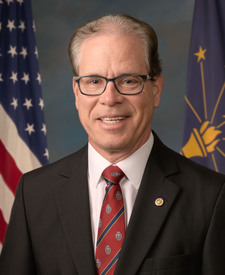
Gary C. Peters
D-MI | Primary Sponsor
Legislative Progress
ReportedReported by Mr. Peters, with an amendment
Mr. Peters (for himself and Mr. Braun) introduced the following …
Stakeholder Effects
cui bono?How this legislation distributes effects. Mention counts reflect frequency, not effect magnitude.
Defense contractor employees, Defense contractors, Defense subcontractor employees
Positive-direction: Defense contractor employees, Defense subcontractor employees
Negative-direction: Defense contractors
DOD and NASA grantee employees, Federal grantee employees
Executive branch officials, Executive branch officials overseeing defense contracts
Federal contractor employees, Federal contractors
Positive-direction: Federal contractor employees
Negative-direction: Federal contractors
State and local government employees on federal projects
Bill Structure & Actor Mappings
Who is "The Secretary" in each section?
- "the_secretary"
- → Secretary of Defense
- "the_inspector_general"
- → Inspector General of the Department of Defense
- "the_inspector_general"
- → Inspector General of the relevant agency
Key Definitions
Terms defined in this bill
A contractor, subcontractor, grantee, or subgrantee of the Federal Government (including state governments, Indian tribes, territories), or an employee of such entities
Includes any Federal award as defined in section 2(a) of the Federal Funding Accountability and Transparency Act of 2006
We use a combination of our own taxonomy and classification in addition to large language models to assess meaning and potential beneficiaries. High confidence means strong textual evidence. Always verify with the original bill text.
Learn more about our methodology