To provide the United States Government with additional tools to deter state and non-state actors from wrongfully detaining United States nationals for political leverage, and for other purposes.
Summary
What This Bill Does
Creates a wrongful-detention state-sponsor designation, requires travel-advisory certifications for tickets to D or K indicator destinations, establishes an advisory council of former hostages, wrongful detainees, family members, and experts, and requires presidential reports on hostage recovery components and deterrence tools.
Who Benefits and How
Wrongfully detained U.S. nationals benefit because the State Department gains a public designation tool for countries that support or directly engage in unlawful or wrongful detention. Families of detainees benefit because the designation review must consider sanctions, visa restrictions, assistance limits, export controls, travel restrictions, terrorism-sponsor authorities, and resources for former detainees and hostages. Former hostages benefit from advisory-council seats and annual recommendations to the President and Congress. International travelers benefit from required ticket-purchase certifications that force review of State Department D or K indicator advisories before travel to high-risk destinations without cutting off consular access. Congressional foreign-affairs committees benefit from 60-day briefings on Afghanistan, Eritrea, Iran, China, Russia, Syria, Maduro-led Venezuela, and Belarus plus annual briefings for five years.
Who Bears the Burden and How
Foreign governments detaining U.S. nationals face designation risk, public listing, sanctions review, visa restrictions, aid restrictions, export restrictions, possible travel limits, and possible terrorism-sponsor review. State Department consular staff must brief Congress, maintain public lists, review authorities, and coordinate responses to wrongful detention. The Special Presidential Envoy for Hostage Affairs must support briefings, advisory-council work, and reports on hostage recovery components. Air carriers must collect passenger certifications for D or K indicator destinations. Ticket agents must collect the same certifications when selling covered foreign-air-transportation tickets in the United States. Advisory Council members serve without compensation, although travel expenses may be allowed.
Key Provisions
- Authorizes the Secretary of State to designate a foreign country as a State Sponsor of Unlawful or Wrongful Detention.
- Requires seven-day pre-designation notice to congressional foreign-affairs and appropriations committees with justification and response actions.
- Directs initial and annual briefings on listed high-risk countries and U.S. deterrence steps.
- Requires a public State Department list of designated countries and a comprehensive review of sanctions, visa, aid, export, travel, and terrorism-sponsor authorities.
- Requires airlines and ticket agents to collect passenger certification of D or K travel-advisory review.
- Establishes a 10-year Advisory Council on Hostage Taking and Unlawful or Wrongful Detention.
- Requires a 180-day presidential report on hostage response, recovery, and envoy components.
Evidence Chain:
This summary is generated from the full bill text using AI analysis. Expand "Detailed Analysis" below for identified beneficiaries/burden bearers with clause-level evidence links.
At a Glance
What This Bill Does
Creates a wrongful-detention state-sponsor designation, requires travel-advisory certifications for tickets to D or K indicator destinations, establishes an advisory council of former hostages, wrongful detainees, family members, and experts, and requires presidential reports on hostage recovery components and deterrence tools.
Key Policy Areas
Hostage Affairs, Consular Affairs, Foreign Policy, Aviation
Primary Purpose
Creates a wrongful-detention state-sponsor designation, requires travel-advisory certifications for tickets to D or K indicator destinations, establishes an advisory council of former hostages, wrongful detainees, family members, and experts, and requires presidential reports on hostage recovery components and deterrence tools.
Policy Domains
House resolution provisions
Identified Gains
- Families of wrongfully detained nationals
- Former hostage families
- International travelers using air carriers
- Congressional foreign-affairs committees
- State Department travel advisory users
Identified Costs
- State Department consular staff
- Hostage Response Group staff
- Hostage Recovery Fusion Cell staff
- Office of the Special Presidential Envoy
- Air carrier compliance staff
- Ticket agent compliance staff
Sponsors
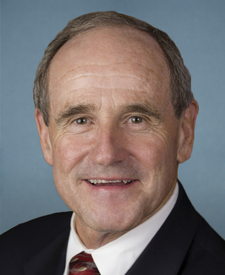
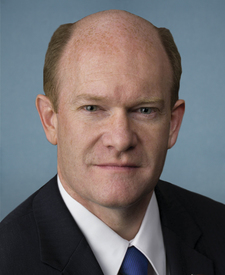
Legislative Progress
ReportedReported by Mr. Risch, with an amendment
Mr. Risch (for himself and Mr. Coons) introduced the following …
Stakeholder Effects
cui bono?How this legislation distributes effects. Mention counts reflect frequency, not effect magnitude.
Advisory Council members, Families of detainees, Foreign governments detaining U.S. nationals
Positive-direction: Families of detainees, Former hostages, State Department travel advisory users, Wrongful detention survivors, Wrongfully detained U.S. nationals
Negative-direction: Advisory Council members, Foreign governments detaining U.S. nationals, Hostage recovery offices, State Department consular staff, State Department sanctions staff
Congressional foreign-affairs committees, White House reporting staff
Positive-direction: Congressional foreign-affairs committees
Negative-direction: White House reporting staff
Bill Structure & Actor Mappings
Who is "The Secretary" in each section?
- "president"
- → President
- "secretary"
- → Secretary of State
Key Definitions
Terms defined in this bill
A foreign country designated for supporting or directly engaging in unlawful or wrongful detention of a U.S. national.
A State Department travel advisory indicator showing wrongful-detention risk for U.S. nationals.
We use a combination of our own taxonomy and classification in addition to large language models to assess meaning and potential beneficiaries. High confidence means strong textual evidence. Always verify with the original bill text.
Learn more about our methodology