Wildfire Prevention Act of 2025
Summary
What This Bill Does
The Wildfire Prevention Act of 2025 directs the Forest Service and Bureau of Land Management to set annual mechanical-thinning and prescribed-fire goals on federal land, using 2019 through 2023 treatment averages as the baseline. Goals for fiscal years 2027 and 2028 must be at least 20 percent above that baseline, and goals for fiscal year 2029 and later must be at least 40 percent above it. The bill also requires public reporting on treatment acreage, challenges, streamlined environmental-review authorities, partner use, standardized data procedures, forest carbon balance, and wildfire performance metrics.
Who Benefits and How
Communities in the wildland-urban interface benefit from higher hazardous-fuels treatment goals, better tracking of whether treatments reduce wildfire risk, and a new categorical exclusion for high-priority hazard trees near roads, trails, and developed recreation sites. Electric transmission and distribution operators benefit from longer operating-plan horizons and permission, in special use permits or easements, to cut and remove vegetation near facilities without a separate timber sale when consistent with plans and environmental law. Local governments and Indian Tribes benefit from intervention rights and full settlement-participation status in lawsuits over nearby federal wildfire, insect, disease, or timber projects. Livestock grazing permittees benefit from a required federal strategy to use grazing as a wildfire-risk-reduction tool. Wildfire technology companies, universities, and nonprofits benefit from a seven-year public-private deployment and testbed pilot for prevention, detection, communication, and mitigation technologies.
Who Bears the Burden and How
Forest Service and BLM hazardous-fuels staff bear the core burden of calculating treatment baselines, setting annual goals, assigning regional or state acreage allotments, publishing data, preparing annual reports, and implementing standardized tracking procedures. USDA and Interior budget staff must include hazardous-fuels reporting in budget materials, while Forest Service carbon-accounting staff must publish regional net forest carbon balances every three years. Federal land managers must use at least one existing streamlined environmental-review authority for qualifying units within three years, develop a high-priority hazard-tree categorical exclusion, and run a technology testbed with agencies such as Defense, NOAA, FEMA, NASA, the U.S. Fire Administration, and the Bureau of Indian Affairs. Environmental-review and litigation participants may face faster project processing and more required local or Tribal participation in settlements.
Key Provisions
- Requires Forest Service and BLM treatment goals for mechanical thinning and prescribed fire, with minimum increases of 20 percent for fiscal years 2027 and 2028 and 40 percent for fiscal year 2029 and later.
- Requires annual public reports on treated acres, prescribed fire, mechanical thinning, regeneration harvests, high wildfire hazard or insect and disease risk areas, streamlined authorities, partner agreements, and implementation challenges.
- Standardizes hazardous-fuels data reporting by requiring single-counted acres, risk levels, wildland-urban interface status, activity types, cost per acre, location, and treatment effectiveness.
- Requires regional forest carbon accounting every three years and a congressional report on outcome-based wildfire-risk performance metrics.
- Expands utility right-of-way vegetation management permissions, raises the small timber-sale threshold to $55,000, and creates a high-priority hazard-tree categorical exclusion capped at 3,000 acres.
- Gives local governments and Indian Tribes intervention and settlement-participation rights for qualifying nearby federal projects.
- Requires a grazing strategy for wildfire risk reduction, mandatory use of existing streamlined environmental-review authorities on qualifying units, and a seven-year wildfire technology deployment and testbed pilot.
Evidence Chain:
This summary is generated from the full bill text using AI analysis. Expand "Detailed Analysis" below for identified beneficiaries/burden bearers with clause-level evidence links.
At a Glance
What This Bill Does
Sets wildfire hazardous-fuels treatment goals and transparency requirements for federal lands while expanding tools for utility right-of-way vegetation work, hazard-tree removal, grazing, streamlined environmental review, local and Tribal intervention, and wildfire technology testing.
Key Policy Areas
Forestry, Wildfire, Public Lands, Utilities, Technology
Primary Purpose
Sets wildfire hazardous-fuels treatment goals and transparency requirements for federal lands while expanding tools for utility right-of-way vegetation work, hazard-tree removal, grazing, streamlined environmental review, local and Tribal intervention, and wildfire technology testing.
Policy Domains
Utility, hazard-tree, grazing, litigation, and technology tools
Identified Gains
- Electric transmission operators on federal rights-of-way
- Local governments adjacent to wildfire projects
- Indian Tribes adjacent to wildfire projects
- Livestock grazing permittees on federal land
- Wildfire technology companies
- Firefighters using wildfire detection tools
Identified Costs
- Forest Service environmental-review staff
- BLM environmental-review staff
- Federal land management technology pilot staff
- NOAA wildfire technology coordinators
- FEMA wildfire response coordinators
Federal wildfire treatment goals and reporting
Identified Gains
- Wildland-urban interface communities near federal land
- Congressional wildfire oversight staff
- Forest restoration project partners
- Public wildfire data users
Identified Costs
- Forest Service hazardous-fuels program staff
- BLM hazardous-fuels program staff
- USDA budget reporting staff
- Interior budget reporting staff
- Forest Service carbon-accounting staff
Sponsors

Legislative Progress
ReportedCommittee on Energy and Natural Resources. Ordered to be reported …
Committee on Energy and Natural Resources Subcommittee on Public Lands, …
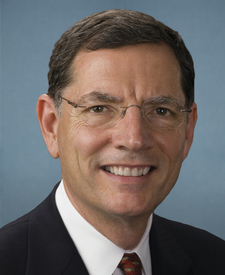
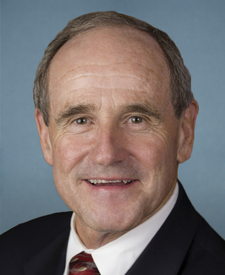
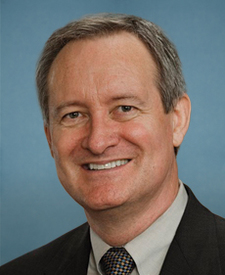
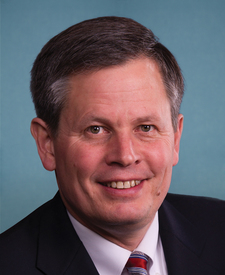
Mr. Barrasso (for himself, Mr. Daines, Ms. Lummis, Mr. Sheehy, …
Read twice and referred to the Committee on Energy and …
Introduced in Senate
Stakeholder Effects
cui bono?How this legislation distributes effects. Mention counts reflect frequency, not effect magnitude.
BLM environmental-review staff, BLM hazardous-fuels program staff, BLM rangeland management staff
Forest Service hazardous-fuels program staff faces effects in multiple directions
Positive-direction: Forest Service hazard-tree crews, Indian Tribes adjacent to wildfire projects, Interior wildfire budget reporting staff
Negative-direction: BLM environmental-review staff, BLM hazardous-fuels program staff, BLM rangeland management staff, BLM wildfire performance metrics staff, BLM wildfire reporting staff, Federal land management technology pilot staff, Forest Service environmental-review staff, Forest Service special-use permit staff, Forest Service wildfire performance metrics staff, Forest Service wildfire reporting staff, Interior budget reporting staff, NOAA wildfire technology coordinators, USDA budget reporting staff
Communities threatened by invasive annual grasses, Firefighters using wildfire detection tools, Public wildfire data users
Forest thinning contractors on federal land, Wildfire project proponents on federal land
Electric transmission operators on federal rights-of-way
Utility vegetation management contractors
Bill Structure & Actor Mappings
Who is "The Secretary" in each section?
- "blm"
- → Bureau of Land Management
- "forest_service"
- → Forest Service
- "secretary_concerned"
- → Secretary of Agriculture through the Forest Service or Secretary of the Interior through BLM
- "indian_tribe"
- → Indian Tribe adjacent to a qualified project
- "utility_owner"
- → Owner or operator of an electric transmission or distribution facility
- "covered_entity"
- → Private entity, nonprofit, or institution of higher education testing wildfire technology
- "local_government"
- → Unit of local government adjacent to a qualified project
Key Definitions
Terms defined in this bill
Vegetation management to reduce wildfire risk, including mechanical treatments and prescribed burning, excluding the award of a contract itself.
A visibly hazardous tree likely to fail and injure people or damage federal property near specified roads, trails, or developed recreation sites.
We use a combination of our own taxonomy and classification in addition to large language models to assess meaning and potential beneficiaries. High confidence means strong textual evidence. Always verify with the original bill text.
Learn more about our methodology