Impact Aid Infrastructure Partnership Act
Analysis under review: This bill has generated analysis that may be too generic or incomplete. Clause-level evidence remains available below.
Summary
What This Bill Does
The Impact Aid Infrastructure Partnership Act authorizes $1 billion in federal construction grants over four years ($250 million per year) for school districts that are heavily affected by the presence of non-taxable federal property -- such as military bases, Indian reservations, and other federal lands -- which shrinks their local tax base and limits their ability to fund school construction and repairs. The bill supplements existing Impact Aid payments under the Elementary and Secondary Education Act by creating a new, dedicated construction funding stream. 75 percent of funds go to competitive grants prioritized by facility condition severity, while 25 percent go to formula-based grants using an expanded weighted student unit calculation.
Who Benefits and How
- Federally impacted school districts (local educational agencies eligible under Impact Aid sections 7002 and 7003) receive direct construction, renovation, and repair funding for school buildings that are deteriorating, overcrowded, or fail health and safety codes. Districts with no bonding capacity receive full federal payment with no local match required.
- Students and staff at impacted schools benefit from improved learning environments -- the bill specifically targets buildings with poor ventilation, structural deficiencies, hazardous materials, unsafe drinking water, overcrowding, and inadequate technology infrastructure.
- Indian Treaty and federal trust land communities receive priority attention, including dedicated teacher housing construction and repair provisions. The bill explicitly addresses the unique challenges of geographically remote Tribal school districts where teacher recruitment depends on agency-provided housing.
- Rural communities benefit from formula grants that expand eligibility to districts meeting National Defense Authorization Act requirements, addressing the 30%+ construction cost premium that rural and remote districts face.
- Construction industry firms operating in rural and underserved areas gain $1 billion in potential contract opportunities over four years.
Who Bears the Burden and How
- The federal government (taxpayers) bears the $1 billion authorization cost over four years, plus up to 0.5% administrative set-aside for the Department of Education technical assistance, management, and oversight.
- The Department of Education assumes significant new administrative responsibilities: establishing and maintaining a facility condition priority listing, reviewing grant applications, certifying facility conditions, approving construction plans for grants over $5 million, and producing annual congressional reports.
- Local educational agencies with some bonding capacity must provide a non-Federal match (10-25% depending on their learning opportunity threshold percentage), which may strain already-limited local budgets.
- School districts that apply but are not funded must wait and reapply in subsequent years within the 4-year authorization window, potentially delaying urgently needed repairs.
Key Provisions
- Authorizes $250M/year for 4 fiscal years ($1B total), with funds remaining available until expended (Sec. 3)
- 75/25 split: 75% competitive grants based on facility condition, 25% formula grants (Sec. 3)
- Top competitive priority: facilities violating health/safety codes, failing CDC building standards, or non-compliant with disability access and capacity standards (Sec. 4)
- Second priority: facilities in poor condition per ASCE standards, with hazardous conditions including lead in drinking water, poor air quality, and structural deficiencies (Sec. 4)
- Full federal payment for districts with no bonding capacity; sliding scale match (10-25%) for others based on learning opportunity threshold (Sec. 8)
- Teacher housing construction and repair included for districts serving Indian lands (Secs. 4, 8)
- Funds restricted to construction, renovation, and repair -- no real property acquisition (Sec. 9)
- Supplement-not-supplant requirement prevents districts from reducing local funding (Sec. 9)
Evidence Chain:
This summary is generated from the full bill text using AI analysis. Expand "Detailed Analysis" below for identified beneficiaries/burden bearers with clause-level evidence links.
At a Glance
What This Bill Does
Authorizes $1 billion over four years ($250M/year) in federal construction grants for federally impacted local educational agencies -- school districts with large amounts of non-taxable federal property (military bases, Indian reservations, federal lands) that limits their bonding capacity and ability to fund school facility construction, renovation, and repair.
Key Policy Areas
Education, Infrastructure
Primary Purpose
Authorizes $1 billion over four years ($250M/year) in federal construction grants for federally impacted local educational agencies -- school districts with large amounts of non-taxable federal property (military bases, Indian reservations, federal lands) that limits their bonding capacity and ability to fund school facility construction, renovation, and repair.
Policy Domains
Formula Grants (Sec. 5)
Identified Gains
- School districts near military installations meeting NDAA requirements
- School districts with 20%+ enrollment of children from Indian lands
Identified Costs
- Federal government (expanded formula increases the number of eligible districts competing for 25% formula allocation)
Competitive Grants Based on Facility Condition (Sec. 4)
Identified Gains
- School districts with facilities violating health/safety codes (highest priority)
- School districts serving Indian lands needing teacher housing
- Students in schools with hazardous drinking water, poor air quality, or structural deficiencies
Identified Costs
- Department of Education (must establish and maintain facility condition priority listing)
Payments and General Provisions (Secs. 8-9)
Identified Gains
- School districts with high federal impact (80%+ threshold) -- lowest match requirement
- School districts with no bonding capacity -- full federal payment
- Unsuccessful applicants -- may reapply in subsequent fiscal years
Identified Costs
- School districts with moderate federal impact -- must fund 20-25% match
- Department of Education -- annual reporting, grant oversight, construction plan approval for grants over $5M
Application and Award Criteria (Secs. 6-7)
Identified Gains
- School districts with no bonding capacity (first priority)
- School districts with low assessed property values (first and second priority)
- Rural and remote school districts with limited alternative funding
Identified Costs
- Department of Education (application review and multi-factor evaluation)
Findings, Purpose, and Funding Authorization (Secs. 2-3)
Identified Gains
- Federally impacted local educational agencies with deteriorating facilities
- Students and staff at schools failing health and safety standards
- Indian Treaty and federal trust land school communities
Identified Costs
- Federal government (taxpayers) -- $1B authorization over 4 years
- Department of Education -- new program administration and oversight
Sponsors



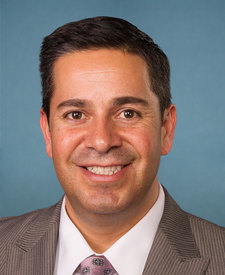
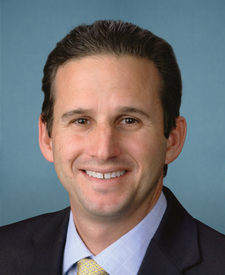
Legislative Progress
In CommitteeMs. Hirono (for herself, Mr. Blumenthal, Mr. Durbin, Mr. Gallego, …
Read twice and referred to the Committee on Health, Education, …
Introduced in Senate
Stakeholder Effects
cui bono?How this legislation distributes effects. Mention counts reflect frequency, not effect magnitude.
Federally impacted local educational agencies, Federally impacted local educational agencies receiving grants, Local educational agencies applying for competitive grants
Positive-direction: Federally impacted local educational agencies, School districts meeting standard Section 7007(a) threshold, School districts near military installations meeting NDAA requirements, School districts serving Indian Treaty and federal trust lands, School districts serving Indian lands needing teacher housing, School districts with 20%+ Indian lands enrollment, School districts with 80%+ learning opportunity threshold, School districts with facilities violating health and safety codes, School districts with moderate property values below state average, School districts with no bonding capacity, School districts with no bonding capacity or very low property values, Students and staff at impacted schools, Students in schools with hazardous conditions, Teachers in remote Tribal communities, Unfunded applicant school districts
Negative-direction: School districts with moderate federal impact (under 50% threshold), Wealthier school districts with assessed values above 100M
Congress, Department of Education
Positive-direction: Congress
Negative-direction: Department of Education
Bill Structure & Actor Mappings
Who is "The Secretary" in each section?
- "the_secretary"
- → Secretary of Education
- "the_secretary"
- → Secretary of Education
- "the_secretary"
- → Secretary of Education
- "the_secretary"
- → Secretary of Education
- "the_secretary"
- → Secretary of Education
Note: 'The Secretary' refers to the Secretary of Education throughout all sections.
Key Definitions
Terms defined in this bill
As described in section 7003(b)(3)(B)(i) of ESEA -- a measure of the proportion of federally-connected children in a school district, used to determine the non-Federal match requirement.
Has the meaning given in section 7013 of the Elementary and Secondary Education Act of 1965 (20 U.S.C. 7713) -- a school district eligible for Impact Aid payments due to the presence of non-taxable federal property.
We use a combination of our own taxonomy and classification in addition to large language models to assess meaning and potential beneficiaries. High confidence means strong textual evidence. Always verify with the original bill text.
Learn more about our methodology