Workplace Violence Prevention for Health Care and Social Service Workers Act
Analysis under review: This bill has generated analysis that may be too generic or incomplete. Clause-level evidence remains available below.
Summary
This bill requires the Department of Labor to issue a new OSHA standard within one year that mandates workplace violence prevention plans for healthcare and social service employers. Covered facilities include hospitals, nursing homes, psychiatric treatment facilities, drug treatment centers, emergency departments, and community care settings. Employers must conduct risk assessments, implement engineering controls, train employees annually, investigate violent incidents, maintain incident logs for 5 years, and submit annual summaries to the Secretary of Labor. Title II ties compliance to Medicare participation, making it a condition of receiving Medicare funds for certain facilities. The bill also includes strong anti-retaliation protections for employees who report violence.
Evidence Chain:
This summary is generated from the full bill text using AI analysis. Expand "Detailed Analysis" below for identified beneficiaries/burden bearers.
At a Glance
What This Bill Does
Directs the Secretary of Labor to issue an OSHA standard requiring healthcare and social service employers to develop and implement comprehensive workplace violence prevention plans, including risk assessments, engineering controls, training, incident investigation, recordkeeping, and anti-retaliation protections.
Who Benefits
- Healthcare workers
- Social service workers
- Emergency responders
Who Bears Costs
- Healthcare employers (compliance costs)
- Social service agencies (plan development and training costs)
- OSHA (rulemaking and enforcement)
Key Policy Areas
{'domain': 'Labor', 'evidence': 'Title I requires OSHA workplace violence prevention standard under the Occupational Safety and Health Act'}, {'domain': 'Healthcare', 'evidence': 'Section 102 defines covered facilities including hospitals, nursing homes, psychiatric facilities, and social service settings'}, {'domain': 'Medicare', 'evidence': 'Title II applies the standard as a condition of Medicare participation for certain facilities'}
Primary Purpose
Directs the Secretary of Labor to issue an OSHA standard requiring healthcare and social service employers to develop and implement comprehensive workplace violence prevention plans, including risk assessments, engineering controls, training, incident investigation, recordkeeping, and anti-retaliation protections.
Policy Domains
Legislative Strategy
"Using OSHA regulatory authority and Medicare participation conditions to mandate violence prevention across the healthcare sector"
Sponsors

Legislative Progress
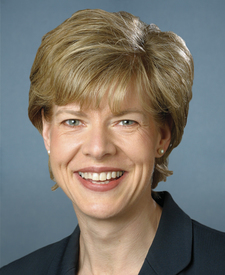
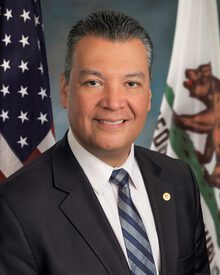
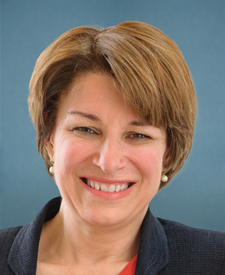
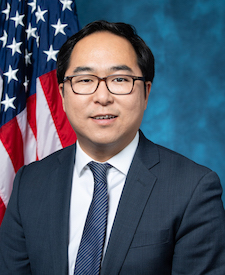
In CommitteeMs. Baldwin (for herself, Mr. Markey, Mr. Kaine, Mrs. Shaheen, …
Read twice and referred to the Committee on Health, Education, …
Introduced in Senate
Stakeholder Effects
cui bono?How this legislation distributes effects. Mention counts reflect frequency, not effect magnitude.
Healthcare and social service employers, Healthcare employers, Medicare-participating healthcare facilities
Positive-direction: Physician offices (excluded)
Negative-direction: Healthcare and social service employers, Healthcare employers, Medicare-participating healthcare facilities
Healthcare workers, Healthcare workers and social service workers, Healthcare workers at Medicare facilities
Bill Structure & Actor Mappings
Who is "The Secretary" in each section?
- "the_secretary"
- → Secretary of Labor
- "covered_employer"
- → Employer in healthcare or social service sector operating a covered facility or performing covered services
- "the_secretary"
- → Secretary of Health and Human Services
Key Definitions
Terms defined in this bill
Hospitals, nursing homes, psychiatric facilities, drug treatment centers, community care settings, correctional medical facilities, and others
Home health care, home-based hospice, home-based social work, emergency services and transport
Person employing individuals to work at covered facilities or perform covered services, including contractors and temp agencies
Any act of violence or threat of violence at a covered facility or during covered services, excluding lawful self-defense
We use a combination of our own taxonomy and classification in addition to large language models to assess meaning and potential beneficiaries. High confidence means strong textual evidence. Always verify with the original bill text.
Learn more about our methodology