To enable the Federal Trade Commission to deter filing of sham citizen petitions to cover an attempt to interfere with approval of a competing generic drug or biosimilar, to foster competition, and facilitate the efficient review of petitions filed in good faith to raise legitimate public health concerns, and for other purposes.
Summary
What This Bill Does
This bill gives the Federal Trade Commission explicit authority to pursue sham citizen petitions related to FDA drug and biologic approvals. A covered petition is a petition or supplement filed under Food, Drug, and Cosmetic Act section 505(q). A sham petition is either objectively baseless and aimed at using the government process to interfere with a competitor, or a series of covered petitions using the process rather than the outcome to interfere with a competitor.
Submitting or causing a sham covered petition becomes an unfair method of competition under FTC Act section 5. FTC may sue in federal district court for civil penalties and other relief. If HHS determines a petition was primarily submitted to delay approval of a covered application and refers that finding to FTC, a petition in a series is presumed part of a sham series unless the defendant proves otherwise. Penalties can be the greater of revenue from the referenced drug product during petition review or $50,000 for each calendar day each sham petition was under HHS review.
Who Benefits and How
Generic drug applicants benefit because sham citizen petitions become riskier and more expensive for competitors. Biosimilar applicants benefit from the same protection against delay tactics. Patients using affected drugs benefit if competition reaches the market sooner. Health plan payers benefit if generic or biosimilar entry lowers drug spending. FTC competition staff benefit from explicit penalty authority and HHS referral presumptions.
Who Bears the Burden and How
Brand drug manufacturers filing sham petitions face civil penalties, FTC lawsuits, and revenue-based exposure. Petition sponsors must be able to show good-faith public health concerns. HHS and FDA staff must identify delay-purpose petitions and refer reasoned determinations to FTC. Federal courts must evaluate sham petition claims and any third-party challenges to HHS referrals.
Key Provisions
- Defines covered applications, covered petitions, series of petitions, and sham petitions.
- Makes sham citizen petitions an FTC unfair method of competition.
- Authorizes FTC civil actions for penalties and other relief.
- Creates an HHS referral presumption for serial delay petitions.
- Sets penalties at revenue during review or $50,000 per day, whichever is greater.
Evidence Chain:
This summary is generated from the full bill text using AI analysis. Expand "Detailed Analysis" below for identified beneficiaries/burden bearers with clause-level evidence links.
At a Glance
What This Bill Does
Makes sham FDA citizen petitions targeting generic drug or biosimilar approvals an FTC unfair method of competition, authorizing civil actions, penalties based on revenue during petition review or $50,000 per day, HHS referral presumptions for serial petitions, and preservation of other antitrust remedies.
Key Policy Areas
Pharmaceuticals, FTC, FDA, Drug Competition
Primary Purpose
Makes sham FDA citizen petitions targeting generic drug or biosimilar approvals an FTC unfair method of competition, authorizing civil actions, penalties based on revenue during petition review or $50,000 per day, HHS referral presumptions for serial petitions, and preservation of other antitrust remedies.
Policy Domains
House resolution provisions
Identified Gains
- Generic drug applicants
- Biosimilar applicants
- Patients using affected drugs
- Health plan payers
- FTC competition staff
Identified Costs
- Brand drug manufacturers filing sham petitions
- Petition sponsors
- HHS petition review staff
- FDA petition review staff
- Federal courts
Sponsors
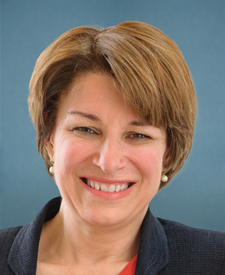
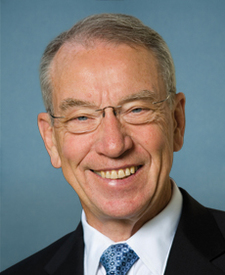
Legislative Progress
ReportedReported by Mr. Grassley, without amendment
Ms. Klobuchar (for herself, Mr. Grassley, Mr. Durbin, Mr. Blumenthal, …
Stakeholder Effects
cui bono?How this legislation distributes effects. Mention counts reflect frequency, not effect magnitude.
Biosimilar applicants, Brand drug manufacturers filing sham petitions, Generic drug applicants
Positive-direction: Biosimilar applicants, Generic drug applicants
Negative-direction: Brand drug manufacturers filing sham petitions
HHS petition review staff, Patients using affected drugs
Positive-direction: Patients using affected drugs
Negative-direction: HHS petition review staff
Bill Structure & Actor Mappings
Who is "The Secretary" in each section?
- "fda"
- → Food and Drug Administration
- "ftc"
- → Federal Trade Commission
- "hhs"
- → Department of Health and Human Services
We use a combination of our own taxonomy and classification in addition to large language models to assess meaning and potential beneficiaries. High confidence means strong textual evidence. Always verify with the original bill text.
Learn more about our methodology