SOIL Act of 2025
Analysis under review: This bill has generated analysis that may be too generic or incomplete. Clause-level evidence remains available below.
Summary
The SOIL Act of 2025 (Security and Oversight for International Landholdings) restricts foreign adversary nations from acquiring U.S. agricultural land and real estate near military installations. The bill expands the jurisdiction of the Committee on Foreign Investment in the United States (CFIUS) to review agricultural land purchases and real estate transactions within 50 miles of military bases by nationals from countries designated as nonmarket economies (primarily China) or identified as national security threats. It prohibits any federal agency from providing subsidies or assistance for agricultural land owned by persons from these adversary countries. The bill also strengthens disclosure rules by requiring reporting of agricultural land leases longer than 5 years (not just purchases), prevents the Secretary of Agriculture from excluding land based on acreage, and mandates an annual public report on foreign agricultural landholdings with country-by-country analysis including specific data on Chinese and Russian holdings.
Evidence Chain:
This summary is generated from the full bill text using AI analysis. Expand "Detailed Analysis" below for identified beneficiaries/burden bearers.
At a Glance
What This Bill Does
Increases oversight of foreign direct investment in U.S. agricultural land, expands CFIUS jurisdiction to cover agricultural land and near-military real estate transactions by adversary nations, prohibits federal subsidies for foreign-owned agricultural holdings, and strengthens disclosure requirements under the Agricultural Foreign Investment Disclosure Act.
Who Benefits
- U.S. domestic agricultural landowners
- National security infrastructure near military bases
- CFIUS oversight authority
Who Bears Costs
- Foreign nationals from adversary nations seeking to acquire U.S. farmland
- Chinese and Russian agricultural investors in the U.S.
- Foreign-owned agricultural operations receiving federal subsidies
Key Policy Areas
{'domain': 'Agriculture', 'evidence': ['4', '5', '6']}, {'domain': 'National Security', 'evidence': ['2', '3']}, {'domain': 'Foreign Affairs', 'evidence': ['2', '3', '4']}
Primary Purpose
Increases oversight of foreign direct investment in U.S. agricultural land, expands CFIUS jurisdiction to cover agricultural land and near-military real estate transactions by adversary nations, prohibits federal subsidies for foreign-owned agricultural holdings, and strengthens disclosure requirements under the Agricultural Foreign Investment Disclosure Act.
Policy Domains
Legislative Strategy
"Layer multiple restrictions - CFIUS review, subsidy prohibition, and enhanced disclosure - to create a comprehensive framework limiting adversary-nation acquisition and use of U.S. agricultural land and near-military real estate."
Sponsors



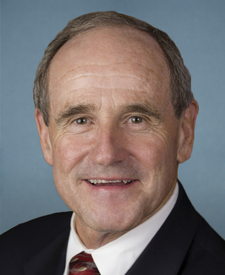

Legislative Progress
In CommitteeMr. Lankford (for himself, Mr. Bennet, Mr. Risch, and Mr. …
Read twice and referred to the Committee on Agriculture, Nutrition, …
Introduced in Senate
Stakeholder Effects
cui bono?How this legislation distributes effects. Mention counts reflect frequency, not effect magnitude.
Chinese agricultural investors in the U.S., Chinese and Russian agricultural investors, Chinese-owned U.S. agricultural operations
CFIUS, Federal agricultural subsidy programs, USDA Secretary
Foreign-owned agricultural operations receiving federal subsidies, Small-acreage foreign agricultural holdings, U.S. domestic agricultural landowners
Positive-direction: U.S. domestic agricultural landowners, U.S. domestic farmers
Negative-direction: Foreign-owned agricultural operations receiving federal subsidies, Small-acreage foreign agricultural holdings
Bill Structure & Actor Mappings
Who is "The Secretary" in each section?
- "cfius"
- → Committee on Foreign Investment in the United States
- "the_secretary"
- → Secretary of Agriculture
Key Definitions
Terms defined in this bill
We use a combination of our own taxonomy and classification in addition to large language models to assess meaning and potential beneficiaries. High confidence means strong textual evidence. Always verify with the original bill text.
Learn more about our methodology