Making continuing appropriations and extensions for fiscal year 2025, and for other purposes.
Analysis under review: This bill has generated analysis that may be too generic or incomplete. Clause-level evidence remains available below.
Summary
What This Bill Does
This continuing resolution funds the federal government through December 20, 2024, at fiscal year 2024 spending levels. It prevents a government shutdown while Congress finishes work on full-year appropriations, and includes specific provisions for presidential transition, inauguration security, and maintaining key programs.
Who Benefits and How
Federal agencies can continue operations without shutdown. Federal employees avoid furloughs—agencies may increase civilian pay rates to prevent layoffs. WIC recipients maintain program participation at current levels. The presidential transition team receives $25 million for transition activities. DC receives $47 million for inauguration security costs. Farm loan applicants continue receiving approved loans at higher rates.
Who Bears the Burden and How
Defense programs face restrictions—no new production, no rate increases, no new projects beyond FY2024 levels. Grant programs cannot make high initial distributions that would "impinge on final funding prerogatives." The most limited funding action permitted must be taken. Mandatory payments continue but with timing restrictions near the expiration date.
Key Provisions
- Funds government through December 20, 2024 at FY2024 rates
- $25 million for presidential transition administrative support
- $47 million for DC inauguration security
- Emergency and disaster relief designations continue
- Farm ownership and operating loans maintained
- WIC and commodity food programs maintain participation levels
- Livestock mandatory reporting extended
- U.S. Parole Commission extended
Evidence Chain:
This summary is generated from the full bill text using AI analysis. Expand "Detailed Analysis" below for identified beneficiaries/burden bearers.
At a Glance
What This Bill Does
Provides continuing appropriations for federal government operations through December 20, 2024, maintaining FY2024 funding levels, with specific provisions for presidential transition, inauguration security, and disaster relief.
Key Policy Areas
Appropriations, Federal Budget, Government Operations
Primary Purpose
Provides continuing appropriations for federal government operations through December 20, 2024, maintaining FY2024 funding levels, with specific provisions for presidential transition, inauguration security, and disaster relief.
Policy Domains
Sponsors
Legislative Progress
IntroducedReceived
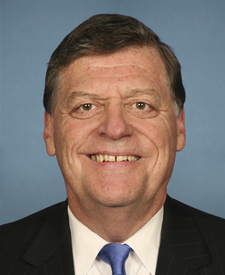
Mr. Cole introduced the following bill; which was referred to …
Stakeholder Effects
cui bono?How this legislation distributes effects. Mention counts reflect frequency, not effect magnitude.
All federal agencies, Bureau of Labor Statistics, Congress
Department of Defense, Department of State, Department of Veterans Affairs, Federal agencies, Office of Management and Budget face effects in multiple directions
Positive-direction: All federal agencies, Bureau of Labor Statistics, Congress, District of Columbia government, Executive Office of the President, FAA Air Traffic Organization, Farm Service Agency, Federal Emergency Management Agency, Federal civilian employees, Federal employees, Federal government departments and agencies, Federal programs funded by this CR, Food and Nutrition Service, Foreign Service officers stationed overseas, Forest Service, General Services Administration, HHS implementing No Surprises Act, Indian Health Service, Intelligence agencies, Medicare program, National Archives and Records Administration, National Park Service, Northern Mariana Islands government, Programs with emergency designations, Public housing authorities, Rural Housing Service, State welfare agencies, US Navy, US Secret Service, US agencies administering Palau compact, VA Home Loan Program
Negative-direction: Department of Homeland Security, Federal agencies with rescinded funds, State SNAP administrators, State and local governments receiving federal grants, VA Chief Financial Officer
American Indian/Alaska Native communities, Communities in wildfire-prone areas, Disabled veterans in Paralympic/Olympic sports
Positive-direction: American Indian/Alaska Native communities, Communities in wildfire-prone areas, Disabled veterans in Paralympic/Olympic sports, Disabled veterans needing specially adapted housing, Disaster relief recipients, Disaster-affected communities, Heirs of deceased Representatives, Hermit's Peak/Calf Canyon Fire victims, Homeless veterans with special needs, Homeless women veterans and veterans with children, Inauguration attendees, New Mexico communities affected by fire, Patients protected from surprise medical billing, Rural communities, Rural communities with EAS routes, TANF recipients, Very low-income veteran families, Veterans and military personnel receiving healthcare, Veterans with service-connected disabilities requiring nursing home care, WIC recipients (women, infants, children)
Negative-direction: Veterans using VA home loans
Incoming administration transition team, Presidential candidates, Presidential transition teams
Disaster relief contractors, Historic preservation contractors, Military construction contractors at Kings Bay
Veteran homeless service providers, Veteran reintegration service providers, Veteran supportive housing service providers
Cattle and livestock producers, Farmers seeking ownership or operating loans, Livestock packers and processors
Positive-direction: Cattle and livestock producers, Farmers seeking ownership or operating loans
Negative-direction: Livestock packers and processors
Airport operators, Regional airlines providing Essential Air Service
Healthcare providers in Northern Mariana Islands, Tribal healthcare facilities
Bill Structure & Actor Mappings
Who is "The Secretary" in each section?
- "the_director"
- → Director of the Office of Management and Budget
- "the_secretary"
- → Secretary of the Treasury
Key Definitions
Terms defined in this bill
Appropriations available until December 20, 2024, or enactment of full-year appropriations
We use a combination of our own taxonomy and classification in addition to large language models to assess meaning and potential beneficiaries. High confidence means strong textual evidence. Always verify with the original bill text.
Learn more about our methodology