To require the Federal Aviation Administration to provide funding for noise mitigation, and for other purposes.
Analysis under review: This bill has generated analysis that may be too generic or incomplete. Clause-level evidence remains available below.
Summary
This bill creates a new system for communities affected by airport noise and pollution. It expands eligibility for FAA noise mitigation funding to communities outside the current 65 DNL noise standard. It directs the FAA to contract with the National Academy of Sciences to study aviation impacts and develop a scientific framework for measuring them. Communities near major airports can request official designation and form community boards to work with the FAA on assessing impacts and developing action plans. The FAA must devise action plans to address community concerns, including possible changes to flight paths and operations. The bill authorizes million from the Airport and Airway Trust Fund over 10 years for noise mitigation grants covering residences, hospitals, schools, places of worship, and other impacted facilities.
Evidence Chain:
This summary is generated from the full bill text using AI analysis. Expand "Detailed Analysis" below for identified beneficiaries/burden bearers.
At a Glance
What This Bill Does
Establish a comprehensive framework for identifying, assessing, and mitigating the impacts of aviation noise and emissions on communities near large hub airports, including expanding eligibility for noise mitigation funding beyond the current 65 DNL standard.
Who Benefits
- Residential communities near large hub airports
- Hospitals, schools, and places of worship in impacted areas
- National Academy of Sciences (study contract)
Who Bears Costs
- Federal Aviation Administration (new administrative duties)
- Airport operators (action plan implementation)
- Airport and Airway Trust Fund (up to M over 10 years)
Key Policy Areas
{'domain': 'Aviation', 'evidence': ['2', '3', '7']}, {'domain': 'Environment', 'evidence': ['3', '6']}, {'domain': 'Public Health', 'evidence': ['3', '5']}
Primary Purpose
Establish a comprehensive framework for identifying, assessing, and mitigating the impacts of aviation noise and emissions on communities near large hub airports, including expanding eligibility for noise mitigation funding beyond the current 65 DNL standard.
Policy Domains
Legislative Strategy
"Expand the scope of aviation impact assessment beyond the narrow 65 DNL noise metric to include broader health and environmental factors, with community-driven processes and significant federal funding."
Sponsors
Legislative Progress
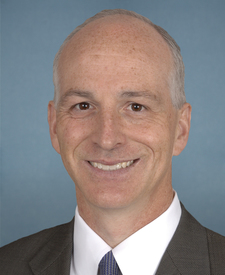
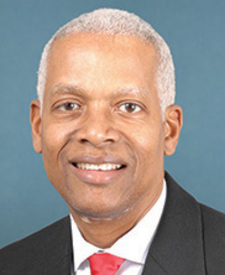
IntroducedMr. Smith of Washington (for himself, Mr. Johnson of Georgia, …
Stakeholder Effects
cui bono?How this legislation distributes effects. Mention counts reflect frequency, not effect magnitude.
Aviation-impacted communities, Aviation-impacted community residents, Aviation-impacted designated communities
Airport and Airway Trust Fund, Federal Aviation Administration
Airlines and air traffic operations, Airport operators, Local airport operators
Noise mitigation and sound insulation contractors
Bill Structure & Actor Mappings
Who is "The Secretary" in each section?
- "the_administrator"
- → Administrator of the FAA
- "the_administrator"
- → Administrator of the FAA
- "the_administrator"
- → Administrator of the FAA
Key Definitions
Terms defined in this bill
A community located not greater than 1 mile from any point at which a commercial or cargo jet route is 3,000 feet or less above ground level
An aviation-impacted community that has chosen to be designated pursuant to section 4
Noise, air pollution emissions, or any other aviation-related impact identified by a community coming from an aircraft and that is affecting a community or its residents
We use a combination of our own taxonomy and classification in addition to large language models to assess meaning and potential beneficiaries. High confidence means strong textual evidence. Always verify with the original bill text.
Learn more about our methodology