Recover COVID Unemployment Fraud in Banks Act
Summary
What This Bill Does
The Recover COVID Unemployment Fraud in Banks Act directs the Labor Secretary, consulting Treasury, the Department of Labor Inspector General, and the Attorney General, to designate a National Recovery Coordinator. Within 30 days, that coordinator must convene a Recover Pandemic Unemployment Funds in Banks Task Force with Justice, Labor, the Labor Inspector General, Treasury, the FDIC, and the Consumer Financial Protection Bureau. The task force must help identify federal pandemic unemployment payments left on prepaid debit cards held by financial institutions or transferred to state unclaimed-property agencies.
The task force must create model processes and guidance for recovering funds in a cost-effective way. State unemployment agencies get guidance on improper-payment review, fraud and identity-theft handling, state-law recovery pathways, and standardized methods for returning recovered federal funds. Financial institutions and state unclaimed-property administrators get parallel guidance. Labor must reimburse states for administrative costs tied to this recovery work. The bill also gives federal civil and criminal fraud enforcement a 10-year limitations period for pandemic unemployment programs such as PUA, FPUC, MEUC, and PEUC, except where the prior limitations period already expired.
Who Benefits and How
Federal taxpayers benefit if dormant or fraud-linked pandemic unemployment funds are recovered and returned to the federal government. State unemployment agencies benefit from model processes, federal guidance, and reimbursement of administrative costs. Labor fraud-recovery staff benefit from a named coordinator and interagency task force. Identity theft victims benefit because the guidance must address identity-theft resources with CFPB involvement. Justice Department prosecutors and DOL Inspector General investigators benefit from a longer 10-year enforcement window for pandemic unemployment fraud.
Who Bears the Burden and How
Financial institutions holding prepaid debit card balances must work with federal and state recovery guidance. State unclaimed-property agencies must identify and return relevant pandemic unemployment funds. State unemployment agencies must review improper payments and route recovered money under federal guidance. Pandemic unemployment fraud defendants face a longer limitations period. Labor, Treasury, FDIC, CFPB, DOJ, and the Labor Inspector General must coordinate the task force and produce guidance.
Key Provisions
- Creates a Labor-designated National Recovery Coordinator for pandemic unemployment fund recovery.
- Establishes an interagency task force including Labor, Treasury, Justice, FDIC, CFPB, and the Labor Inspector General.
- Directs guidance to state unemployment agencies, financial institutions, and state unclaimed-property administrators.
- Requires Labor to reimburse states for administrative costs tied to recovery work.
- Extends civil and criminal pandemic unemployment fraud limitations periods to 10 years for covered programs.
Evidence Chain:
This summary is generated from the full bill text using AI analysis. Expand "Detailed Analysis" below for identified beneficiaries/burden bearers with clause-level evidence links.
At a Glance
What This Bill Does
Creates a Labor-led task force to recover pandemic unemployment payments sitting on prepaid debit cards or with unclaimed property agencies, directs guidance to states, banks, and unclaimed-property administrators, reimburses state administrative costs, and extends fraud enforcement limitations periods to 10 years.
Key Policy Areas
Unemployment Insurance, COVID Relief, Fraud Recovery, Banking
Primary Purpose
Creates a Labor-led task force to recover pandemic unemployment payments sitting on prepaid debit cards or with unclaimed property agencies, directs guidance to states, banks, and unclaimed-property administrators, reimburses state administrative costs, and extends fraud enforcement limitations periods to 10 years.
Policy Domains
House resolution provisions
Identified Gains
- Federal taxpayers
- State unemployment agencies
- Labor fraud recovery staff
- Identity theft victims
- Justice Department prosecutors
- DOL Inspector General investigators
Identified Costs
- Financial institutions holding prepaid debit funds
- State unclaimed property agencies
- State unemployment agencies
- Pandemic unemployment fraud defendants
- Federal task force agencies
Sponsors
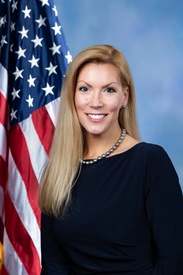

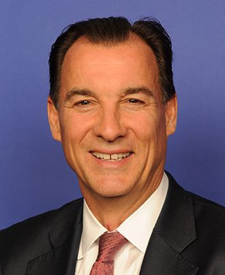
Legislative Progress
ReportedReceived in the Senate and Read twice and referred to …
Motion to reconsider laid on the table Agreed to without …
On motion to suspend the rules and pass the bill, …
Passed/agreed to in House: On motion to suspend the rules …
DEBATE - The House proceeded with forty minutes of debate …
Considered under suspension of the rules. (consideration: CR H4269-4272)
Mr. Smith (MO) moved to suspend the rules and pass …
Placed on the Union Calendar, Calendar No. 585.
Reported (Amended) by the Committee on Ways and Means. H. …
Additional sponsor: Mr. Feenstra
Stakeholder Effects
cui bono?How this legislation distributes effects. Mention counts reflect frequency, not effect magnitude.
Financial institutions holding prepaid debit funds, State unemployment agencies
Justice Department prosecutors, Pandemic unemployment fraud defendants
Positive-direction: Justice Department prosecutors
Negative-direction: Pandemic unemployment fraud defendants
Bill Structure & Actor Mappings
Who is "The Secretary" in each section?
- "doj"
- → Attorney General
- "cfpb"
- → Consumer Financial Protection Bureau
- "fdic"
- → Federal Deposit Insurance Corporation
- "labor"
- → Secretary of Labor
- "treasury"
- → Secretary of the Treasury
We use a combination of our own taxonomy and classification in addition to large language models to assess meaning and potential beneficiaries. High confidence means strong textual evidence. Always verify with the original bill text.
Learn more about our methodology