Federal Employee Short-Term Disability Insurance Act of 2026
Summary
What This Bill Does
The Federal Employee Short-Term Disability Insurance Act of 2026 adds a new chapter 88 to title 5 of the U.S. Code for non-work-related short-term disability insurance. The Director of the Office of Personnel Management must establish and administer a program making insurance coverage available to eligible federal employees, including officers and employees of the United States Postal Service and Postal Regulatory Commission.
The coverage is for injuries or disabilities not covered by federal workers' compensation, leave to care for or arrange care for a family member including the birth of a child, and leave to make arrangements to become a foster parent or adopt a child. Coverage is unavailable if the employee's injury or disability is caused by willful misconduct, an intentional self-inflicted or other-inflicted injury, or intoxication. Insurance contracts must be fully insured, whether through reinsurance or another method.
OPM may contract with one or more disability insurance carriers without following competitive-bidding statutes, but must award contracts based on contractor qualifications, price, and reasonable competition. Each contract must specify benefits, premiums, enrollment periods, eligibility procedures, dispute-resolution procedures, carrier duties to pay covered benefits, and contract terms lasting at least three and not more than seven years. Contracts may renew automatically for one year unless OPM or the carrier gives at least 180 days' notice.
OPM may set reasonable minimum standards for benefit plans. Benefits must offset other benefits received for the same disability or leave, including workers' compensation and disability retirement income. Contracts may not exclude preexisting conditions or charge more, deny coverage, or drop coverage because of a preexisting condition. Benefits may last up to 12 months per qualifying instance and equal the lesser of 70 percent of the employee's annual pay excluding bonuses or 70 percent of the maximum GS-15 basic pay rate. Employees choose a waiting period starting on day 8, 31, 91, or 181, and shorter waiting periods come with higher premiums.
Employees who enroll pay 100 percent of premiums through payroll withholding. Participating carriers must keep separate accounting records for program funds. The Employees' Life Insurance Fund may cover implementation costs before the first contract term, but the carrier must reimburse those costs, including lost investment income. The bill also creates a Non-Work Related Disability Insurance Administrative Account in that fund, financed by periodic carrier contributions, to cover OPM administrative expenses after the program begins.
The bill preempts State, territorial, tribal, and local laws on the nature, provision, or extent of coverage or benefits under program contracts. It bars those governments from taxing or charging premiums paid for chapter 88 policies, while preserving broad business taxes on carrier net income or profit. State, territorial, tribal, and local subrogation or reimbursement laws apply only if adopted by OPM. Carriers and federal agencies must provide reports and records needed by OPM, OPM must conduct periodic competitiveness reviews, and federal district courts share jurisdiction with the Court of Federal Claims for some claims against the United States after required administrative remedies are exhausted. Cost accounting standards under title 41 do not apply to chapter 88 insurance contracts.
Who Benefits and How
Federal employees benefit from access to voluntary short-term disability coverage for non-work injuries, qualifying family care, birth, adoption, and foster-parent arrangements. Postal Service employees and Postal Regulatory Commission employees benefit because the bill expressly includes them in the eligible employee definition. Employees with preexisting conditions benefit because carriers may not exclude, price up, deny, or drop coverage based on those conditions. Disability insurance carriers benefit from OPM contract opportunities and premium revenue. OPM benefits from authority to standardize contracts and preempt conflicting local insurance rules.
Who Bears the Burden and How
Enrolled federal employees bear the full premium cost through payroll withholding. The Office of Personnel Management bears duties to create the program, contract with carriers, set minimum benefit standards, manage dispute-resolution terms, coordinate payroll systems, issue regulations, administer the fund account, review plans for competitiveness, and define service-credit effects while an employee is receiving benefits. Participating carriers bear contract, claim-payment, dispute-resolution, accounting, reimbursement, administrative-account contribution, reporting, and enrollment-education duties. Federal agencies bear recordkeeping, certification, and reporting duties. State insurance regulators, tribal governments, territorial governments, and local governments bear reduced authority over covered policy terms, premium taxes or fees, and subrogation or reimbursement rules.
Key Provisions
- Establishes a new chapter 88 short-term disability insurance program for eligible federal, Postal Service, and Postal Regulatory Commission employees.
- Covers non-workers-compensation disabilities, family caregiving, birth-related leave, adoption arrangements, and foster-parent arrangements while excluding willful misconduct, intentional injury, and intoxication cases.
- Authorizes OPM to contract with one or more fully insured disability insurance carriers based on qualifications, price, and reasonable competition.
- Sets benefit rules including no preexisting-condition exclusions, return-to-work incentives, up to 12 months of benefits, a 70 percent pay replacement formula, and employee-selected waiting periods.
- Requires enrollees to pay 100 percent of premiums through payroll withholding and requires carriers to fund OPM administrative costs.
- Preempts State, territorial, tribal, and local coverage rules, premium taxes or fees, and subrogation or reimbursement laws unless OPM adopts the rule.
- Requires carrier and agency reports, OPM competitiveness reviews, federal court jurisdiction after administrative exhaustion, OPM implementation regulations, carrier enrollment education, and a cost-accounting-standards exemption.
Evidence Chain:
This summary is generated from the full bill text using AI analysis. Expand "Detailed Analysis" below for identified beneficiaries/burden bearers with clause-level evidence links.
At a Glance
What This Bill Does
The bill creates an Office of Personnel Management-administered voluntary non-work-related short-term disability insurance program for federal, Postal Service, and Postal Regulatory Commission employees, using private carrier contracts funded by employee premiums and covering qualifying disabilities, family caregiving, birth, adoption, and foster-parent arrangements.
Key Policy Areas
Federal Workforce, Insurance, Labor, Family Leave, Government Operations
Primary Purpose
The bill creates an Office of Personnel Management-administered voluntary non-work-related short-term disability insurance program for federal, Postal Service, and Postal Regulatory Commission employees, using private carrier contracts funded by employee premiums and covering qualifying disabilities, family caregiving, birth, adoption, and foster-parent arrangements.
Policy Domains
Eligible employees, covered leave, exclusions, and benefit design
Identified Gains
- Eligible federal employees
- Postal Service employees
- Postal Regulatory Commission employees
- Employees with preexisting conditions
Identified Costs
- Enrolled federal employees
- Office of Personnel Management
- Disability insurance carriers
Carrier contracts, premiums, administrative financing, reporting, and cost standards
Identified Gains
- Disability insurance carriers
- Office of Personnel Management
- Employees seeking fully insured coverage
Identified Costs
- Participating disability insurance carriers
- Federal agencies
- Enrolled federal employees
Federal preemption, judicial review, and administrative implementation
Identified Gains
- Office of Personnel Management
- Participating disability insurance carriers
Identified Costs
- State insurance regulators
- Tribal governments
- Local governments
- Territorial governments
Legislative Progress
In CommitteeReferred to the House Committee on Oversight and Government Reform.
Sponsor introductory remarks on measure. (CR E423)
Introduced in House
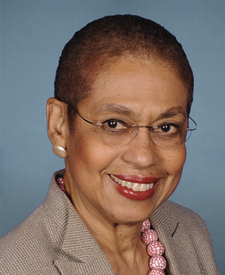
Ms. Norton introduced the following bill; which was referred to …
Stakeholder Effects
cui bono?How this legislation distributes effects. Mention counts reflect frequency, not effect magnitude.
Eligible federal employees, Employees choosing shorter waiting periods, Employees injured through willful misconduct
Enrolled federal employees faces effects in multiple directions
Positive-direction: Eligible federal employees, Federal employees arranging adoption, Federal employees becoming foster parents, Federal employees taking family care leave, Federal employees with chapter 88 claims, Federal employees with preexisting conditions, Postal Regulatory Commission employees, Postal Service employees
Negative-direction: Employees choosing shorter waiting periods, Employees injured through willful misconduct, Employees seeking late coverage extensions
Federal agencies, Federal payroll offices, Office of Personnel Management
Office of Personnel Management faces effects in multiple directions
Positive-direction: Office of Personnel Management contracting officials
Negative-direction: Federal agencies, Federal payroll offices, United States government
Disability insurance carriers, Disability insurance carriers licensed nationwide, Participating disability insurance carriers
Disability insurance carriers, Participating disability insurance carriers face effects in multiple directions
Local governments, State insurance regulators
Positive-direction: State insurance regulators
Negative-direction: Local governments
Territorial governments, Tribal governments
Positive-direction: Tribal governments
Negative-direction: Territorial governments
Federal district courts, United States Court of Federal Claims
Bill Structure & Actor Mappings
Who is "The Secretary" in each section?
- "carriers"
- → Disability insurance carriers
- "director"
- → Director of the Office of Personnel Management
- "employees"
- → Eligible federal employees
- "postal_employees"
- → Postal Service employees
- "agencies"
- → Federal agencies
- "carriers"
- → Disability insurance carriers
- "director"
- → Director of the Office of Personnel Management
- "employees"
- → Enrolled federal employees
- "courts"
- → Federal district courts
- "director"
- → Director of the Office of Personnel Management
- "state_regulators"
- → State insurance regulators
- "tribal_governments"
- → Tribal governments
Key Definitions
Terms defined in this bill
Includes the District of Columbia.
An insurance company licensed to issue disability insurance in all States, taking subsidiaries or affiliates into account.
A federal employee defined in 5 U.S.C. 8901(1), plus officers and employees of the United States Postal Service and Postal Regulatory Commission.
A condition that makes the employee unable to perform the essential functions of the employee's federal position.
We use a combination of our own taxonomy and classification in addition to large language models to assess meaning and potential beneficiaries. High confidence means strong textual evidence. Always verify with the original bill text.
Learn more about our methodology