Keep Our PACT Act
Analysis under review: This bill has generated analysis that may be too generic or incomplete. Clause-level evidence remains available below.
Summary
What This Bill Does
This bill, To require full funding of part A of title I of the Elementary and Secondary Education Act of 1965 and the Individuals with Disabilities Education Act., changes federal law or congressional policy affecting schools, students, and education providers. The main policy domain is Education, Finance, Immigration.
Who Benefits and How
schools, students, and education providers may benefit from new authority, funding, eligibility, regulatory clarity, or reduced risk created by the bill.
Who Bears the Burden and How
federal implementing agencies, schools, students, and education providers may take on implementation duties, reporting obligations, compliance costs, or oversight responsibilities.
Key Provisions
- Section H4F3647C818364446A32E7662ECE7412A: 1. Short title This Act may be cited as the Keep Our Promise to America’s Children and Teachers Act or the Keep Our PACT Act.
- Section HCBBF8175CA6441AA835ECA5F4E6F08BE: 2. Findings Congress finds the following: Children are our Nation’s future and greatest treasure. A high-quality education is the surest way for every child to...
- Section HA0E2788036514263987B75999C67E552: 3. Mandatory funding of part A of title I of ESEA In this section, the term fiscal year 2025 part A of title I appropriation means the amount appropriated for...
- Section H01B3CB2FE3FB4A7DB7E2C09345FF9313: 4. Mandatory funding of the Individuals With Disabilities Education Act Section 611(i) of the Individuals with Disabilities Education Act (20 U.S.C. 1411(i))...
- Section HD95D673EAF5D4DC0ACC74EBC432FFA59: 5. Emergency designation The amounts provided by the amendments made by this Act are designated as an emergency requirement pursuant to section 4(g) of the...
Evidence Chain:
This summary is generated from the full bill text using AI analysis. Expand "Detailed Analysis" below for identified beneficiaries/burden bearers with clause-level evidence links.
At a Glance
What This Bill Does
This bill, To require full funding of part A of title I of the Elementary and Secondary Education Act of 1965 and the Individuals with Disabilities Education Act., changes federal law or congressional policy affecting schools, students, and education providers.
Key Policy Areas
Education, Finance, Immigration
Primary Purpose
This bill, To require full funding of part A of title I of the Elementary and Secondary Education Act of 1965 and the Individuals with Disabilities Education Act., changes federal law or congressional policy affecting schools, students, and education providers.
Policy Domains
Whole bill
Identified Gains
- schools, students, and education providers
Identified Costs
- federal implementing agencies
- schools, students, and education providers
Sponsors



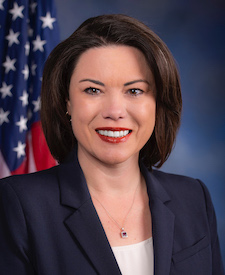

Legislative Progress
In CommitteeMs. Lee of Nevada introduced the following bill; which was …
Referred to the Committee on Education and Workforce, and in …
Introduced in House
Impact analysis is available but no clear stakeholder effects identified. View clause-level analysis →
Bill Structure & Actor Mappings
Who is "The Secretary" in each section?
- "federal_implementing_agencies"
- → Federal agencies assigned duties by the bill
We use a combination of our own taxonomy and classification in addition to large language models to assess meaning and potential beneficiaries. High confidence means strong textual evidence. Always verify with the original bill text.
Learn more about our methodology