Americans First Immigration Act
Summary
What This Bill Does
The Americans First Immigration Act restructures several immigration pathways around U.S. worker protection, ideological and security attestations, tighter family categories, a points-based employment system, conditional permanent residence, and restrictions on public education benefits. It creates a new employer-attestation regime for points-based immigrant petitions. Employers must recruit U.S. workers, offer the job to equally or better qualified U.S. workers, document recruitment contacts and wages, avoid laying off equivalent U.S. workers around the foreign worker's employment, avoid placement arrangements that evade the rules, and pay the promised wage for three years unless the worker is discharged for cause or leaves voluntarily. The Secretary of Labor may investigate, use arbitration, impose civil penalties of up to $5,000, $15,000, or $50,000 depending on the violation, order hiring or compensatory damages for affected U.S. workers, and block petitions by noncompliant employers for up to 15 years. The bill also requires immigration applicants to attest that they remain attached to the Constitution and have not advocated or participated in genocide, religion-based punishment, governmentally enforced religious law in the United States, persecution, female infanticide, sex-selective abortion, honor killing, or female genital mutilation.
The bill repeals the diversity lottery structure and replaces section 203(c) with a 3,000-visa worldwide level for religious workers. It bars new petitions under the old special immigrant religious-worker pathway after enactment, transfers pending religious-worker petitions to the new allocation, rejects pending non-religious special immigrant petitions, and caps remaining approved non-religious special immigrant visas at 6,940. It narrows family immigration by removing parents of adult U.S. citizens from immediate-relative treatment, limiting family-sponsored immigrants to spouses and children of lawful permanent residents, setting the family-sponsored worldwide level at 87,934 minus certain parolee counts, and changing age determinations to the petition filing date. It replaces employment-based categories with a points-based immigrant visa program capped at 192,000 minus certain mandatory-detention failures. Applicants need a U.S. job offer, employer attestation, applicant attestation, minimum salary levels, at least 16 points, age 18 through 51, and English proficiency in at least the fifth decile. Points favor high salaries, Nobel prizes, Olympic medals, extraordinary ability, U.S. degrees, STEM doctorates, English proficiency, U.S. military service, and younger working-age applicants.
The bill makes points-based immigrants, spouses, and children conditional permanent residents for two years. DHS must terminate conditional status if the principal immigrant violates the attestation, is sentenced to more than one year for offenses, receives a means-tested public benefit, or no longer works in the offered job or an equivalent-or-higher-paid job. To remove conditions, the principal immigrant must file a petition in the 90-day period before the two-year anniversary and appear for a DHS interview unless waived under fraud and national-security criteria. The bill also states a federal policy that non-permanent residents should not receive public education benefits in the same way as U.S. citizens and lawful permanent residents, and it requires non-permanent-resident students at postsecondary institutions to pay at least the nonresident tuition, fees, and costs charged to similarly situated students.
Who Benefits and How
U.S. workers benefit because employers sponsoring points-based immigrants must recruit U.S. workers first, offer jobs to equally or better qualified U.S. applicants, avoid equivalent layoffs, pay promised wages, and face investigations, damages, and petition bans for violations. High-wage foreign professionals, Nobel laureates, Olympic medalists, STEM doctoral graduates, U.S.-educated degree holders, English-proficient applicants, and qualified U.S. military service members can benefit relative to other employment-based applicants because the points system gives them ranking advantages. Religious worker immigrants benefit from a dedicated 3,000-visa allocation. U.S. taxpayers and public benefit programs benefit because points-based conditional residents risk losing status if they receive means-tested public benefits. U.S. citizen and national college students benefit because institutions may not charge them more than non-permanent-resident students carrying the same workload after netting public or institutional discounts.
Who Bears the Burden and How
Employers sponsoring points-based immigrants bear new recruitment, wage, recordkeeping, attestation, anti-layoff, anti-placement, arbitration, penalty, and petition-ban risks. Points-based immigrant applicants bear higher entry barriers because they need a qualifying job offer, salary thresholds, points evidence, English scores, age limits, constitutional and values attestations, conditional residence, a later petition, and a DHS interview. Family-sponsored immigrants outside spouses and children of lawful permanent residents, parents of adult U.S. citizens, diversity visa applicants, many non-religious special immigrant applicants, and lower-wage employment-based applicants bear reduced or eliminated paths to immigrant visas. DHS, USCIS, the Secretary of Homeland Security, the Secretary of Labor, the Secretary of State, the Department of Labor, the Federal Mediation and Conciliation Service, and postsecondary institutions bear administrative burdens from new petitions, rankings, attestations, investigations, arbitration, visa transitions, conditional status reviews, tuition rules, and reporting or notice duties. Non-permanent-resident students bear higher higher-education costs where they previously received in-state or other preferential rates.
Key Provisions
- Requires employers sponsoring points-based immigrants to recruit U.S. workers, document recruitment, offer jobs to equally or better qualified U.S. applicants, avoid equivalent layoffs, maintain promised wages, and face Labor Department investigations, arbitration, civil penalties, remedial hiring, damages, and petition bans for noncompliance.
- Requires immigration applicants to sign values attestations covering attachment to the Constitution and nonparticipation in listed conduct such as genocide, religious persecution, honor killing, and female genital mutilation.
- Repeals the diversity lottery structure, creates a 3,000-visa religious worker allocation, rejects many pending non-religious special immigrant petitions, and caps remaining approved non-religious special immigrant visas at 6,940.
- Reduces family immigration by excluding parents of adult U.S. citizens from immediate-relative treatment, limiting family-sponsored immigrants to spouses and children of lawful permanent residents, setting an 87,934 worldwide level minus certain parolee counts, and changing child-age determinations to the petition filing date.
- Creates a 192,000-slot points-based employment immigrant system that requires job offers, salary thresholds, at least 16 points, age 18 to 51, English proficiency, and ranking by employment, achievement, education, language, military service, and age factors.
- Establishes two-year conditional permanent residence for points-based immigrants, spouses, and children, with termination for attestation violations, serious criminal sentences, means-tested public benefits, or loss of qualifying employment, and with a petition and interview process to remove conditions.
- Restricts education benefits by stating that non-permanent residents should not receive public education benefits on the same terms as U.S. citizens and lawful permanent residents and by requiring postsecondary non-permanent-resident students to pay at least nonresident tuition and fee levels.
Evidence Chain:
This summary is generated from the full bill text using AI analysis. Expand "Detailed Analysis" below for identified beneficiaries/burden bearers with clause-level evidence links.
At a Glance
What This Bill Does
The bill rewrites major parts of the Immigration and Nationality Act to tighten employment-based immigration, require employer and applicant attestations, repeal the diversity visa program, narrow family-based immigration categories, replace employment-based categories with a capped points-based system, impose conditional permanent residence on points-based immigrants, and restrict public education benefits and in-state tuition preferences for non-permanent resident immigrants.
Key Policy Areas
Immigration, Labor, Education, Government Operations
Primary Purpose
The bill rewrites major parts of the Immigration and Nationality Act to tighten employment-based immigration, require employer and applicant attestations, repeal the diversity visa program, narrow family-based immigration categories, replace employment-based categories with a capped points-based system, impose conditional permanent residence on points-based immigrants, and restrict public education benefits and in-state tuition preferences for non-permanent resident immigrants.
Policy Domains
Public education policy and higher education tuition restrictions
Identified Gains
- U.S. citizen college students
- State governments funding public education
- Local governments funding public education
Identified Costs
- Non-permanent-resident college students
- Postsecondary educational institutions
Conditional permanent residence for points-based immigrants
Identified Gains
- U.S. taxpayers funding means-tested benefits
- Federal public benefit programs
- State public benefit programs
Identified Costs
- Points-based conditional permanent residents
- Spouses of points-based immigrants
- Children of points-based immigrants
- Secretary of Homeland Security
- USCIS Fraud Detection and National Security Directorate
- U.S. Immigration and Customs Enforcement
Diversity, religious-worker, family-sponsored, and points-based visa categories
Identified Gains
- Special immigrant religious workers
- High-wage points-based immigrant applicants
- STEM doctoral immigrant applicants
- U.S.-educated immigrant applicants
- United States workers competing for sponsored jobs
Identified Costs
- Diversity visa applicants
- Parents of adult U.S. citizens seeking immigrant visas
- Family-sponsored immigrant applicants outside spouse and child categories
- Lower-wage employment-based immigrant applicants
- Secretary of Homeland Security
- Secretary of State
Employer labor attestations and applicant values attestations
Identified Gains
- United States workers applying for sponsored jobs
- United States workers laid off in violation of attestations
- Secretary of Labor enforcement program
Identified Costs
- Employers sponsoring points-based immigrant workers
- Points-based immigrant petitioners
- Federal Mediation and Conciliation Service arbitrators
Sponsors
Legislative Progress
In CommitteeReferred to the Committee on the Judiciary, and in addition …
Introduced in House
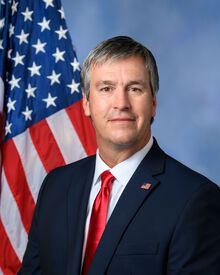
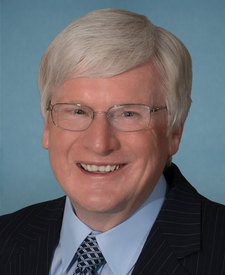
Mr. Moore of Alabama (for himself, Mr. Grothman, Mr. Hunt, …
Stakeholder Effects
cui bono?How this legislation distributes effects. Mention counts reflect frequency, not effect magnitude.
Children of points-based immigrants, Diversity visa applicants, Family-sponsored immigrant applicants outside child categories
Positive-direction: High-scoring points-based immigrant applicants, High-wage points-based immigrant applicants, Nobel laureate immigrant applicants, Olympic medalist immigrant applicants, STEM doctoral immigrant applicants
Negative-direction: Children of points-based immigrants, Diversity visa applicants, Family-sponsored immigrant applicants outside child categories, Family-sponsored immigrant applicants outside spouse categories, Immigrant applicants with low English test scores, Immigration applicants affiliated with listed conduct, Low-wage immigrant workers, Lower-scoring points-based immigrant applicants, Lower-wage employment-based immigrant applicants, Parents of adult U.S. citizens seeking immigrant visas, Pending non-religious special immigrant petitioners, Points-based conditional permanent residents, Points-based immigrant petitioners, Points-based immigrant petitioners signing values attestations, Spouses of points-based immigrants
Federal Mediation and Conciliation Service arbitrators, Immigration and Customs Enforcement, Secretary of Homeland Security conditional residence program
Non-permanent-resident college students, Postsecondary educational institutions, U.S. citizen college students
Positive-direction: U.S. citizen college students, U.S. national college students, U.S.-educated immigrant applicants
Negative-direction: Non-permanent-resident college students, Postsecondary educational institutions
Employers offering qualifying points-based jobs, Employers sponsoring points-based immigrant workers, Noncompliant sponsoring employers
United States workers applying for sponsored jobs, United States workers competing for sponsored jobs, United States workers laid off in violation of attestations
Federal means-tested public benefit programs, State means-tested public benefit programs
Local governments funding public education, State governments funding public education
Bill Structure & Actor Mappings
Who is "The Secretary" in each section?
- "employers"
- → Employers sponsoring points-based immigrant workers
- "us_workers"
- → United States workers
- "secretary_labor"
- → Secretary of Labor
- "alien_petitioners"
- → Points-based immigrant petitioners
- "dhs"
- → Secretary of Homeland Security and USCIS
- "state"
- → Secretary of State
- "family_applicants"
- → Family-sponsored immigrant applicants
- "points_applicants"
- → Points-based immigrant applicants
- "religious_workers"
- → Special immigrant religious workers
- "dhs"
- → Secretary of Homeland Security, USCIS, FDNS, and ICE
- "spouses"
- → Spouses of points-based immigrants
- "children"
- → Children of points-based immigrants
- "points_immigrants"
- → Points-based conditional permanent residents
- "students"
- → Non-permanent-resident students
- "institutions"
- → Postsecondary educational institutions
- "state_local_governments"
- → State and local governments
Key Definitions
Terms defined in this bill
An institution of higher education as defined in section 102 of the Higher Education Act of 1965 for the higher-education tuition restriction.
A federal, state, or local cash, medical, housing, food, social service, or other benefit whose eligibility or amount depends on income, resources, or financial need.
A new employment immigrant ranking system using salary, extraordinary achievement, education, English proficiency, U.S. military service, and age points, with petitions ranked by DHS.
A U.S. citizen or national, or an alien lawfully admitted for permanent residence, for purposes of employer recruitment, layoff, and remedial-hiring requirements.
We use a combination of our own taxonomy and classification in addition to large language models to assess meaning and potential beneficiaries. High confidence means strong textual evidence. Always verify with the original bill text.
Learn more about our methodology