To establish an Office of Housing Innovation in the Department of Housing and Urban Development to assist in exploring and developing new approaches for increasing and diversifying the supply of housing and for meeting the challenges of housing shortages, housing affordability, and traffic congestion, and for other purposes.
Analysis under review: This bill has generated analysis that may be too generic or incomplete. Clause-level evidence remains available below.
Summary
What This Bill Does
The bill establishes Office of Housing Innovation within HUD with new Assistant Secretary and interagency detailees from DOT, EPA, and DOE, creates grant program for local governments in urbanized areas to undertake housing planning and regulatory reforms addressing supply, affordability, and commute times, and creates grant program for research partnerships studying innovative housing approaches including modular building, micro-units, home-sharing, and transit integration. It relies on grants, appropriations, and reporting requirements. The main policy areas are Housing, Education, and Finance.
Who Benefits and How
Local governments in urbanized areas could gain revenue opportunities, HUD Office of Housing Innovation could gain revenue opportunities, and Universities and research institutions could gain revenue opportunities.
Who Bears the Burden and How
GAO would take on compliance duties.
Key Provisions
- Establishes Office of Housing Innovation within HUD with new Assistant Secretary and interagency detailees from DOT, EPA, and DOE.
- Creates grant program for local governments in urbanized areas to undertake housing planning and regulatory reforms addressing supply, affordability, and commute times.
- Creates grant program for research partnerships studying innovative housing approaches including modular building, micro-units, home-sharing, and transit integration.
- Creates grant program for academic partnerships to support educational and community outreach on housing, community development, and regional planning.
- Requires GAO review of grant program effectiveness after 3 years with report to congressional committees.
Evidence Chain:
This summary is generated from the full bill text using AI analysis. Expand "Detailed Analysis" below for identified beneficiaries/burden bearers with clause-level evidence links.
At a Glance
What This Bill Does
The bill establishes Office of Housing Innovation within HUD with new Assistant Secretary and interagency detailees from DOT, EPA, and DOE, creates grant program for local governments in urbanized areas to undertake housing planning and regulatory reforms addressing supply, affordability, and commute times, and creates grant program for research partnerships studying innovative housing approaches including modular building, micro-units, home-sharing, and transit integration.
Key Policy Areas
Housing, Education, Finance
Primary Purpose
The bill establishes Office of Housing Innovation within HUD with new Assistant Secretary and interagency detailees from DOT, EPA, and DOE, creates grant program for local governments in urbanized areas to undertake housing planning and regulatory reforms addressing supply, affordability, and commute times, and creates grant program for research partnerships studying innovative housing approaches including modular building, micro-units, home-sharing, and transit integration.
Policy Domains
Section 3 - Office of Housing Innovation
Identified Gains
- Local governments in urbanized areas
- HUD Office of Housing Innovation
- Universities and research institutions
- HUD
- Academic institutions with housing programs
Identified Costs
- GAO
Legislative Progress
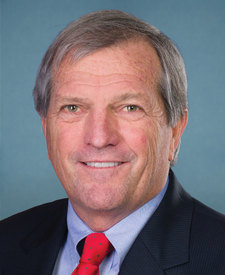
IntroducedMr. DeSaulnier introduced the following bill; which was referred to …
Stakeholder Effects
cui bono?How this legislation distributes effects. Mention counts reflect frequency, not effect magnitude.
GAO, HUD, HUD Office of Housing Innovation
Positive-direction: HUD, HUD Office of Housing Innovation, Local governments in urbanized areas, Local governments seeking housing technical assistance
Negative-direction: GAO
Housing developers exploring innovative construction, Modular and prefab construction companies, Multifamily housing developers
Academic institutions with housing programs, Universities and research institutions
Community development organizations, Nonprofit housing organizations
Bill Structure & Actor Mappings
Who is "The Secretary" in each section?
- "the_secretary"
- → Secretary of Housing and Urban Development
- "the_secretary"
- → Secretary of HUD
- "the_secretary"
- → Secretary of HUD
- "the_secretary"
- → Secretary of HUD
Key Definitions
Terms defined in this bill
A unit of general local government located within an urbanized area as defined by the Census Bureau
We use a combination of our own taxonomy and classification in addition to large language models to assess meaning and potential beneficiaries. High confidence means strong textual evidence. Always verify with the original bill text.
Learn more about our methodology