To hold law enforcement accountable for misconduct in court, improve transparency through data collection, and reform police training and policies.
Analysis under review: This bill has generated analysis that may be too generic or incomplete. Clause-level evidence remains available below.
Summary
What This Bill Does
This bill, To hold law enforcement accountable for misconduct in court, improve transparency through data collection, and reform police training and policies., changes federal law or congressional policy affecting law enforcement, courts, victims, and regulated public-safety actors. The main policy domain is Criminal Justice, Civil Rights, Labor.
Who Benefits and How
law enforcement, courts, victims, and regulated public-safety actors may benefit from new authority, funding, eligibility, regulatory clarity, or reduced risk created by the bill.
Who Bears the Burden and How
federal implementing agencies, law enforcement, courts, victims, and regulated public-safety actors may take on implementation duties, reporting obligations, compliance costs, or oversight responsibilities.
Key Provisions
- Section HC0BF1825BFB94598B24580456A4B2FF9: 1. Short title; table of contents This Act may be cited as the George Floyd Justice in Policing Act of 2024. The table of contents for this Act is as follows:
- Section HB0F2DFAE04E74A79B2E87FB3F3A15FB6: 2. Definitions In this Act: The term Byrne grant program means any grant program under subpart 1 of part E of title I of the Omnibus Crime Control and Safe...
- Section HC133E32ECE464D95A780D97A76B67DEB: 101. Deprivation of rights under color of law Section 242 of title 18, United States Code, is amended— by striking willfully and inserting knowingly or...
- Section H098C972F1A25453A84836F3A20DC8449: 102. Qualified immunity reform Section 1979 of the Revised Statutes of the United States (42 U.S.C. 1983) is amended by adding at the end the following: It...
- Section H3CE8B28C9540436E867A2FFE9FEC8131: 103. Pattern and practice investigations Section 210401 of the Violent Crime Control and Law Enforcement Act of 1994 (34 U.S.C. 12601) is amended— in...
Evidence Chain:
This summary is generated from the full bill text using AI analysis. Expand "Detailed Analysis" below for identified beneficiaries/burden bearers with clause-level evidence links.
At a Glance
What This Bill Does
This bill, To hold law enforcement accountable for misconduct in court, improve transparency through data collection, and reform police training and policies., changes federal law or congressional policy affecting law enforcement, courts, victims, and regulated public-safety actors.
Key Policy Areas
Criminal Justice, Civil Rights, Labor
Primary Purpose
This bill, To hold law enforcement accountable for misconduct in court, improve transparency through data collection, and reform police training and policies., changes federal law or congressional policy affecting law enforcement, courts, victims, and regulated public-safety actors.
Policy Domains
Whole bill
Identified Gains
- law enforcement, courts, victims, and regulated public-safety actors
Identified Costs
- federal implementing agencies
- law enforcement, courts, victims, and regulated public-safety actors
Sponsors


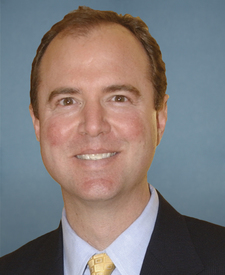
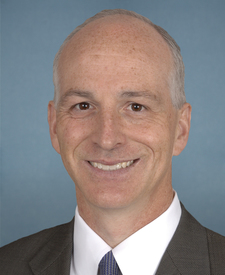
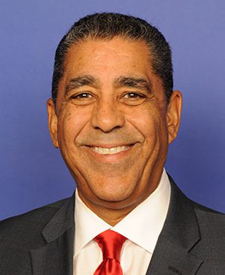
Legislative Progress
IntroducedMs. Jackson Lee (for herself, Mr. Nadler, Mr. Lieu, Mr. …
Impact analysis is available but no clear stakeholder effects identified. View clause-level analysis →
Bill Structure & Actor Mappings
Who is "The Secretary" in each section?
- "the_commission"
- → The commission identified in the operative section
Key Definitions
Terms defined in this bill
an administrative entity that investigates civilian complaints against law enforcement officers and— is independent and adequately funded
any images or audio recorded by a body camera. Federal law enforcement officers shall wear a body camera. A body camera required under paragraph (1) shall— have a field of view at least as broad as the officer's vision
a statute requiring an independent investigation in a criminal matter in which— one or more of the possible defendants is a law enforcement officer
all requests for information, except for those that— are immaterial to the investigation
that force which a reasonable person would consider likely to cause death or serious bodily harm, including— the discharge of a firearm
a sworn law enforcement officer who is— assigned by the employing law enforcement agency to a local educational agency or school
We use a combination of our own taxonomy and classification in addition to large language models to assess meaning and potential beneficiaries. High confidence means strong textual evidence. Always verify with the original bill text.
Learn more about our methodology