Stopping Fraudulent Payments Act
Summary
What This Bill Does
The Stopping Fraudulent Payments Act adds title 31 section 3337 on pausing and segmenting payments. Agency heads that administer federally funded financial assistance or public benefit programs must temporarily delay, condition, or segment a disbursement request before voucher certification when a designated official determines the payment presents elevated fraud risk based on objective fraud-risk indicators or improper-payment estimates, or when Treasury issues a corrective-action order. Treasury must notify certifying officials, return certified payment vouchers, and issue corrective-action orders when payments present elevated fraud risk or a payee is flagged in Do Not Pay or another Treasury payment, account, or payee validation program. Agency corrective action must be based on objective documented fraud-risk indicators, narrowly applied to the risky portion of the payment, and limited to the minimum time needed to verify eligibility or accuracy. Agencies must provide prompt payee notice where appropriate, identify the nature of the pause, and follow procedures for verification, response, and resolution. Treasury, consulting OMB, must issue regulations and guidance for implementation.
Who Benefits and How
Federal taxpayers benefit because agencies can stop suspicious payments before disbursement. Treasury payment validation staff benefit from authority to return vouchers and issue corrective-action orders. Agency fraud prevention officials benefit from a clear legal basis to pause, condition, or segment risky payments. Honest benefit recipients benefit if fraud controls preserve program funds. Inspectors general benefit from better documentation of objective fraud-risk indicators. OMB improper-payment officials benefit from governmentwide rules on time-limited payment pauses.
Who Bears the Burden and How
Agency heads must designate officials, apply corrective action, notify payees, verify eligibility, and resolve paused payments. Agency certifying officials must respond to Treasury voucher-return orders. Payees flagged by Do Not Pay or other validation systems may experience payment delays, conditions, or segmentation. Treasury officials must issue corrective-action orders and implementation guidance. Public benefit program administrators must balance fraud controls against timely benefits. Federal payment staff must document objective indicators and limit pauses to the minimum necessary period.
Key Provisions
- Requires agencies to pause, condition, or segment disbursement requests with elevated fraud or improper-payment risk.
- Directs Treasury to return vouchers and issue corrective-action orders for high-risk payments or flagged payees.
- Requires corrective actions to be objective, documented, narrow, and time-limited.
- Requires prompt payee notice and procedures for verification, response, and resolution.
- Requires Treasury and OMB regulations and guidance for implementation.
Evidence Chain:
This summary is generated from the full bill text using AI analysis. Expand "Detailed Analysis" below for identified beneficiaries/burden bearers with clause-level evidence links.
At a Glance
What This Bill Does
Authorizes and requires agency heads administering federally funded financial assistance or public benefit programs to temporarily delay, condition, or segment disbursement requests before voucher certification when objective documented fraud-risk indicators or improper-payment risks exist, requires Treasury to return certified vouchers and issue corrective-action orders when payments are elevated risk or payees are flagged by Do Not Pay or other Treasury validation systems, requires corrective actions to be narrow and time-limited, and requires payee notice, verification, appeal or response procedures, OMB-Treasury regulations, and reporting.
Key Policy Areas
Fraud Prevention, Federal Payments, Public Benefits, Treasury
Primary Purpose
Authorizes and requires agency heads administering federally funded financial assistance or public benefit programs to temporarily delay, condition, or segment disbursement requests before voucher certification when objective documented fraud-risk indicators or improper-payment risks exist, requires Treasury to return certified vouchers and issue corrective-action orders when payments are elevated risk or payees are flagged by Do Not Pay or other Treasury validation systems, requires corrective actions to be narrow and time-limited, and requires payee notice, verification, appeal or response procedures, OMB-Treasury regulations, and reporting.
Policy Domains
House resolution provisions
Identified Gains
- Federal taxpayers
- Treasury payment validation staff
- Agency fraud prevention officials
- Honest benefit recipients
- Inspectors general
- OMB improper payment officials
Identified Costs
- Agency heads
- Agency certifying officials
- Payees flagged by Do Not Pay
- Treasury officials
- Public benefit program administrators
- Federal payment staff
Sponsors
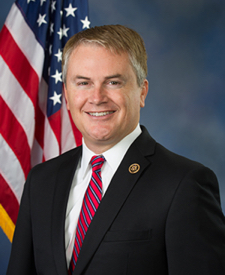


Legislative Progress
ReportedReceived in the Senate.
Motion to reconsider laid on the table Agreed to without …
On passage Passed by the Yeas and Nays: 218 - …
Considered as unfinished business. (consideration: CR H4078-4079)
The previous question on the motion to recommit was ordered …
Motion to reconsider laid on the table Agreed to without …
On passage Passed by the Yeas and Nays: 218 - …
Passed/agreed to in House: On passage Passed by the Yeas …
On motion to recommit Failed by the Yeas and Nays: …
The previous question was ordered pursuant to the rule.
Stakeholder Effects
cui bono?How this legislation distributes effects. Mention counts reflect frequency, not effect magnitude.
Agency certifying officials, Agency fraud prevention officials, Payees flagged by Do Not Pay
Positive-direction: Taxpayers
Negative-direction: Agency certifying officials, Agency fraud prevention officials, Payees flagged by Do Not Pay, Treasury payment validation staff
Bill Structure & Actor Mappings
Who is "The Secretary" in each section?
- "omb"
- → Office of Management and Budget
- "treasury"
- → Department of the Treasury
We use a combination of our own taxonomy and classification in addition to large language models to assess meaning and potential beneficiaries. High confidence means strong textual evidence. Always verify with the original bill text.
Learn more about our methodology