To amend the Internal Revenue Code of 1986 to allow a credit against tax for charitable donations to nonprofit organizations providing education scholarships to qualified elementary and secondary students.
Analysis under review: This bill has generated analysis that may be too generic or incomplete. Clause-level evidence remains available below.
Summary
What This Bill Does
This bill creates a new federal tax credit for people and corporations who donate to scholarship granting organizations (SGOs). These SGOs then provide scholarships for K-12 students from lower-income families (up to 300% of area median income) to attend public, private, or religious schools. The program is capped at $10 billion per year, with an automatic 5% increase if 90% of the cap is used.
Who Benefits and How
Private and religious K-12 schools benefit from increased enrollment funded by scholarships. Wealthy individual donors receive a tax credit of up to 10% of AGI (or $5,000, whichever is greater) for donations. Corporations can claim a credit of up to 5% of taxable income. Scholarship granting organizations gain a major new funding stream. Lower-income families gain access to school choice options they could not otherwise afford.
Who Bears the Burden and How
The U.S. Treasury loses up to $10 billion or more annually in tax revenue. Public schools may face reduced enrollment and funding as students shift to private options. The IRS must build and maintain a real-time volume cap tracking system. SGOs must comply with audit requirements, income verification procedures, and distribution mandates (must distribute 85% of receipts within 3 years).
Key Provisions
- Tax credit for individuals (Section 25F): up to the greater of 10% of AGI or $5,000 for donations to SGOs
- Tax credit for corporations (Section 45BB): up to 5% of taxable income
- $10 billion annual volume cap with 5% automatic escalator and real-time tracking
- Scholarship recipients’ income excluded from gross income (Section 139J)
- SGO autonomy protections: bars government control over SGOs and participating schools, protects religious schools from discrimination
Evidence Chain:
This summary is generated from the full bill text using AI analysis. Expand "Detailed Analysis" below for identified beneficiaries/burden bearers.
At a Glance
What This Bill Does
Creates a federal tax credit for individuals and corporations who make charitable contributions to scholarship granting organizations (SGOs) that provide education scholarships covering tuition and related expenses at public, private, or religious K-12 schools for students from households earning up to 300% of area median income.
Key Policy Areas
Education, Tax
Primary Purpose
Creates a federal tax credit for individuals and corporations who make charitable contributions to scholarship granting organizations (SGOs) that provide education scholarships covering tuition and related expenses at public, private, or religious K-12 schools for students from households earning up to 300% of area median income.
Policy Domains
Educational Choice for Children Act of 2025
Identified Gains
Contextual inference, no direct clause citation- Private and religious K-12 schools
- Scholarship granting organizations
- High-income individual donors
- Corporations
- Lower-income families seeking school choice
Contextual inference, no direct clause citation
Identified Costs
Contextual inference, no direct clause citation- U.S. Treasury (foregone tax revenue)
- Public school systems (enrollment competition)
- IRS (volume cap tracking system)
- Scholarship granting organizations (compliance costs)
Contextual inference, no direct clause citation
Sponsors
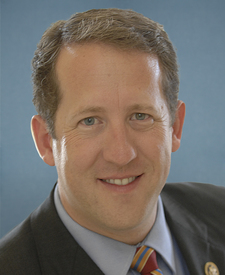
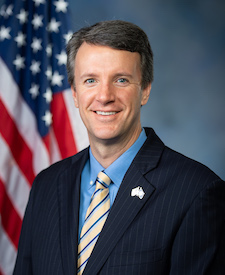
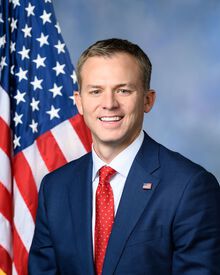
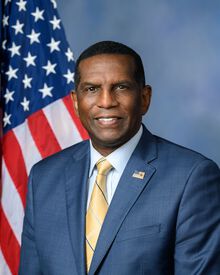
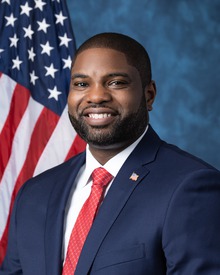
Legislative Progress
IntroducedMr. Smith of Nebraska (for himself, Mr. Owens, Mr. Walberg, …
Stakeholder Effects
cui bono?How this legislation distributes effects. Mention counts reflect frequency, not effect magnitude.
Private and religious K-12 schools, Private and religious K-12 schools (program scale guarantees significant scholarship volume), Private and religious elementary and secondary schools (including homeschools)
Positive-direction: Private and religious K-12 schools, Private and religious K-12 schools (program scale guarantees significant scholarship volume), Private and religious elementary and secondary schools (including homeschools), Scholarship granting organizations, Scholarship granting organizations (501(c)(3) nonprofits), Scholarship granting organizations meeting Section 25F requirements, Scholarship granting organizations receiving corporate donations
Negative-direction: Scholarship granting organizations (compliance obligations), Scholarship granting organizations that fail to distribute receipts timely
Eligible K-12 students (ensures funds are actually distributed as scholarships), Eligible students from households up to 300% area median income, Families of eligible students receiving SGO scholarships
IRS/Department of the Treasury (must build real-time tracking system), State and local education agencies (constrained from regulating participating schools), U.S. Treasury (additional foregone income tax revenue)
Donors to non-compliant scholarship granting organizations, High-income individual taxpayers who donate to scholarship granting organizations, Individual taxpayers making charitable contributions to SGOs
Positive-direction: High-income individual taxpayers who donate to scholarship granting organizations, Individual taxpayers making charitable contributions to SGOs, Taxpayers in smaller states (guaranteed 10% state allocation)
Negative-direction: Donors to non-compliant scholarship granting organizations
Corporations making charitable contributions to scholarship granting organizations, Corporations that donate to scholarship granting organizations
Bill Structure & Actor Mappings
Who is "The Secretary" in each section?
- "the_secretary"
- → Secretary of the Treasury (via IRS)
Key Definitions
Terms defined in this bill
An individual who is a member of a household with income not greater than 300% of area median gross income and is eligible to enroll in a public elementary or secondary school.
A charitable contribution (as defined in section 170(c)) to a scholarship granting organization in the form of cash or marketable securities.
Tuition, curricula, books, online materials, tutoring fees, testing fees, dual enrollment fees, and educational therapies for students with disabilities at public, private, or religious K-12 schools (including homeschool).
A 501(c)(3) non-private-foundation that substantially provides scholarships for K-12 education expenses, maintains separate accounts for qualified contributions, and meets operational requirements (or qualifies under existing state law).
We use a combination of our own taxonomy and classification in addition to large language models to assess meaning and potential beneficiaries. High confidence means strong textual evidence. Always verify with the original bill text.
Learn more about our methodology