To amend the Internal Revenue Code of 1986 to treat Indian Tribal Governments in the same manner as State governments for certain Federal tax purposes, and for other purposes.
Analysis under review: This bill has generated analysis that may be too generic or incomplete. Clause-level evidence remains available below.
Summary
What This Bill Does
The Tribal Tax and Investment Reform Act of 2024 corrects longstanding inequities in how Indian Tribal Governments are treated under the Internal Revenue Code compared to state and local governments. It ensures tribal governments have equal access to tax-exempt bond financing, tax credits for economic development, and standard governmental exemptions that states already enjoy. The bill also strengthens protections for tribal pension plans and clarifies that tribal welfare benefits should not count against federal assistance eligibility.
Who Benefits and How
Indian Tribal Governments gain the ability to issue tax-exempt bonds with a dedicated national volume cap ($175M annually for New Markets Tax Credits) and receive parity treatment for excise taxes and charitable giving rules. Tribal citizens benefit from expanded housing tax credits in Indian areas, tax-free treatment of health professions scholarships, and exclusion of general welfare benefits from income calculations. Employers on tribal lands receive an enhanced Indian Employment Tax Credit (wage cap increased from $20,000 to $30,000) that no longer sunsets.
Who Bears the Burden and How
The federal government bears the cost through reduced tax revenue from expanded tax credits and exemptions. The Treasury/IRS must establish new allocation systems for tribal bond volume caps and administer additional tax credit programs.
Key Provisions
- Treats Indian Tribal Governments as states for excise taxes and bond issuance with a dedicated national bond volume cap
- Creates $175 million annual New Markets Tax Credit allocation specifically for tribal area investments
- Expands Low-Income Housing Tax Credit by designating all Indian areas as difficult development areas
- Makes the Indian Employment Tax Credit permanent and increases the qualified wage cap to $30,000
- Excludes Indian Health Professions Scholarships and IHS loan repayments from gross income
Evidence Chain:
This summary is generated from the full bill text using AI analysis. Expand "Detailed Analysis" below for identified beneficiaries/burden bearers with clause-level evidence links.
At a Glance
What This Bill Does
Extends tax parity to Indian Tribal Governments by treating them as states for purposes of excise taxes, bond issuance, pension plans, charitable deductions, and various tax credits to promote economic development on tribal lands.
Key Policy Areas
Taxation, Native American Affairs, Employee Benefits, Housing, Economic Development, Health Care
Primary Purpose
Extends tax parity to Indian Tribal Governments by treating them as states for purposes of excise taxes, bond issuance, pension plans, charitable deductions, and various tax credits to promote economic development on tribal lands.
Policy Domains
Tribal Tax and Investment Reform Act of 2024
Identified Gains
- Indian Tribal Governments
- Tribal citizens and employees
- Tribal housing developers
- Healthcare professionals serving Indian communities
- Employers in Indian areas
- Tribal charities and foundations
Identified Costs
- Federal Treasury (reduced tax revenue)
- IRS (administrative burden)
Sponsors



Legislative Progress
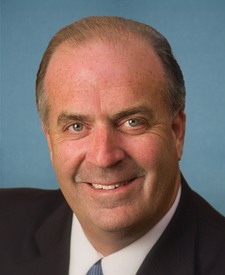
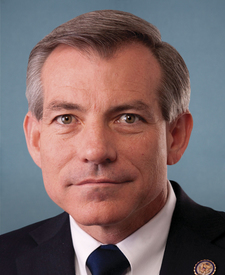
IntroducedMs. Moore of Wisconsin (for herself, Mr. Schweikert, Mr. Kildee, …
Impact analysis is available but no clear stakeholder effects identified. View clause-level analysis →
Bill Structure & Actor Mappings
Who is "The Secretary" in each section?
- "the_secretary"
- → Secretary of the Treasury
- "the_secretary_of_interior"
- → Secretary of the Interior
Key Definitions
Terms defined in this bill
Includes a plan established or maintained for its employees by an Indian tribal government, an agency, instrumentality, or subdivision of an Indian tribal government, or an entity established under Federal, State, or Tribal law which is wholly owned or controlled by any of the foregoing.
The recognized governing body of any Indian or Alaska Native tribe, band, nation, pueblo, village, community, component band, or component reservation, individually identified (including any Alaska Native village) which is recognized as eligible for the special programs and services provided by the United States to Indians because of their status as Indians.
Any qualified employer retirement plan which is a governmental plan with at least 500 active participants and is established or maintained by an Indian Tribal Government.
A qualified low-income community investment made in a tribal statistical area for purposes of the New Markets Tax Credit.
Any Indian area as defined in section 4(11) of the Native American Housing Assistance and Self Determination Act of 1996 (25 U.S.C. 4103(11)).
We use a combination of our own taxonomy and classification in addition to large language models to assess meaning and potential beneficiaries. High confidence means strong textual evidence. Always verify with the original bill text.
Learn more about our methodology